
Ragi Rotti | Nachni Roti: A Recipe from Karnataka
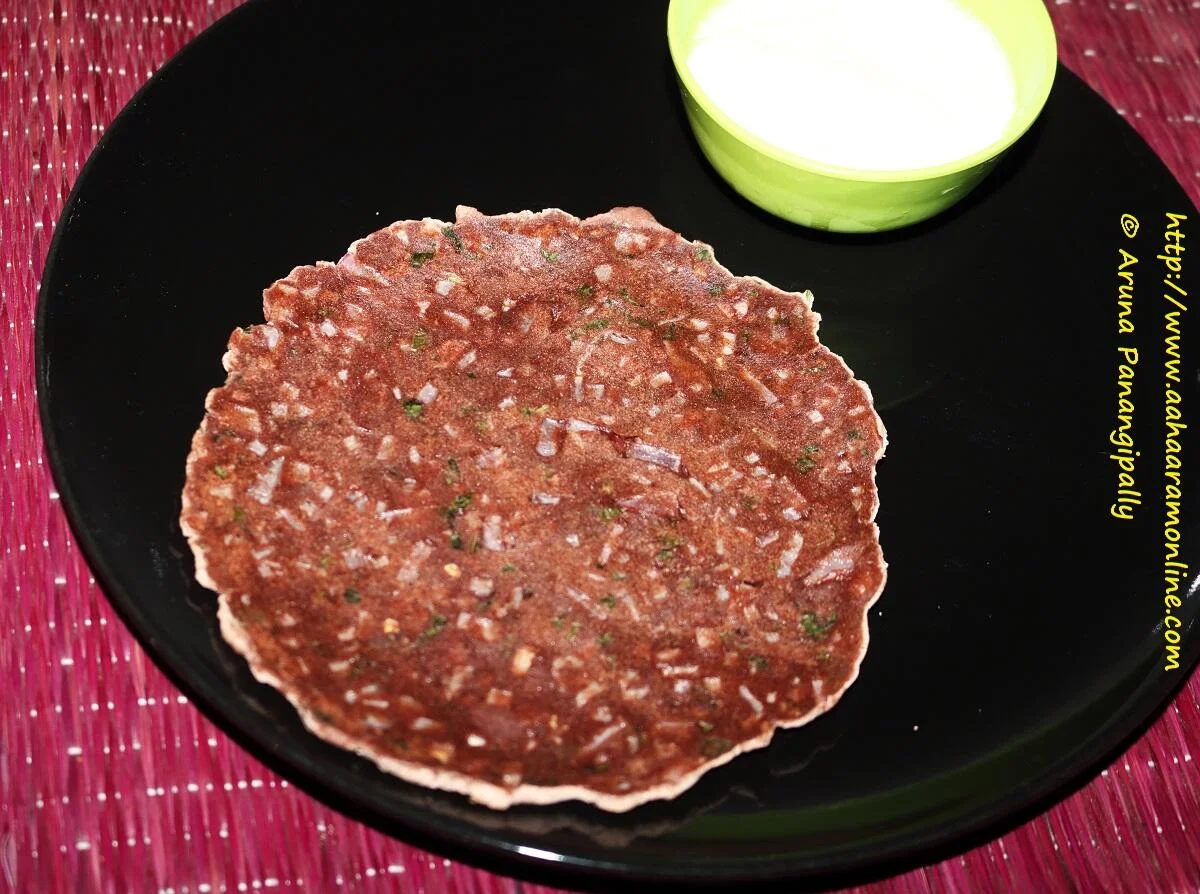
Ragi rotti is a soft, savoury flatbread from Karnataka, made with finger millet flour, onion, coriander, chilli and cumin. It cooks directly on a tava and is served hot, traditionally with yoghurt.
Ingredients
- 120 g (1 cup)ragi (finger millet) flour
- 75 g (½ cup)finely chopped onion
- 10 g (¼ cup)finely chopped coriander
- 3–4finely chopped green chillies
- 5 ml (1 tsp)cumin seeds
- to tastesalt
- as requiredwater
Instructions
- 1
Mix the ingredients
Put the ragi flour in a bowl and add the salt, green chillies, cumin seeds, coriander and onion.
- 2
Knead the dough
Add water a little at a time, kneading until you have a soft dough.
- 3
Divide the dough
Split the dough into six equal portions and roll each one into a ball.
- 4
Shape the rotti
Place one dough ball in the centre of a cold, unheated tava or griddle. Wet your hand and press the dough into an evenly thick circle about 15 cm (6 inches) across.
- 5
Cook the first side
Set the tava over a medium flame and cook until the surface of the rotti dries out.
- 6
Flip and finish
Turn the rotti over and cook the other side.
- 7
Serve it hot
Serve the ragi rotti hot with dahi (yoghurt).
- 8
Cool the tava
Before making the next rotti, let the tava cool completely. Alternatively, use two tavas in rotation or wash the tava under running water.
- 9
Repeat the process
Make the remaining rottis in the same way.
What is ragi rotti?
Ragi rotti is a Karnataka flatbread made from ragi, also known as nachni or finger millet. Unlike wheat dough, this dough is pressed into shape by hand rather than rolled out.
This version folds onion, coriander, green chilli and cumin into the dough, giving the earthy millet flour plenty of savoury flavour. Yoghurt makes a simple, cooling accompaniment.
Nutrition and macros by portion
The nutrition label shows one serving as written: 110 calories, 3g protein, 24g carbs, 1g fat.
| Portion | Adjustment | kcal | Protein | Carbs | Fat |
|---|---|---|---|---|---|
| Lighter | Smaller rotti portions | 77 kcal | 2g | 17g | 1g |
| This serving | As written | 110 kcal | 3g | 24g | 1g |
| Hungry | Two rottis per person | 165 kcal | 5g | 36g | 2g |
Ragi flour provides most of the carbohydrates and some of the protein, while onion, coriander and chilli add smaller amounts. There is no added oil in the listed ingredients, so the recipe is naturally low in fat; serve it with yoghurt and a vegetable or lentil side to make a more balanced plate.
Getting the dough right
Water: Add it gradually while kneading. The dough should be soft enough to press, but not so wet that it sticks heavily to your hand.
Mix-ins: Chop the onion, coriander and chillies finely so they are easier to press into an even rotti. Adjust the chilli quantity to suit your preference.
Shaping on a cold tava
Starting cold: Place the dough on an unheated tava before shaping. This gives you room to press it out without having to handle dough over a hot surface.
Even thickness: Wet your hand and press from the centre towards the edges, aiming for a circle about 15 cm across. A consistent thickness helps the rotti cook evenly.
Cooking cues
First side: Use a medium flame and wait until the surface looks dry before turning the rotti. The method relies on this visual cue rather than a fixed cooking time.
Second side: Cook the other side as well, then serve the rotti hot. The recipe gives no set timing for each side, so keep an eye on the surface as it cooks.
Why the tava needs to cool
A cold tava makes it possible to press the next portion into shape directly on the cooking surface. If the tava is still hot, the dough can begin cooking before you have finished shaping it.
Let it cool completely between rottis, rotate between two tavas, or wash it under running water as described in the method.
Serving ideas
Dahi: Serve the rotti hot with yoghurt, as suggested in the recipe. Its cool, mild flavour is a straightforward contrast to the chilli and cumin.
For a more substantial plate, pair it with a vegetable side or a lentil dish. Keep the rotti warm while you finish cooking the remaining portions.
Recipe notes & tips
- Add water a little at a time so the dough stays soft rather than becoming sticky.
- Wet your hand before pressing each portion to make shaping easier.
- Keep the dough circles evenly thick so they cook at a similar pace.
- Wait for the surface to dry before flipping.
- Use two tavas in rotation if you want to avoid waiting for one to cool between rottis.
Variations
- Milder chilli: Use three green chillies, or reduce the amount to suit your taste.
- More coriander: Increase the coriander for a fresher, herb-led flavour.
- Extra cumin: Add a little more cumin for a stronger warm, savoury note.
- Yoghurt on the side: Serve with dahi as suggested for a cool accompaniment.
- Smaller rottis: Divide the dough into more portions and press each one into a smaller circle.
Common mistakes to avoid
- Adding water too quickly: The dough can turn sticky; add it gradually as you knead.
- Starting on a hot tava: The dough may begin cooking before it is shaped; place it on a cold tava.
- Pressing unevenly: Thick and thin patches cook at different rates; aim for an even circle.
- Flipping too soon: The method calls for the surface to dry first; wait for that cue before turning.
- Reusing a hot tava: The next rotti can start cooking while you shape it; let the tava cool completely or alternate between two.
How to store
Cool any leftovers and refrigerate them in an airtight container for up to 2 days. Reheat on a tava over a medium flame until warmed through; serve promptly.
Frequently asked questions
Why do I shape the rotti on a cold tava?
The dough is pressed directly on the tava, so starting cold gives you time to shape it before cooking begins. Cool the tava completely before making the next one.
How do I know when to flip a rotti?
Turn it when the surface has dried out, as directed in the method. Then cook the other side as well.
Can I make the dough less spicy?
Yes. Use fewer green chillies, or choose the lower amount in the recipe's range of 3–4.
What should I serve with ragi rotti?
The recipe suggests dahi (yoghurt). You can also serve it alongside a vegetable or lentil dish.
How many rottis does this recipe make?
The method divides the dough into six equal portions. The recipe lists four servings.
Cook it from the original
This recipe comes from aahaaramonline.com. Their page has the author’s own photos, notes and tips — the best place to cook it from.
Open the recipe on aahaaramonline.com