
Korean Mandu (Homemade Dumplings)
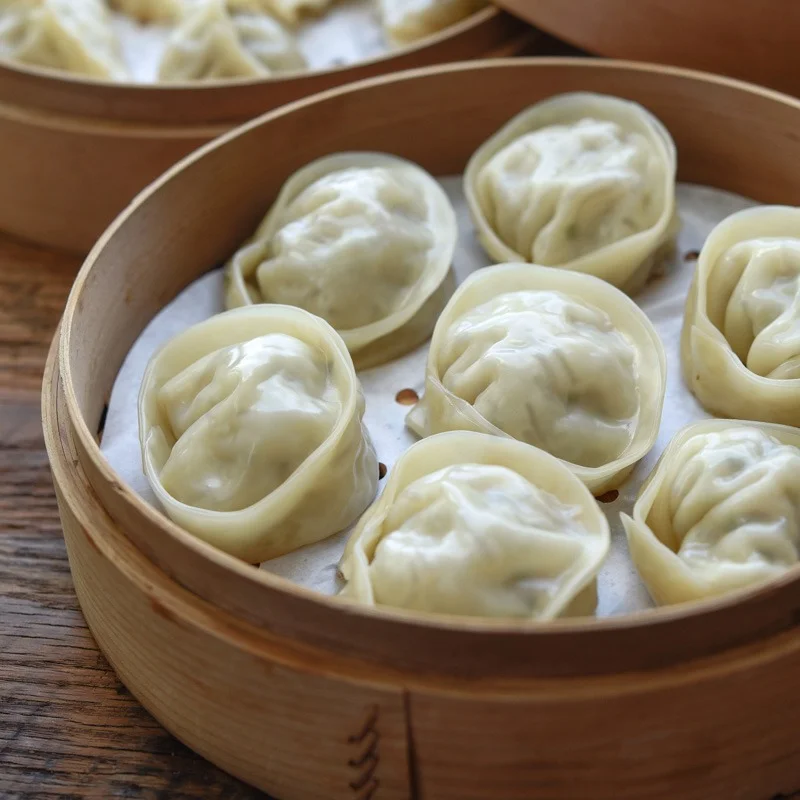
These Korean mandu are filled with pork, napa cabbage, glass noodles and aromatic greens, then shaped into half-moons or pleated parcels. Make a batch for steaming, pan-frying, boiling or deep-frying, and freeze extras for another meal.
Ingredients
- 40Korean dumpling wrappers
- 7 oz (200 g)napa cabbage
- 1 tsp (5 g)salt
- 3 oz (85 g)Korean glass noodles (dangmyeon)
- 1 1/2 lb (680 g)minced pork
- 1 cup (25 g)Asian chives, finely chopped
- 1 cup (80 g)Asian leeks or spring onions, finely chopped
- 2 tbsp (30 ml)soy sauce
- 2 tbsp (30 ml)sweet rice wine (mirim)
- 1 tsp (5 g)ginger paste
- 1 tbsp (15 ml)sesame oil
- 3/4 tsp (1.5 g)black pepper
- 4 tbsp (60 ml)soy sauce
- 2 tbsp (30 ml)rice vinegar
- 2 tsp (4 g)Korean chilli flakes (gochugaru), optional
Instructions
- 1
Salt the cabbage
Chop the napa cabbage very finely and place it in a mixing bowl. Add 1 tsp (5 g) salt and toss to coat. Leave for 10 minutes, then squeeze out the liquid once the cabbage has softened.
- 2
Prepare noodles
Boil the glass noodles according to the packet instructions, about 6–7 minutes. Rinse them in cold water, drain thoroughly and chop into small pieces.
- 3
Mix the filling
Put the pork, cabbage, chives, leeks or spring onions, and noodles in a large bowl. Add 2 tbsp (30 ml) soy sauce, the sweet rice wine, ginger paste, sesame oil and black pepper. Mix by hand until combined. This makes 40 large dumplings.
- 4
Shape half-moons
Put a heaped tablespoon of filling in the centre of a wrapper. Wet the wrapper edges with a finger, fold it in half and pinch the edges together. Bring the two ends towards the centre and pinch them together.
- 5
Shape pleated dumplings
Place some filling in the centre of a wrapper and wet the edges with a finger. Bring one edge to the other and pinch at the centre. Make about four small pleats on one side, facing towards the centre, then make the same number on the other side, also facing inwards.
- 6
Mix the sauce
Combine the remaining 4 tbsp (60 ml) soy sauce, rice vinegar and optional gochugaru. Drizzle the sauce over the dumplings.
- 7
Steam the dumplings
Line a bamboo or regular steamer with a steam liner or kitchen cloth to prevent sticking. Arrange the dumplings so they do not touch. Set the steamer over simmering water, cover and steam for 5–6 minutes, until fully cooked.
- 8
Pan-fry the dumplings
Heat 1–2 tablespoons of oil in a frying pan over medium heat. Place the dumplings flat-side down and cook for about 2–3 minutes, until the bottoms are golden. Add 2–3 tablespoons of water, cover and steam for 3–4 minutes more, until the water evaporates.
- 9
Deep-fry the dumplings
Heat oil to 175°C (350°F). Fry the dumplings in batches for about 3–4 minutes, until golden and crisp. Drain them on kitchen paper before serving.
- 10
Boil the dumplings
Bring a large pan of water to the boil, add the dumplings and stir gently. Cook for about 4–5 minutes, until they float to the surface. Lift them out with a slotted spoon and serve hot.
What is Korean mandu?
Mandu is the Korean name for filled dumplings, made in a range of shapes and cooked in several ways. This version combines pork with cabbage, glass noodles and greens for a juicy, savoury filling.
The mix of meat, vegetables and noodles gives the dumplings plenty of texture, while the wrappers make them easy to steam, fry or boil. Shape the batch in whichever style feels most comfortable.
Nutrition and macros by portion
The nutrition label shows one serving as written: 425 calories, 21g protein, 38g carbs, 21g fat.
| Portion | Adjustment | kcal | Protein | Carbs | Fat |
|---|---|---|---|---|---|
| Lighter | Steam instead of frying | 298 kcal | 15g | 27g | 15g |
| This serving | As written | 425 kcal | 21g | 38g | 21g |
| Hungry | Add more dumplings | 638 kcal | 32g | 57g | 32g |
The pork contributes much of the protein and fat, while the wrappers and glass noodles provide most of the carbohydrates. Serve a few dumplings with a generous portion of vegetables or a light broth to round out the plate.
Build a balanced filling
Cabbage: Salting it for 10 minutes draws out moisture. Squeezing it well helps keep the filling from turning wet.
Noodles: Glass noodles add a springy, slippery bite. Drain them thoroughly before chopping so extra water does not loosen the mixture.
Greens: Chives and Asian leeks bring a fresh savoury note. Spring onions can stand in for the leeks if needed.
Seal each wrapper well
Moisten the wrapper edge lightly with water; too much can make it slippery to handle. Press the seam firmly closed so the filling stays inside during cooking.
For half-moons, pinch the folded edge before bringing the ends together. For pleated dumplings, start with a pinch at the centre, then work outward with small, inward-facing pleats.
Choose a cooking method
Steaming keeps the wrappers soft and tender, while boiling gives them a smooth, delicate finish. In both cases, cook until the filling is fully cooked through.
Pan-frying gives a crisp base and a steamed top. Deep-frying makes the whole wrapper crisp, so cook in batches and drain well.
Know when they are done
For steamed dumplings, follow the 5–6 minute cooking time and check that the pork filling is cooked through. Boiled dumplings are ready when they float, usually after 4–5 minutes.
For pan-fried dumplings, look for golden bottoms before adding water, then let the covered pan steam until the water has evaporated. Deep-fried wrappers should be golden and crisp after about 3–4 minutes.
Serve with the dipping sauce
The soy sauce, rice vinegar and optional gochugaru make a savoury, tangy sauce with a little heat. Drizzle it over the dumplings, or serve it alongside for dipping.
Serve mandu hot as a snack or meal, or add boiled dumplings to soup. A simple vegetable side makes a fresh contrast to the pork filling.
Recipe notes & tips
- Keep unused wrappers covered while you shape the dumplings so they do not dry out.
- Squeeze the salted cabbage firmly to remove as much moisture as you can.
- Use a heaped tablespoon of filling for each large half-moon dumpling.
- Arrange dumplings with space between them in the steamer to prevent them sticking together.
- Cook deep-fried dumplings in batches rather than crowding the pan.
- Mix the dipping sauce before serving so the chilli flakes, if used, have time to mingle with the liquid.
Variations
- Use spring onions: Replace the Asian leeks with finely chopped spring onions.
- Add chilli: Include the optional gochugaru in the dipping sauce for a spicy, tangy finish.
- Steam for soup: Boil the dumplings and serve them in a bowl of soup.
- Choose a crisp base: Pan-fry the dumplings, then cover with water to steam the tops.
- Make them extra crisp: Deep-fry in batches until the wrappers are golden.
Common mistakes to avoid
- Wet cabbage: Squeeze it thoroughly after salting so the filling does not become watery.
- Poorly drained noodles: Drain the rinsed noodles well before chopping them into the filling.
- Overfilled wrappers: Use a heaped tablespoon for each large dumpling and leave room to seal the edges.
- Dry wrapper edges: Moisten the edges with water before folding and pinching them closed.
- Crowded steamer: Leave space between dumplings so they do not touch as they cook.
- Unwatched frying: Cook in batches and keep an eye on the dumplings so their wrappers do not over-brown.
How to store
Refrigerate cooked dumplings in a covered container and eat within 2–3 days; reheat until hot throughout by steaming or pan-frying. Freeze uncooked dumplings in a single layer until firm, then transfer them to a freezer-safe container; cook from frozen until fully cooked, allowing extra time.
Frequently asked questions
Can I freeze mandu?
Yes. Freeze the uncooked dumplings in a single layer first, then store them in a freezer-safe container. Cook from frozen and allow extra cooking time.
Do I need to cook the pork before filling the wrappers?
No. The recipe mixes the minced pork into the filling raw, and it cooks inside the dumplings.
How do I stop the filling making the wrappers soggy?
Salt the finely chopped cabbage for 10 minutes and squeeze it firmly. Drain the noodles well after rinsing them in cold water.
Can I use spring onions instead of Asian leeks?
Yes. The recipe allows finely chopped green onion, called spring onion in British English, in place of Asian leeks.
How can I tell when boiled mandu are ready?
They usually take about 4–5 minutes and are ready when they float to the surface. Remove them with a slotted spoon.
Which way should I cook mandu?
Steam them for a soft wrapper, pan-fry for a golden base, deep-fry for a crisp shell, or boil them for serving in soup. Follow the corresponding method and timing.
Cook it from the original
This recipe comes from beyondkimchee.com. Their page has the author’s own photos, notes and tips — the best place to cook it from.
Open the recipe on beyondkimchee.com