
Sage Rubbed Pork Tenderloin
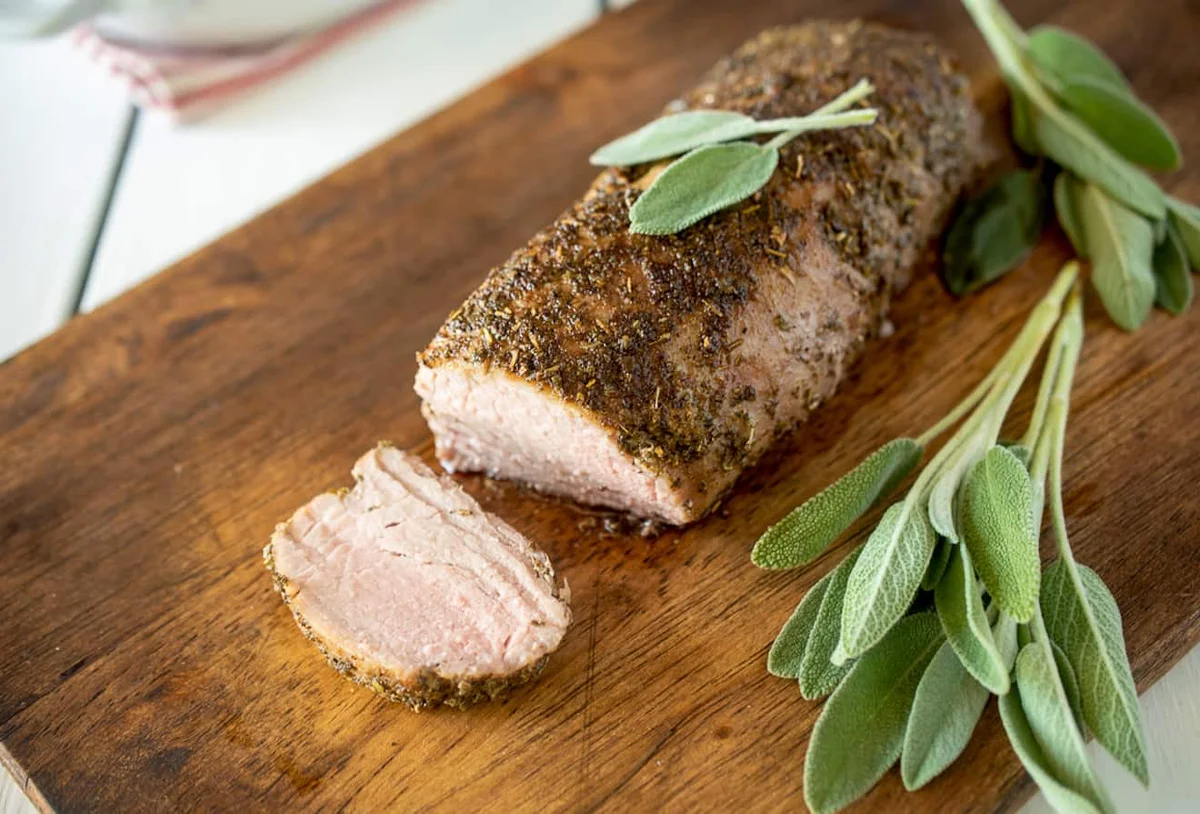
This American-style pork tenderloin is coated in dried sage, garlic and pepper, seared in a hot pan, then roasted until juicy. It makes a straightforward centrepiece for a weeknight meal or a small gathering.
Ingredients
- 15 ml (1 tablespoon)dried sage
- 3.75 ml (3/4 teaspoon)garlic powder
- 5 ml (1 teaspoon)salt
- 2.5 ml (1/2 teaspoon)ground black pepper
- 453 g (1 pound)pork tenderloin
- 10 ml (2 teaspoons)vegetable oil
Instructions
- 1
Preheat the oven
Heat the oven to 225°C (425°F).
- 2
Mix the spices
Put the sage, garlic powder, salt and pepper in a bowl and mix them together.
- 3
Season the pork
Drizzle the tenderloin with oil and rub it over the surface. Sprinkle the spice mixture all over the pork and work it in with your hands.
- 4
Sear the tenderloin
Heat a large cast-iron or other ovenproof skillet on the hob over medium-high heat for 2 minutes. Add the pork and sear each side for 3 minutes.
- 5
Roast and rest
Move the pan to the oven and roast for 15–17 minutes, until a meat thermometer reads 60°C (140°F). Take the pork out and rest it on a chopping board for 10 minutes before slicing. It will continue cooking as it rests; use a thermometer to check that it reaches a final temperature of 63°C (145°F).
What is sage-rubbed pork tenderloin?
Pork tenderloin is a lean, tender cut that cooks quickly and is easy to serve in slices. In this American-style preparation, dried sage and simple pantry spices form a savoury coating.
The method combines a stovetop sear with oven roasting. Browning the outside before roasting gives the pork colour while keeping the cooking process fairly hands-off.
Nutrition and macros by portion
The nutrition label shows one serving as written: 93 calories, 5g protein, 1g carbs, 8g fat.
| Portion | Adjustment | kcal | Protein | Carbs | Fat |
|---|---|---|---|---|---|
| Lighter | Less oil, more vegetables | 65 kcal | 4g | 1g | 6g |
| This serving | As written | 93 kcal | 5g | 1g | 8g |
| Hungry | Larger pork portion | 140 kcal | 8g | 2g | 12g |
The pork provides most of the protein, while the oil contributes most of the fat; the small amount of spice mix contributes very little carbohydrate. Serve it with a generous portion of vegetables and a measured serving of potatoes or another starchy side to make a balanced plate.
The sage and spice coating
Dried sage: its concentrated, earthy flavour gives the rub its defining character. Mixing it with garlic powder, salt and pepper helps distribute the seasoning over the whole tenderloin.
Oil: a small amount helps the seasoning cling to the meat and supports browning in the skillet. Rub it over the pork before adding the spice mixture.
Searing before roasting
Hot pan: preheat the ovenproof skillet on the hob for 2 minutes over medium-high heat before adding the pork. Sear each side for 3 minutes as directed.
Ovenproof cookware: the skillet goes directly from the hob into the oven, so make sure its handle and construction are suitable for oven use.
Checking when it is done
Use a thermometer: check the thickest part of the tenderloin, aiming for the recipe's 60°C (140°F) reading before taking it out of the oven.
Resting temperature: the pork continues cooking off the heat. Leave it to rest for 10 minutes and check that it reaches 63°C (145°F) before slicing.
Slicing and serving
Resting: let the tenderloin sit on a chopping board for the full 10 minutes so the cooking can finish before you cut it. Slice across the meat into even portions.
On the plate: pair the pork with vegetables and a starchy side such as potatoes or rice. Their mild flavours work well with the savoury sage rub.
Timing and preparation
The stated total time is 55 minutes, including the 10-minute resting period. The active cooking sequence is a short sear followed by 15–17 minutes in the oven.
Have the spice mixture ready before heating the skillet, and use the thermometer rather than relying on the clock alone to judge doneness.
Recipe notes & tips
- Mix the dry seasoning thoroughly so the salt and spices are spread evenly.
- Rub the oil and spice mixture over every side of the tenderloin.
- Use a skillet large enough to hold the pork without crowding it.
- Check the thickest section of the meat with a thermometer.
- Rest the tenderloin for 10 minutes before slicing.
Variations
- Fresh sage: finely chop it and use it in place of dried sage, adjusting to taste.
- Extra garlic: add a little more garlic powder for a stronger savoury note.
- Herb blend: combine the sage with a little dried thyme for a broader herbal flavour.
- Peppery rub: increase the ground black pepper for more bite.
- Pan juices: spoon any juices from the skillet over the sliced pork when serving.
Common mistakes to avoid
- Skipping the preheat: a properly heated skillet helps the pork sear; give the pan the full 2 minutes.
- Uneven seasoning: coat all sides of the tenderloin with the oil and rub.
- Overcooking by time alone: check the thickest part with a meat thermometer.
- Cutting too soon: resting for 10 minutes allows the pork to finish cooking before slicing.
- Using a non-ovenproof pan: transfer the pork only in a skillet designed to go into the oven.
How to store
Refrigerate leftover pork in a covered container within 2 hours and use within 3–4 days. Reheat gently until hot throughout, taking care not to dry out the lean meat.
Frequently asked questions
Can I use fresh sage instead of dried?
Yes, finely chopped fresh sage can be used, though its flavour is less concentrated than dried sage. Adjust the amount to taste.
How do I know the tenderloin is cooked?
Check the thickest part with a meat thermometer. The recipe calls for 60°C (140°F) when it comes out of the oven, followed by a 10-minute rest and a final temperature of 63°C (145°F).
Can I roast the pork without searing it?
The method relies on searing the tenderloin on the hob before roasting. Skipping that step will change the browning and texture.
Why does the pork need to rest?
The recipe uses a 10-minute rest to let the pork continue cooking to its final temperature before slicing. It also gives you time to prepare the rest of the meal.
What should I serve with sage-rubbed pork?
Serve it with vegetables and a side such as potatoes or rice. Choose accompaniments that suit the savoury sage and pepper seasoning.
Cook it from the original
This recipe comes from culinaryginger.com. Their page has the author’s own photos, notes and tips — the best place to cook it from.
Open the recipe on culinaryginger.com