
Korean Doenjang Pork (Maekjeok)
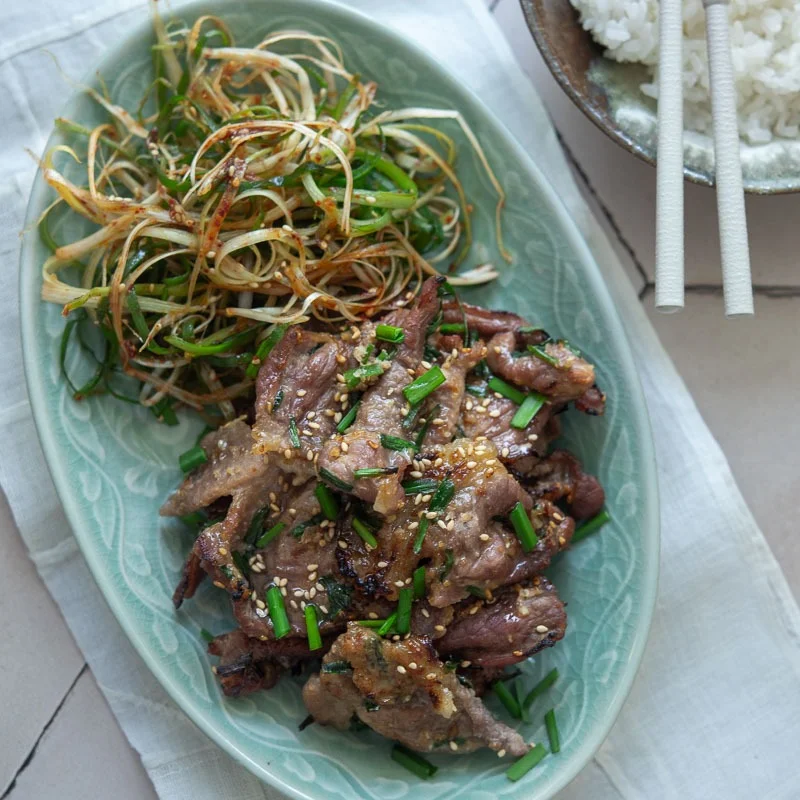
Maekjeok is thinly sliced pork coated in a savoury doenjang marinade and broiled until browned at the edges. Serve it hot with a sharp, gently spicy spring onion salad and rice for an easy Korean-inspired meal.
Ingredients
- 680 gpork neck (shoulder), thinly sliced
- 50 gAsian chives or spring onion, chopped
- 60 gKorean soybean paste (doenjang)
- 15 mlKorean soup soy sauce (gukganjang)
- 60 mlwater
- 25 gsugar
- 3 clovesgarlic, minced
- 30 mlsweet rice wine (mirim)
- 15 mlsesame oil
- A few dashesfreshly ground black pepper
- 30 mlKorean corn syrup (mulyeot), optional
- 1 Asian leek or 4spring onions, white and light green parts, very thinly sliced
- 6 gKorean chilli flakes (gochugaru)
- 15 mlsoy sauce
- 6 gsugar
- 10 mlcider vinegar
- 15 mlsesame oil
- 4 gtoasted sesame seeds
Instructions
- 1
Mix the marinade
In a large bowl, combine the doenjang, Korean soup soy sauce, sesame oil, rice wine, garlic, sugar and Korean corn syrup, if using. Stir in the chopped chives.
- 2
Coat the pork
Add the sliced pork and toss by hand until each piece is evenly coated. If the meat is cold, leave it for 10–15 minutes to lose its chill and take on the flavours. Meanwhile, preheat the oven’s broiler.
- 3
Arrange the slices
Set a wire rack over a baking sheet and lightly coat it with cooking oil spray. Lay the pork on the rack in a single layer, without overlapping.
- 4
Broil the pork
Position the pan about 7.5–10 cm below the broiler and cook for 5 minutes, watching closely to avoid burning. Turn the pork and broil for a further 4–5 minutes, until the edges are browned and slightly crisp.
- 5
Serve the pork
Serve the pork hot over Korean spring onion salad (pa-muchim), with a bowl of rice.
- 6
Soak the onions
For the salad, soak the sliced spring onions or leek in cold water with 1 teaspoon of vinegar for 10 minutes, then drain well.
- 7
Dress the salad
Mix the Korean chilli flakes, soy sauce, sugar, vinegar, sesame oil and sesame seeds in a bowl. Add the drained spring onions or leek and toss gently with chopsticks or tongs until coated.
What is maekjeok?
Maekjeok is a Korean-style grilled or broiled pork dish seasoned with doenjang, a fermented soybean paste. This version uses thinly sliced pork and a quick broil, so it can be made without a barbecue.
Doenjang gives the meat a deep, salty savouriness, while the fresh spring onion salad brings a bright, spicy contrast. The combination makes the pork especially good with plain rice.
Nutrition and macros by portion
The nutrition label shows one serving as written: 411 calories, 42g protein, 30g carbs, 14g fat.
| Portion | Adjustment | kcal | Protein | Carbs | Fat |
|---|---|---|---|---|---|
| Lighter | More salad, less pork | 288 kcal | 29g | 21g | 10g |
| This serving | As written | 411 kcal | 42g | 30g | 14g |
| Hungry | Larger pork portion | 617 kcal | 63g | 45g | 21g |
The pork provides most of the protein and contributes fat, while the sugar and any rice served alongside supply much of the carbohydrate. The doenjang, soy sauces and seasoning also contribute sodium. For a balanced plate, serve a moderate portion with plenty of salad and rice rather than adding extra salty sauces.
Build a balanced marinade
Doenjang and Korean soup soy sauce form the savoury base. Rice wine, garlic, sugar and sesame oil round it out; the optional corn syrup adds extra sweetness and a glossy coating.
Chopped chives or spring onion are mixed directly into the marinade, adding a fresh allium note to the pork.
Use thin slices
Thinly sliced pork neck or shoulder cooks quickly under the broiler and takes on the marinade across a generous surface area. Separate any pieces that are stuck together before coating them so the marinade reaches each slice.
A short rest of 10–15 minutes is enough to take the chill off cold meat while the broiler heats. Keep the slices in the marinade during this time.
Watch the broiler closely
Broilers brown food intensely and can scorch a sweet, salty marinade in moments. Place the rack 7.5–10 cm below the heat and keep an eye on the pork throughout both cooking periods.
Spread the slices in one layer so they broil rather than steam. Turn them after 5 minutes, then check for browned edges after another 4–5 minutes.
Make the spring onion salad
Soaking the very thinly sliced spring onions or leek in cold water with vinegar for 10 minutes mellows their sharpness. Drain them well so excess water does not dilute the dressing.
Toss the onions gently with gochugaru, soy sauce, sugar, vinegar, sesame oil and sesame seeds shortly before serving. This keeps the salad fresh and gives it a lively, savoury-sour finish.
Serve with rice
Serve the pork and pa-muchim straight away, with rice to balance the strongly seasoned meat and salad. The rice is not included in the ingredient list, so prepare it separately if you want it alongside.
Arrange the salad as a bed for the hot pork, or serve it on the side so diners can combine each bite to taste.
Recipe notes & tips
- Cut or buy the pork in thin, even slices so it cooks at a similar pace.
- Use a wire rack over a baking sheet to expose more of the pork to the broiler.
- Keep the slices in a single layer and cook in batches if your rack is crowded.
- Stay close to the oven during broiling because the marinade can brown quickly.
- Drain the soaked spring onions thoroughly before mixing them with the dressing.
- Toss the salad just before serving so it stays fresh rather than sitting in its dressing.
Variations
- Use spring onions: Choose them instead of Asian chives in the pork marinade for a similar fresh allium flavour.
- Skip the syrup: Leave out the optional mulyeot for a less sweet marinade.
- Adjust the heat: Use less gochugaru in the salad for a milder finish.
- Choose leek: Use the specified Asian leek in place of spring onions for the salad.
- Add rice: Serve the pork and salad with a bowl of rice for a more filling meal.
Common mistakes to avoid
- Overlapping the pork: Crowded slices can cook unevenly; arrange them in one layer or broil in batches.
- Leaving the broiler unattended: The marinade may burn quickly; watch the pork closely as it cooks.
- Using thick slices: They may not brown before the outside overcooks; use thinly sliced pork as specified.
- Skipping the turn: The pork needs cooking on both sides; flip it after the first 5 minutes.
- Adding wet onions: Excess soaking water can thin the salad dressing; drain the onions well.
- Dressing the salad too early: It can lose its fresh texture; toss it shortly before serving.
How to store
Refrigerate leftover pork and salad separately in covered containers and use within 3 days. Reheat the pork until hot throughout in a pan or under the broiler, watching carefully so it does not burn; serve the salad cold.
Frequently asked questions
Can I prepare the pork ahead?
You can coat the pork in the marinade ahead and keep it covered in the refrigerator. For best texture, prepare the salad near serving time and cook the pork just before eating.
Can I cook this without a broiler?
The method is written for a broiler. If using another cooking method, the timing and browning will differ, so cook the thin slices until browned and cooked through, turning as needed.
What is doenjang?
Doenjang is a fermented Korean soybean paste with a savoury, robust flavour. It is the main seasoning in the pork marinade.
Is the Korean corn syrup essential?
No. It is marked optional in the recipe, so you can leave it out if you do not have it.
Can I use spring onions instead of Asian leek?
Yes. The recipe gives four spring onions as an alternative to one Asian leek for the salad.
How do I know when the pork is ready?
The recipe cues are browned, slightly crisp edges after 5 minutes on the first side and a further 4–5 minutes after turning. Check closely because broilers vary and the marinade can darken quickly.
Cook it from the original
This recipe comes from beyondkimchee.com. Their page has the author’s own photos, notes and tips — the best place to cook it from.
Open the recipe on beyondkimchee.com