
Traditional Galician-style hake with ajada and boiled potatoes
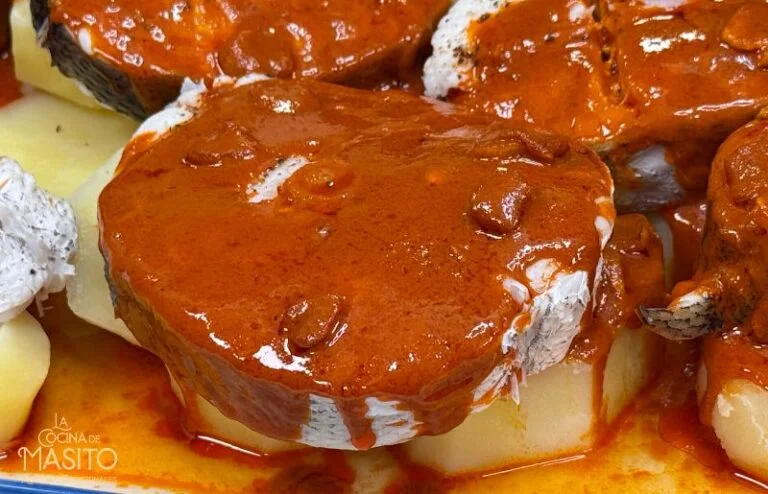
This Galician-style hake pairs gently poached fish and potatoes with ajada, a warm olive-oil sauce flavoured with garlic and sweet paprika. It makes a straightforward fish supper with plenty of character from a few simple ingredients.
Ingredients
- 1 kghake steaks, from the tail end
- 1bay leaf
- 5 clovesgarlic
- 1onion
- 1 tablespoonsweet paprika
- To tastesalt and optional black pepper
- To tasteextra-virgin olive oil
- 4 tablespoonscooking water
- 4, or to tastepotatoes
Instructions
- 1
Boil the potatoes
Peel the potatoes and cut them into thick slices. Boil them in salted water with one peeled garlic clove and the bay leaf for about 15–20 minutes, until tender but still holding their shape.
- 2
Add the hake
When the potatoes are nearly ready, season the hake with salt and optional black pepper, then add it to the water. Cook for 5–6 minutes, depending on thickness, taking care not to overcook it so it stays juicy.
- 3
Make the ajada
While the fish cooks, heat a generous splash of olive oil in a small frying pan and fry the sliced garlic until it begins to turn golden. Take the pan off the heat, add the paprika and stir well with a whisk. Pour in 40 ml of cooking water and keep stirring until the sauce comes together.
- 4
Assemble the plates
Arrange the potatoes on the base of each plate, place the hake on top and spoon over the hot ajada.
- 5
Add an accompaniment
Serve with white rice if you like; it is suggested as an accompaniment.
What is Galician-style hake?
Hake with potatoes and ajada is a familiar combination in Galicia, in north-west Spain, where fish and seafood are central to many regional meals. Ajada is a simple sauce built around olive oil, garlic and paprika.
Here, the potatoes and fish cook in the same pot, while the sauce is made separately and spooned over at the end. That keeps the cooking practical and lets the paprika-garlic flavour stand out.
Nutrition and macros by portion
The nutrition label shows one serving as written: 310 calories, 0g protein, 0g carbs, 0g fat.
| Portion | Adjustment | kcal | Protein | Carbs | Fat |
|---|---|---|---|---|---|
| Lighter | Use less olive oil | 217 kcal | 0g | 0g | 0g |
| This serving | As written | 310 kcal | 0g | 0g | 0g |
| Hungry | Add a side of rice | 465 kcal | 0g | 0g | 0g |
The potatoes provide most of the carbohydrate, while olive oil carries much of the fat; hake is the main protein source. To round out the plate, serve it with a green vegetable, and keep the optional rice portion modest if you are already serving plenty of potatoes.
The fish and potatoes
Hake steaks: The recipe specifies cuts from the tail end. Their thickness affects how quickly they cook, so use the stated 5–6 minutes as a guide and check that the flesh is just cooked through.
Potatoes: Thick slices are less likely to break apart during boiling. Choose potatoes that hold their shape, and stop cooking when they are tender but still intact.
Getting the ajada right
Garlic: Slice the cloves and fry them gently in olive oil until just golden. Garlic can turn bitter if it becomes too dark, so keep an eye on the pan.
Paprika: Take the pan off the heat before stirring in the sweet paprika. This helps prevent it from scorching; the cooking water then loosens the mixture into a spoonable sauce.
Watch the cooking order
Potatoes first: Give them about 15–20 minutes in salted water with a peeled garlic clove and bay leaf. Start checking near the lower end of that range, since slice size and potato variety can affect the timing.
Hake second: Add the seasoned fish when the potatoes are nearly ready, then cook it for 5–6 minutes according to thickness. Lift it carefully so the steaks stay whole.
Serving the dish
Layer the potatoes on the plate and set the hake on top, then pour over the ajada while it is hot. The sauce brings the garlic and paprika flavour to both the fish and potatoes.
White rice is suggested as an accompaniment. You can also serve the dish on its own for a simple fish-and-potato plate.
Seasoning and sauce texture
Season the hake before it goes into the pot, and salt the potato water as well. Taste the finished sauce before serving, bearing in mind that the recipe gives no fixed quantity for salt or olive oil.
The method calls for 4 tablespoons of cooking water in the ingredient list, but specifies 40 ml when making the ajada. Use the stated 40 ml method quantity, adding it carefully while stirring.
Recipe notes & tips
- Cut the potatoes to a similar thickness so they cook at roughly the same rate.
- Keep the garlic moving in the oil and remove it from the heat as soon as it turns golden.
- Take the frying pan off the heat before adding the paprika.
- Add the hake only when the potatoes are nearly tender to avoid overcooking the fish.
- Lift the fish gently with a wide spatula to help keep the steaks intact.
Variations
- Add parsley: Scatter chopped parsley over the finished plates for a fresh herbal note.
- Use hot paprika: Replace some or all of the sweet paprika with hot paprika for a spicier sauce.
- Add greens: Serve with cooked cabbage or green beans alongside the fish and potatoes.
- Adjust the garlic: Use fewer cloves for a milder ajada, or keep the full amount for a stronger flavour.
- Serve with rice: Follow the suggested accompaniment and offer plain white rice at the table.
Common mistakes to avoid
- Overcooking the potatoes: Check them after 15 minutes and stop when tender but still holding their shape.
- Overcooking the hake: Cook for 5–6 minutes according to thickness and avoid leaving it in the hot water longer than needed.
- Burning the garlic: Fry it over moderate heat and take the pan off the heat when it turns golden.
- Scorching the paprika: Add it only after removing the pan from the heat, then stir promptly.
- Breaking the fish: Handle the hake gently when lifting it from the cooking water and plating it.
How to store
Refrigerate leftovers in a covered container and eat within 1–2 days. Reheat gently until piping hot, taking care not to cook the hake for too long; the fish and potatoes can also be warmed separately from the sauce.
Frequently asked questions
Can I use hake fillets instead of steaks?
Yes. Fillets can be used, but they may cook more quickly than thick steaks, so check them early and remove them once just cooked through.
How do I know when the hake is cooked?
The fish should be opaque and separate easily into flakes. Thicker pieces may need the full 5–6 minutes, while thinner ones can be ready sooner.
Can I make the ajada less spicy?
The recipe uses sweet paprika, which gives flavour without relying on heat. For an especially mild sauce, make sure you do not add hot paprika.
What does the cooking water do in the sauce?
It loosens the oil, garlic and paprika into a sauce that can be spooned over the fish and potatoes. Add it while stirring, as directed.
Is rice part of the recipe?
Rice is mentioned as a suggested accompaniment in the method, but it is not included in the ingredient list. Prepare it separately if you want to serve it.
Can I prepare the ajada ahead?
It is best made while the fish cooks so you can serve it hot. If you make it ahead, warm it gently and stir before pouring it over the dish.
Cook it from the original
This recipe comes from lacocinademasito.com. Their page has the author’s own photos, notes and tips — the best place to cook it from.
Open the recipe on lacocinademasito.com