
Turkey tagine with olives
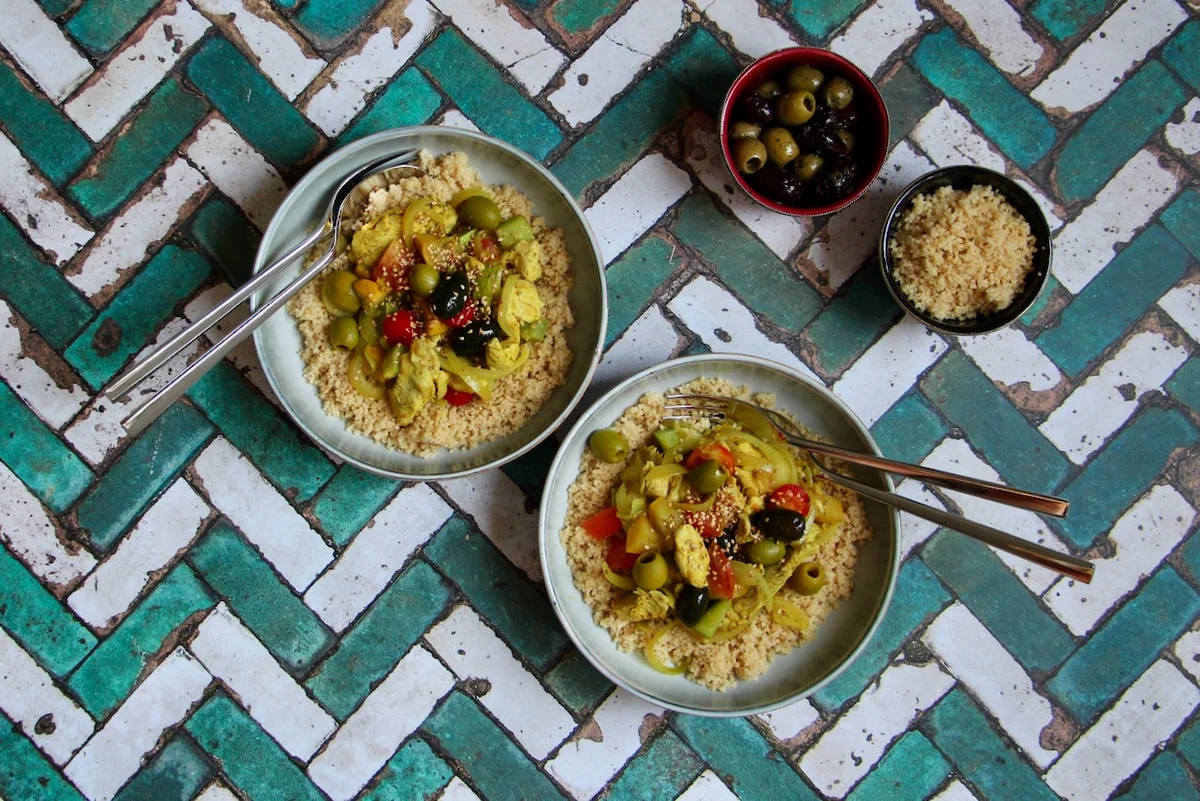
This turkey tagine simmers tender pieces of turkey with courgettes, olives and warm North African spices. It is a generous one-pot meal, with cherry tomatoes added at the end for a fresh finish.
Ingredients
- 500 gturkey breast fillet
- 1 largeonion
- 2courgettes
- 12cherry tomatoes
- 100 golives, green and/or black
- 330 gwater
- 2 tbsp totalras el hanout
- 1 tbsppaprika
- 1 tspcumin
- 1 tspturmeric
- 2 tbsp, twice (4 tbsp total)vegetable oil, such as sunflower, rapeseed or olive oil
- To tastesalt
- To tasteblack pepper
Instructions
- 1
Cut the turkey
Cut the turkey fillets into pieces about 2–3 cm across.
- 2
Sear the turkey
Heat 2 tablespoons of oil in a frying pan, or in the casserole if you are not using a separate pan. Add the turkey and 1 tablespoon of ras el hanout.
- 3
Set aside
Once the turkey pieces are browned on each side, transfer them to a plate.
- 4
Deglaze the pan
Pour a little water into the pan and scrape the browned cooking juices from the base with a spatula. Set this liquid aside with the turkey.
- 5
Cook the onion
Heat 2 tablespoons of oil in the casserole and add the sliced onion.
- 6
Add courgettes
Add the courgettes, cut into cubes, and sprinkle in 1 tablespoon of ras el hanout. Cook for 2 minutes.
- 7
Add spices and water
Add the olives, the remaining spices and the 330 g of water. Season with salt.
- 8
Return the turkey
Cook for 6–8 minutes, then add the turkey pieces and the reserved juices.
- 9
Simmer gently
Adjust the seasoning, cover the casserole and cook over a low heat for 30–40 minutes.
- 10
Finish with tomatoes
Just before serving, halve the cherry tomatoes and arrange them over the tagine.
What is turkey tagine with olives?
A tagine is a North African slow-cooked stew, named for the traditional pot in which it is often made. This version uses turkey rather than the lamb or chicken found in many tagines, and combines it with courgettes, olives and a fragrant spice blend.
The method builds flavour by browning the turkey first, then scraping those savoury juices into the stew. Olives bring a salty, briny note, while the cherry tomatoes go in at the end so they keep a fresher taste.
Nutrition and macros by portion
The nutrition label shows one serving as written: 390 calories, 40g protein, 17g carbs, 21g fat.
| Portion | Adjustment | kcal | Protein | Carbs | Fat |
|---|---|---|---|---|---|
| Lighter | Use less cooking oil | 273 kcal | 28g | 12g | 15g |
| This serving | As written | 390 kcal | 40g | 17g | 21g |
| Hungry | Serve with extra couscous | 585 kcal | 60g | 26g | 32g |
Turkey provides most of the protein, while the oil and olives contribute much of the fat. The courgettes, onion and tomatoes provide some carbohydrates, with couscous, rice or bread adding more if served alongside. Balance the plate with a generous helping of vegetables and a moderate portion of your chosen starch.
Building flavour with spices
Ras el hanout: this North African spice blend is used both to season the turkey and to flavour the vegetables. Its composition varies, so taste the finished stew before adding more salt or pepper.
Paprika, cumin and turmeric: these round out the seasoning with warmth and colour. Add them with the olives and water so their flavours can mingle as the tagine cooks.
Why sear the turkey first?
Searing: brown the turkey pieces on each side in the hot oil before setting them aside. They do not need to cook through at this stage, as they will finish cooking in the covered casserole.
Pan juices: a little water loosens the browned bits left in the pan. Scrape them up and save them with the turkey; they add flavour back into the stew.
Getting the texture right
Courgettes: cut them into even cubes so they cook at a similar rate. Stir them with the onion and ras el hanout for the specified 2 minutes before adding the liquid.
Turkey: the covered, gentle simmer helps the pieces cook through without a fierce boil. Keep the heat low and check that the liquid is gently bubbling rather than reducing rapidly.
Allow time for the simmer
The recipe gives 30–40 minutes of covered cooking over a low heat after the turkey is returned to the casserole. The full cooking time is about 80 minutes, including preparation and the earlier stages.
Keep the lid on while the tagine simmers, then check the turkey is cooked through before serving. The exact time can vary with the size of the pieces and how low your hob runs.
Choosing olives and tomatoes
Olives: use green, black or a mixture, according to the flavour you prefer. As they are salty, taste before adding extra salt at the end.
Cherry tomatoes: halve them and add them just before serving, as directed. This keeps their fresh, juicy contrast against the softer vegetables and savoury olives.
What to serve alongside
Serve the tagine with couscous, rice or bread to catch the spiced cooking liquid. A simple green salad can add a crisp contrast to the warm, soft vegetables.
For a more balanced plate, include a generous portion of courgettes and other vegetables alongside the turkey, and choose a measured serving of couscous or rice.
Recipe notes & tips
- Cut the turkey into similarly sized pieces so they brown and cook at roughly the same rate.
- Scrape the pan thoroughly when deglazing to collect the browned juices.
- Keep the casserole covered and the heat low during the long simmer.
- Taste before adding more salt, as the olives and ras el hanout can already be savoury.
- Add the halved tomatoes only just before serving, as the recipe directs.
Variations
- Mix the olives: use a combination of green and black olives for a varied briny flavour.
- Choose your oil: use sunflower, rapeseed or olive oil, as listed in the recipe.
- Serve with couscous: spoon the tagine over cooked couscous to absorb the spiced juices.
- Add a fresh garnish: scatter chopped parsley over the dish just before serving.
- Adjust the spice: use a little less ras el hanout for a milder result.
Common mistakes to avoid
- Crowding the pan: the turkey may steam rather than brown; sear it in batches if needed.
- Skipping the pan juices: scrape the browned bits loose with a little water and return them with the turkey.
- Boiling too hard: a vigorous boil can make the turkey less tender; keep the covered stew at a gentle simmer.
- Adding salt too early: olives can be salty, so taste the tagine before adjusting the seasoning.
- Cooking the tomatoes for too long: add them just before serving to keep their fresh texture.
How to store
Refrigerate leftovers in a covered container and eat within 3 days. Reheat gently in a covered saucepan until steaming hot, adding a splash of water if the sauce has thickened.
Frequently asked questions
Can I make this without a tagine pot?
Yes. The method specifies using a casserole if you are not using a separate frying pan. Use a pan with a lid for the covered simmer.
Can I use a different type of olive?
Yes. Use green olives, black olives or a mixture, as listed. Taste before adding extra salt because olives can be quite salty.
How do I know when the turkey is cooked?
Check that the largest piece is cooked through with no raw-looking centre. If needed, continue simmering gently and check again.
Can I prepare the tagine ahead?
You can cook it ahead and refrigerate it once cooled. Reheat gently until steaming hot, and add the halved tomatoes just before serving if you want to keep their fresh texture.
What can I serve with turkey tagine?
Couscous, rice or bread all work well with the spiced juices. A crisp green salad makes a fresh accompaniment.
Cook it from the original
This recipe comes from casseroleetchocolat.fr. Their page has the author’s own photos, notes and tips — the best place to cook it from.
Open the recipe on casseroleetchocolat.fr