
Bami with minced meat and stir-fry vegetables
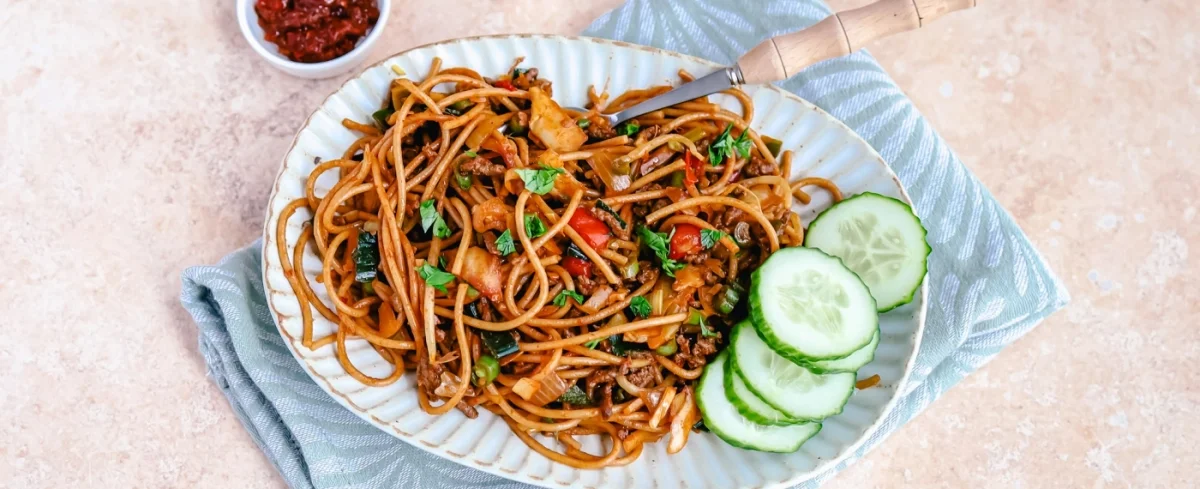
This quick bami pairs wholemeal spaghetti with lean beef mince, Chinese stir-fry vegetables and sweet-savoury ketjap manis. It is a practical one-pan-style meal for a busy evening, with warming spices and plenty of vegetables.
Ingredients
- 75 gwholemeal spaghetti
- 1/2onion
- 1 clove (5 g)garlic
- 1 cm (7 g)ginger
- 1 tbsp (10 ml)olive oil
- 100 glean beef mince
- 1/2 tsp (1 g)ground cumin
- 1/2 tsp (1 g)curry powder
- 1 tsp (2 g)paprika
- 1 tsp (10 g)tomato purée
- 250 gChinese stir-fry vegetables
- 1 tbsp (10 ml)ketjap manis
Instructions
- 1
Cook the spaghetti
Cook the spaghetti until tender according to the packet instructions.
- 2
Prepare the aromatics
Finely chop the onion and garlic, then grate the ginger.
- 3
Fry the aromatics
Heat the oil in a pan. Cook the onion, garlic and ginger for 2 minutes.
- 4
Brown the mince
Add the mince, cumin, curry powder and paprika. Break up the mince and cook it through.
- 5
Cook the vegetables
Stir in the tomato purée and fry it for about 1 minute. Add the stir-fry vegetables and ketjap manis, then stir-fry for 6 minutes until the vegetables are tender but still have a little bite.
- 6
Combine and serve
Drain the spaghetti and stir it through the vegetables. Toss everything together and season with pepper and salt to taste. Serve on a plate or in a deep bowl.
What is bami?
Bami is a name used for noodle dishes associated with Indonesian cooking and popular in the Netherlands. This version takes a quick home-cooking approach, using wholemeal spaghetti in place of Asian wheat noodles.
The combination of minced beef, vegetables, spices and ketjap manis gives the dish a savoury, gently sweet flavour. Cooking the noodles separately makes it easy to combine everything at the end.
Nutrition and macros by portion
The nutrition label shows one serving as written: 632 calories, 37g protein, 69g carbs, 23g fat.
| Portion | Adjustment | kcal | Protein | Carbs | Fat |
|---|---|---|---|---|---|
| Lighter | Use less oil | 442 kcal | 26g | 48g | 16g |
| This serving | As written | 632 kcal | 37g | 69g | 23g |
| Hungry | Add more spaghetti | 948 kcal | 56g | 104g | 35g |
The spaghetti supplies most of the carbohydrates, while the oil and ketjap manis contribute much of the fat and sweetness. Beef mince provides most of the protein, with a smaller contribution from the wholemeal pasta. To balance the plate, serve it with extra vegetables or a crisp side salad.
Build the flavour base
Aromatics: give the onion, garlic and ginger their full 2 minutes in the oil so they soften and release their fragrance without burning.
Spices: add the cumin, curry powder and paprika with the mince. Stir as the meat browns so the spices coat it evenly.
Get the mince and vegetables right
Mince: break it into small pieces as it cooks, and check that no pink remains before moving on.
Vegetables: stir-fry them for 6 minutes, aiming for vegetables that are hot and cooked through but still slightly crisp. If the pan looks crowded, keep the ingredients moving so they cook evenly.
Why cook the spaghetti separately?
Boiling the spaghetti separately lets you control its texture and drain away the cooking water before it goes into the pan. Follow the packet timing, then drain it as soon as it is tender.
Add the drained spaghetti only after the vegetables are cooked. Toss it with the mince and sauce so the flavours are distributed throughout.
Season and serve
Ketjap manis brings sweetness and savoury depth, while tomato purée adds a concentrated tomato note. Taste the finished mixture before adding salt, as the sauce may already be salty.
Serve straight away while the noodles are warm. A simple cucumber salad or extra stir-fry vegetables make an easy accompaniment.
Make the single portion smoothly
Pan space: choose a pan wide enough for the 250 g of vegetables to stir-fry rather than steam. Keep the heat up and stir regularly.
Timing: prepare the onion, garlic and ginger while the water heats, then cook the spaghetti as you work through the pan steps. Drain it shortly before the vegetables are ready.
Recipe notes & tips
- Grate the ginger finely so it mixes evenly through the mince and vegetables.
- Break the mince into small pieces while frying to help it cook through evenly.
- Keep the vegetables moving in the pan to preserve some bite.
- Drain the spaghetti well so excess water does not dilute the sauce.
- Taste before adding salt, as ketjap manis can already bring plenty of seasoning.
Variations
- More vegetables: add extra Chinese stir-fry vegetables and cook them until just tender.
- Extra heat: add chilli flakes with the other spices.
- Different mince: use lean pork or chicken mince in place of the beef.
- More savoury: stir in a little extra ketjap manis, tasting as you go.
- Egg topping: serve with a fried egg for a richer finish.
Common mistakes to avoid
- Burning the aromatics: keep the heat moderate and stir them as they cook for 2 minutes.
- Large mince clumps: break the meat apart as soon as it goes into the pan.
- Soft vegetables: stir-fry for 6 minutes and check for a little bite rather than cooking them until limp.
- Watery bami: drain the spaghetti thoroughly before mixing it into the pan.
- Over-seasoning: taste after adding ketjap manis before adding salt.
How to store
Refrigerate leftovers in a sealed container and eat within 2 days. Reheat thoroughly in a pan or microwave, adding a small splash of water if the noodles seem dry.
Frequently asked questions
Can I use regular spaghetti?
Yes. Use the same amount and cook it according to its packet instructions; the result will be less nutty than with wholemeal spaghetti.
Can I prepare the ingredients ahead?
You can chop the onion and garlic and grate the ginger in advance, then keep them covered in the fridge until cooking.
How do I know the mince is cooked?
Break it into small pieces and cook until no pink remains. Make sure it is hot all the way through before adding the vegetables.
Can I make the dish less sweet?
Use less ketjap manis and taste before adding more. The flavour will be less sweet and the sauce less pronounced.
What can I serve with bami?
A cucumber salad or extra vegetables make a fresh, simple side. You can also serve it on its own as a complete noodle dish.
Cook it from the original
This recipe comes from fitchef.nl. Their page has the author’s own photos, notes and tips — the best place to cook it from.
Open the recipe on fitchef.nl