
Traditional White Bolognese Sauce
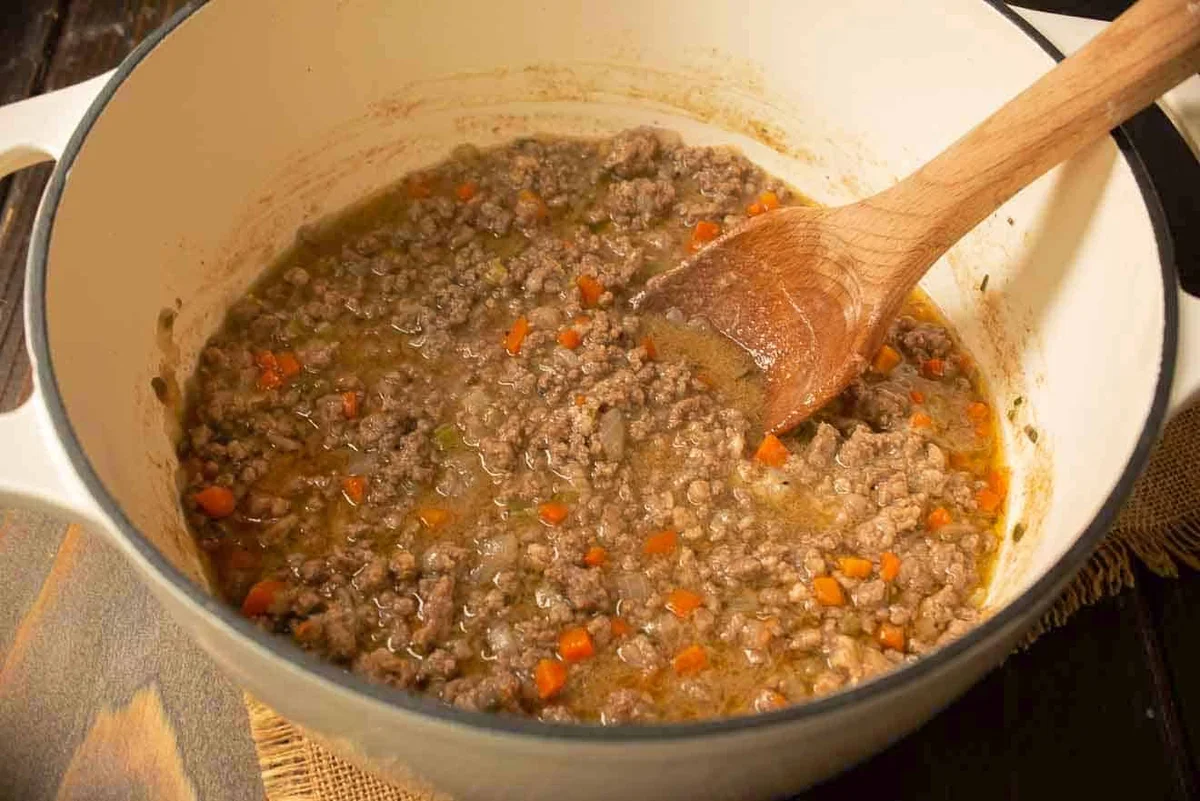
This white Bolognese is a slowly simmered meat sauce made with beef, mild Italian sausage, white wine and aromatic herbs, without tomatoes. It brings plenty of savoury flavour to pasta and is ready in about 40 minutes.
Ingredients
- 30 ml (2 tablespoons)olive oil
- 64 g (1/2 cup)onion, finely chopped
- 80 g (3/4 cup)carrot, peeled and finely chopped
- 35 g (1/4 cup)celery, finely chopped
- 5 ml (1 teaspoon)salt
- 453 g (1 pound)ground beef
- 226 g (1/2 pound)mild Italian sausage meat
- 12 g (1 1/2 tablespoons)plain flour
- 3 clovesgarlic, peeled and chopped
- 5 ml (1 teaspoon)fresh rosemary, chopped
- 4 leavessage, chopped
- 240 ml (1 cup)dry white wine
- 400 ml (1 1/2 cups)beef stock
Instructions
- 1
Soften the vegetables
Heat the olive oil in a deep-sided sauté pan over medium heat. Once hot, add the onion, carrot, celery and a little of the salt. Cook for 5 minutes, until the vegetables begin to soften.
- 2
Brown the meat
Raise the heat to medium-high and add the beef, sausage and remaining salt. Cook, breaking the meat into small pieces, until lightly browned. Add the garlic, rosemary and sage and cook for 1 minute. Sprinkle in the flour and stir to combine, then cook for 1 minute.
- 3
Simmer the sauce
Pour in the wine and cook until it begins to evaporate. Add the beef stock and bring the mixture to a simmer. Cook for 30 minutes, until thickened but still a little saucy. Taste and add more salt if needed; the amount will depend on the saltiness of the stock.
What is white Bolognese?
Bolognese is a meat sauce associated with Bologna in northern Italy, commonly served with pasta. This version leaves out tomatoes and builds its flavour from beef, sausage, wine, stock and herbs.
The combination of two meats makes the sauce savoury and full-bodied, while the finely chopped vegetables soften into the base. A gentle simmer brings the ingredients together without cooking the sauce completely dry.
Nutrition and macros by portion
The nutrition label shows one serving as written: 340 calories, 20g protein, 13g carbs, 18g fat.
| Portion | Adjustment | kcal | Protein | Carbs | Fat |
|---|---|---|---|---|---|
| Lighter | Serve with extra vegetables | 238 kcal | 14g | 9g | 13g |
| This serving | As written | 340 kcal | 20g | 13g | 18g |
| Hungry | Larger sauce portion | 510 kcal | 30g | 20g | 27g |
The beef and sausage provide most of the protein and fat, while the flour and vegetables contribute carbohydrates. Serve with a generous helping of vegetables, and account for any pasta separately when balancing the plate.
The vegetable base
Soffritto: onion, carrot and celery form the aromatic foundation. Chop them finely so they soften evenly and mingle with the meat.
Take your time over the first 5 minutes. The aim is to start softening the vegetables, not to brown them deeply.
Choosing the meat
Ground beef: this gives the sauce its main savoury character. Break it up as it cooks so the finished sauce has an even texture.
Italian sausage: mild sausage adds seasoning and richness alongside the beef. Since the stock can vary in saltiness, wait until the end to decide whether the sauce needs more salt.
Wine, herbs and flour
White wine: let it cook until it starts to evaporate before adding the stock. This keeps the sauce from tasting as though the wine was simply poured in at the end.
Rosemary and sage: these herbs give the meat sauce an aromatic flavour. Stir them in with the garlic and cook for 1 minute before adding the liquids.
Flour: stir it thoroughly through the meat and vegetables, then cook it for 1 minute. This helps the sauce thicken as it simmers.
Getting the consistency right
Keep the sauce at a simmer for 30 minutes after adding the stock. It should thicken while retaining a little liquid, rather than becoming dry or stiff.
The final seasoning depends on your beef stock. Taste the sauce once it has simmered, then add salt only if it needs it.
Serving the sauce
Serve it with pasta that can hold a substantial meat sauce, such as tagliatelle or rigatoni. Tossing the pasta with the sauce helps coat it evenly.
A green salad or simply cooked vegetables make a fresh counterpoint. If serving with pasta, include it in your portion planning as an additional source of carbohydrates.
Recipe notes & tips
- Chop the onion, carrot and celery to a similar fine size so they soften at the same rate.
- Break up the beef and sausage well as they brown to avoid large dense clumps.
- Cook the flour with the meat mixture for its full minute before adding the wine.
- Bring the stock to a simmer, then keep the heat steady rather than boiling the sauce hard.
- Taste the sauce at the end before adding extra salt, as stock saltiness varies.
- Keep a little sauce liquid in the pan so the finished mixture stays spoonable.
Variations
- Use fresh herbs: finely chopped parsley can be stirred in at the end for a fresher finish.
- Add black pepper: season to taste alongside the final salt check.
- Choose another sausage: use another mild Italian sausage meat if that is what you have available.
- Serve over polenta: spoon the sauce over soft polenta instead of pasta.
- Add pasta: toss the sauce with cooked tagliatelle just before serving.
Common mistakes to avoid
- Rushing the vegetables: they may stay firm; give them the full 5 minutes to begin softening.
- Leaving large meat clumps: they brown unevenly; break the beef and sausage apart as they cook.
- Skipping the flour cooking time: the flour may not blend well; stir it in and cook for 1 minute.
- Adding stock before the wine evaporates: follow the stated order and let the wine begin to evaporate first.
- Boiling the sauce vigorously: it can reduce too far; keep it at a simmer for the 30-minute cook.
- Salting too early at the end: stock can be salty; taste first, then adjust.
How to store
Cool leftovers promptly and refrigerate in a covered container for up to 3 days. Reheat gently in a saucepan until hot throughout, adding a splash of water or stock if the sauce has become too thick.
Frequently asked questions
Can I make this sauce ahead?
Yes. Cook it through, cool it and refrigerate it in a covered container. Reheat gently before serving.
Why is this Bolognese white?
This version contains no tomatoes. Its flavour and colour come from the beef, sausage, vegetables, white wine, stock and herbs.
How do I know when the sauce is ready?
After 30 minutes of simmering, it should be thicker but still have a little sauce around the meat. Taste it and adjust the salt if needed.
Can I use a different stock?
The recipe calls for beef stock. If you use a different stock, its flavour and saltiness may change, so taste before adding more salt.
What pasta goes well with white Bolognese?
Tagliatelle and rigatoni are good choices for serving with this meaty sauce. You can also serve it over soft polenta.
Cook it from the original
This recipe comes from culinaryginger.com. Their page has the author’s own photos, notes and tips — the best place to cook it from.
Open the recipe on culinaryginger.com