
Cast-Iron Roast Chicken
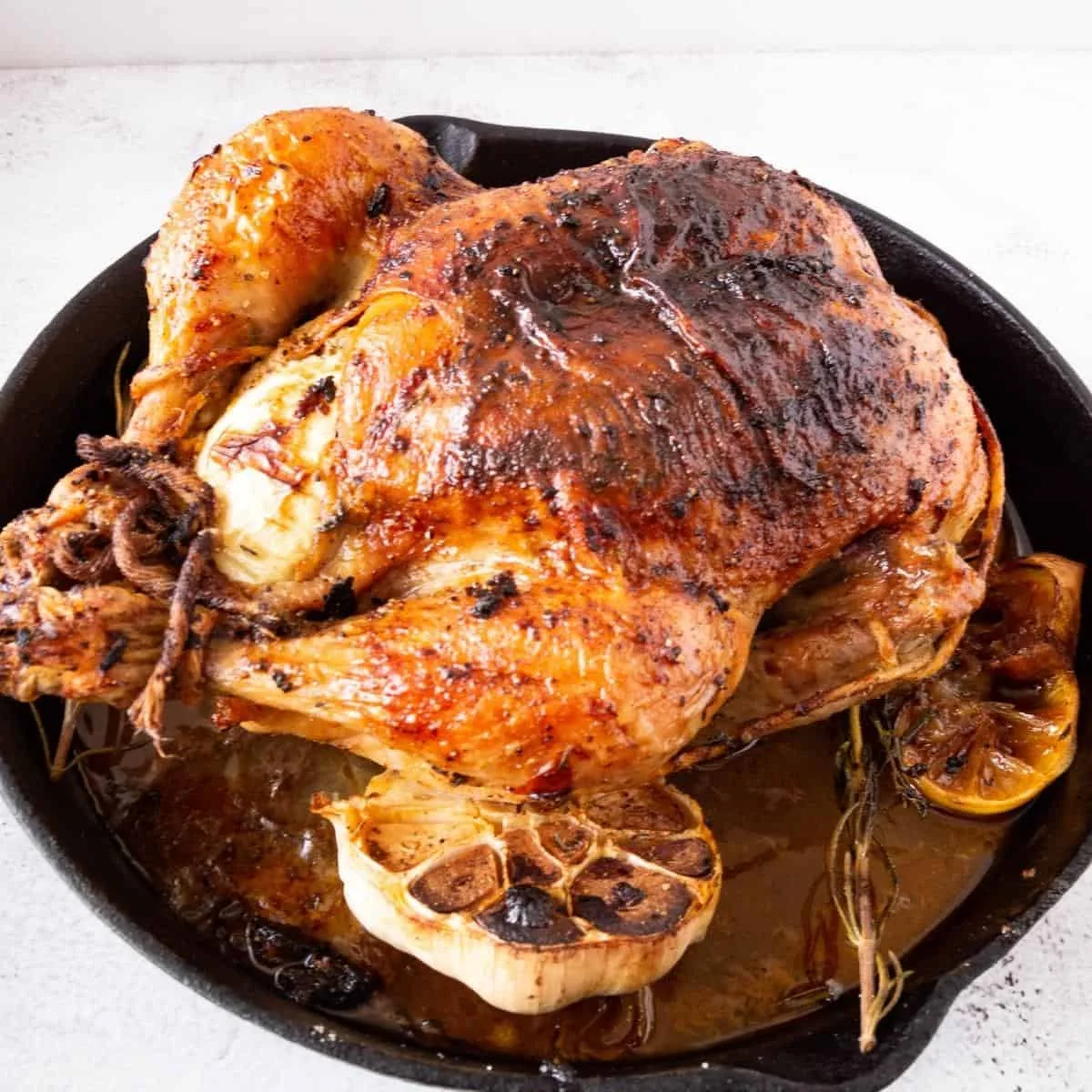
A whole chicken is rubbed with garlic butter, herbs and paprika, then roasted in a hot cast-iron pan over onion, lemon and garlic. It makes a straightforward centrepiece for dinner, with flavourful pan juices and useful leftovers for sandwiches or wraps.
Ingredients
- 1.8–2.3 kg (4–5 lb)whole chicken
- 2.5 ml (½ tsp)salt
- 2.5 ml (½ tsp)pepper
- 2 largeonions, one halved and the other sliced
- 1 largegarlic bulb, halved
- 1 largelemon, halved and sliced
- 3 sprigsrosemary
- 3 sprigsthyme
- 57 g (4 tbsp)butter, softened at room temperature
- 30 ml (2 tbsp)garlic, minced
- 2.5 ml (½ tsp)salt
- 2.5 ml (½ tsp)pepper
- 7.5 ml (½ tbsp)hot paprika
- 7.5 ml (½ tbsp)smoked sweet paprika
- 30 ml (2 tbsp)olive oil
- 15 ml (1 tbsp)rosemary, finely chopped
- 15 ml (1 tbsp)thyme, finely chopped
Instructions
- 1
Preheat the oven
Heat the oven to 190°C (375°F; Gas mark 5). Put a cast-iron skillet or roasting pan in the oven to heat.
- 2
Prepare the chicken
Rinse the chicken under cold water and pat it thoroughly dry with paper towels. Carefully loosen the skin without tearing it, then rub half of the garlic butter mixture beneath the skin and over the meat. Spread the rest over the outside of the chicken.
- 3
Mix the garlic butter
In a small bowl, combine the softened butter and minced garlic with the olive oil, hot and smoked sweet paprika, salt, pepper, chopped rosemary and chopped thyme.
- 4
Stuff the cavity
Fill the chicken cavity with the lemon halves, quartered onion, halved garlic bulb, and whole sprigs of rosemary and thyme.
- 5
Prepare the pan
Arrange the remaining onion slices, lemon, half a garlic bulb, rosemary and thyme in a cast-iron skillet. Season with salt and pepper.
- 6
Roast the chicken
Carefully take the hot skillet or roasting pan out of the oven and set the chicken in it, breast side up. Roast at 190°C (375°F) for about 1½–2 hours, until the thickest part of the thigh reaches 74°C (165°F). Baste with the pan juices every 30 minutes.
- 7
Rest the chicken
Take the chicken out of the oven and leave it to rest in the skillet for 15 minutes before carving.
- 8
Carve and serve
Carve the chicken and serve it hot with the roasted onion, garlic and lemon from the cavity. Spoon over the pan juices.
What is cast-iron roast chicken?
Roast chicken is a familiar American-style dinner: a whole bird cooked until the skin is browned and the meat is tender. This version uses a cast-iron pan, which is heated before the chicken goes in.
Garlic butter, paprika and herbs season the bird, while onion, lemon and garlic roast alongside it. The method gives you a simple centrepiece and savoury pan juices to serve at the table.
Nutrition and macros by portion
The nutrition label shows one serving as written: 452 calories, 28g protein, 8g carbs, 34g fat.
| Portion | Adjustment | kcal | Protein | Carbs | Fat |
|---|---|---|---|---|---|
| Lighter | Less butter, skin removed | 316 kcal | 20g | 6g | 24g |
| This serving | As written | 452 kcal | 28g | 8g | 34g |
| Hungry | Larger chicken portion | 678 kcal | 42g | 12g | 51g |
The chicken provides most of the protein, while the butter and olive oil contribute much of the fat. Carbohydrate comes mainly from the onion, garlic and lemon; serve the chicken with vegetables, and add a modest portion of potatoes if you want a more substantial plate.
The garlic butter and herbs
Butter: Softened butter is easier to mix with the garlic, oil, spices and chopped herbs. Rubbing some under the skin puts the seasoning close to the meat; spreading the rest over the skin flavours the outside.
Paprika: Hot paprika brings heat, while smoked sweet paprika adds a smoky note. Chopped rosemary and thyme carry their flavour through the butter as the chicken roasts.
Getting the chicken ready
Dry skin: Pat the chicken thoroughly dry after rinsing, as directed in the method. Take care when loosening the skin so it stays intact and can hold the butter mixture.
Cavity aromatics: The lemon, onion, garlic and whole herb sprigs go inside the bird. Keep the cavity loosely filled rather than packing it tightly, so the ingredients fit without forcing them in.
Roasting in cast iron
Hot pan: Preheating the cast-iron skillet or roasting pan is part of this recipe's method. Use oven gloves when moving it, and lower the chicken into the pan carefully.
Basting: Spoon the pan juices over the chicken every 30 minutes as it roasts. The recipe allows about 1½–2 hours, but the stated doneness check is a reading of 74°C (165°F) in the thickest part of the thigh.
How to tell when it is done
Temperature: Check the thickest part of the thigh with a meat thermometer, taking care not to touch bone. The recipe's target is 74°C (165°F).
Resting: Leave the cooked chicken in the skillet for 15 minutes before carving. This gives the juices time to settle and makes carving easier.
What to serve with it
Potatoes: Mashed potatoes or roast potatoes make a hearty accompaniment and pair well with the pan juices.
Vegetables: Add a side of vegetables for a more complete plate. Spoon some of the roasted onion and juices alongside the carved chicken.
Making the most of leftovers
Sandwiches and wraps: Remove leftover meat from the bones and use it in sandwiches or wraps, as suggested for this recipe. Keep the meat chilled between meals.
Pan juices: Save any remaining juices separately and spoon them over the chicken when serving leftovers, if desired.
Recipe notes & tips
- Dry the chicken thoroughly before adding the garlic butter.
- Loosen the skin gently so it does not tear when you rub butter underneath.
- Have oven gloves ready before handling the preheated cast-iron pan.
- Baste the chicken with the pan juices every 30 minutes, as directed.
- Check the thickest part of the thigh with a thermometer rather than relying on colour alone.
- Rest the chicken for 15 minutes before carving.
Variations
- Milder paprika: Replace the hot paprika with more smoked sweet paprika for less heat.
- Herb balance: Adjust the rosemary and thyme to suit your preferred flavour.
- Citrus emphasis: Add extra lemon slices to the pan for a more pronounced lemon note.
- Vegetable side: Serve with seasonal vegetables alongside the chicken and potatoes.
- Leftover wraps: Slice or shred cooked chicken for wraps with your preferred fillings.
Common mistakes to avoid
- Damp skin: Pat the chicken dry before seasoning so the surface is not wet.
- Torn skin: Lift it gently and avoid pulling it away from the meat.
- Crowded cavity: Fit the aromatics inside without forcing them into the chicken.
- Guessing doneness: Check for 74°C (165°F) in the thickest part of the thigh.
- Skipping the rest: Leave the chicken in the skillet for 15 minutes before carving.
- Handling hot iron bare-handed: Use oven gloves when taking the skillet out of the oven.
How to store
Refrigerate leftover chicken in a covered container within 2 hours of cooking and use within 3–4 days. Reheat until piping hot throughout, or use chilled in sandwiches and wraps.
Frequently asked questions
How long does this chicken take to roast?
The recipe gives about 1½–2 hours at 190°C (375°F). Check that the thickest part of the thigh reaches 74°C (165°F), as cooking time can vary with the bird's size and oven.
Can I use a roasting pan instead of cast iron?
Yes. The method allows either a cast-iron skillet or a roasting pan, and says to preheat it in the oven.
Do I need to baste the chicken?
The method calls for basting every 30 minutes with the pan juices. Use care when opening the oven and handling the hot pan.
Why does the recipe put butter under the skin?
The method spreads half the garlic butter under the skin, directly onto the meat, and the rest over the chicken's surface. This distributes the seasoned butter across both areas.
How long should the chicken rest?
Rest it in the skillet for 15 minutes before carving, as directed.
What can I do with leftover roast chicken?
Use the meat in sandwiches or wraps, or serve it with leftover vegetables and potatoes. Keep leftovers refrigerated between meals.
Cook it from the original
This recipe comes from veenaazmanov.com. Their page has the author’s own photos, notes and tips — the best place to cook it from.
Open the recipe on veenaazmanov.com