
La Mouna, Oran brioche
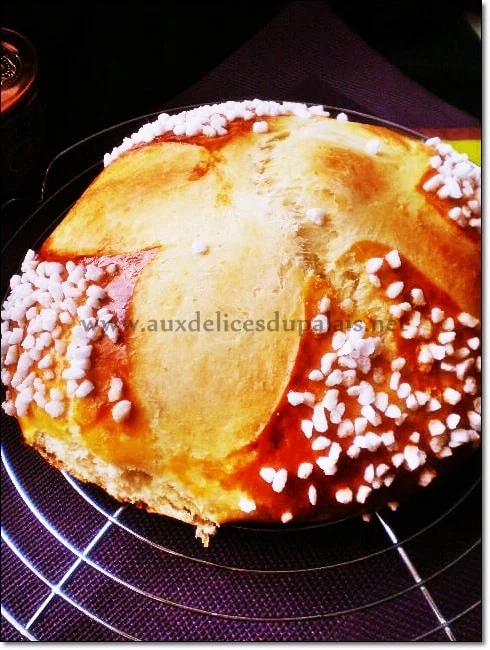
La Mouna is a lightly sweet, citrus-scented Algerian brioche associated with Oran. Anise, orange and lemon give the dough its distinctive aroma, while a slow chill helps make this a good loaf to prepare ahead.
Ingredients
- 500 gplain flour
- 20 gfresh baker’s yeast
- ½ teaspoonsalt
- 3eggs
- 125 gmelted butter
- 1lemon zest
- 1orange zest
- Juice of ½orange
- 1 teaspoonanise seeds
- 100 gsugar
- To tastepearl sugar
- 1egg yolk, for glazing
- As neededwater, for infusing the anise
Instructions
- 1
Infuse the anise
Put the anise seeds in a bowl, cover with boiling water and leave the infusion to cool until lukewarm.
- 2
Make the starter
Put 125 g of the flour in a bowl and crumble the yeast over it. Gradually mix in enough of the lukewarm anise water to make a slightly sticky dough. Cover and leave to rise until doubled in size.
- 3
Combine ingredients
Put the remaining flour in another bowl or in a stand mixer. Make a well in the centre, then add the sugar, salt, lemon and orange zest, orange juice, melted butter, 3 eggs and the starter.
- 4
Knead the dough
Mix by hand or with a mixer, then knead for about 10 minutes. The dough may seem very sticky at first; keep kneading until it gradually comes together.
- 5
Chill the dough
Return the dough to a bowl, cover with cling film and refrigerate for 6 hours or overnight.
- 6
Deflate the dough
Take the dough out of the fridge and knead it for about 1 minute to knock out the air.
- 7
Shape and prove
Divide the dough into 2 equal pieces and shape them into balls. Set them on a baking tray lined with baking paper, cover with a clean tea towel and leave to rise for 1 hour in a temperate place.
- 8
Heat the oven
Preheat the oven to 180°C.
- 9
Glaze and score
Beat the egg yolk with a splash of water and brush it over both dough balls. Cut a cross in each with a sharp knife or scissors.
- 10
Bake the brioche
Sprinkle with pearl sugar and bake for 20–30 minutes, depending on your oven.
- 11
Cool and serve
Transfer the baked brioches to a wire rack to cool, then serve.
What is La Mouna?
La Mouna, also called Mona, is a sweet brioche from Oran in Algeria. It is often linked to Spanish settlers and compared with Spain’s Mona de Pascua.
This version gets its fragrance from anise, citrus zest and orange juice. A long rest in the fridge makes it convenient to prepare the dough ahead of baking.
Nutrition and macros by portion
The nutrition label shows one serving as written: 355 calories, 0g protein, 0g carbs, 0g fat.
| Portion | Adjustment | kcal | Protein | Carbs | Fat |
|---|---|---|---|---|---|
| Lighter | Smaller brioche portion | 248 kcal | 0g | 0g | 0g |
| This serving | As written | 355 kcal | 0g | 0g | 0g |
| Hungry | Larger brioche portion | 533 kcal | 0g | 0g | 0g |
The flour and sugar are the main sources of carbohydrate, while butter and eggs contribute much of the fat. Eggs and flour also provide some protein; serve a portion with yoghurt or another protein-rich accompaniment and fruit for a more balanced plate.
The anise starter
Anise infusion: The seeds steep in boiling water before some of that liquid is mixed with flour and fresh yeast. Add the liquid gradually, since the recipe does not specify a precise volume and the starter should be slightly sticky.
Rising: Let the starter double before adding it to the rest of the dough. This visible change is a more useful cue than a fixed rising time.
Building the dough
Citrus: Lemon zest, orange zest and orange juice bring freshness to the rich dough. Finely grate the zest so it disperses evenly.
Butter and eggs: These enrich the brioche and contribute to its tender texture. Add them with the starter and the remaining ingredients as directed.
Kneading and chilling
Sticky dough: It may feel unusually wet at the beginning, but the method relies on continued kneading rather than adding extra flour. Knead for about 10 minutes, until it starts to come together.
Cold rest: Cover the bowl well and refrigerate the dough for 6 hours or overnight. This is a substantial part of the method, so the stated 50-minute total time does not include the full resting period.
Shaping and proving
Equal portions: Divide the dough into 2 pieces and shape each into a ball for two individual brioches. Tuck the dough neatly underneath as you shape to make smooth tops.
Final rise: Cover the shaped dough and leave it for 1 hour in a temperate place. It should look puffier before it goes into the oven.
Scoring and baking
Cross cuts: Brush the loaves with the egg-yolk glaze mixed with a splash of water, then score a cross in each one. Use a sharp knife or scissors, as specified in the method.
Colour and doneness: Bake at 180°C for 20–30 minutes, allowing for differences between ovens. Check towards the shorter end of the range and continue baking if the loaves need more colour.
Serving ideas
On its own: The citrus and anise make each brioche fragrant enough to enjoy plain, warm or cooled.
With a drink: Serve a slice with tea or coffee, or add fresh fruit to make a simple breakfast or afternoon snack.
Recipe notes & tips
- Use lukewarm, not hot, anise water when mixing the starter.
- Add the infusion gradually because its exact volume is not given.
- Resist adding flour as soon as the dough feels sticky; knead for the full 10 minutes first.
- Plan for the 6-hour or overnight chill in addition to the stated 50-minute total time.
- Use a clean tea towel to cover the shaped loaves during their 1-hour rise.
- Begin checking the loaves after 20 minutes, since oven performance varies.
Variations
- More anise: Increase the anise seeds slightly for a more pronounced spice aroma.
- Citrus balance: Use extra lemon zest in place of some orange zest for a sharper flavour.
- Plain topping: Leave off the pearl sugar for a less crunchy finish.
- Fruit pairing: Serve with fresh orange segments for a bright accompaniment.
- Smaller buns: Divide the dough into more pieces and keep an eye on them, as smaller shapes may bake sooner.
Common mistakes to avoid
- Adding too much infusion: The starter should be only slightly sticky, so pour the anise water in gradually.
- Adding flour too soon: The dough is expected to be sticky at first; knead it for about 10 minutes before judging its texture.
- Skipping the chill: Refrigerate for 6 hours or overnight as directed, rather than treating the 50-minute total time as the full preparation time.
- Rushing the final rise: Give the shaped loaves the full 1-hour prove in a temperate place.
- Scoring too deeply: Cut a cross in the surface without slicing far down into the dough.
- Overbaking: Check from 20 minutes and remove the loaves when baked, rather than automatically leaving them for the full 30 minutes.
How to store
Once completely cool, store the brioche in an airtight container at room temperature and enjoy within 2–3 days. Refresh slices briefly in a warm oven before serving.
Frequently asked questions
Can I leave the dough in the fridge overnight?
Yes. The method gives 6 hours or overnight as the chilling options, so an overnight rest is suitable.
How much water should I use for the anise infusion?
The recipe does not specify a quantity. Add the cooled infusion to the starter gradually, stopping when you have a slightly sticky dough.
Why is the dough so sticky?
It is expected to feel sticky at first. The method says to knead for about 10 minutes, as the dough should come together gradually.
Can I make one large brioche instead of two?
The recipe is written for two equal balls. A larger loaf would need a different baking time, which the method does not provide.
How do I know when the brioches are baked?
Bake at 180°C for 20–30 minutes, adjusting for your oven. Check their colour from 20 minutes and continue only as needed.
Why does the recipe say 50 minutes if the dough rests for so long?
The method also includes a 6-hour or overnight chill, plus rising time. The stated 50 minutes does not account for all of that elapsed time.
Cook it from the original
This recipe comes from auxdelicesdupalais.net. Their page has the author’s own photos, notes and tips — the best place to cook it from.
Open the recipe on auxdelicesdupalais.net