
Lemon-Parmesan Asparagus
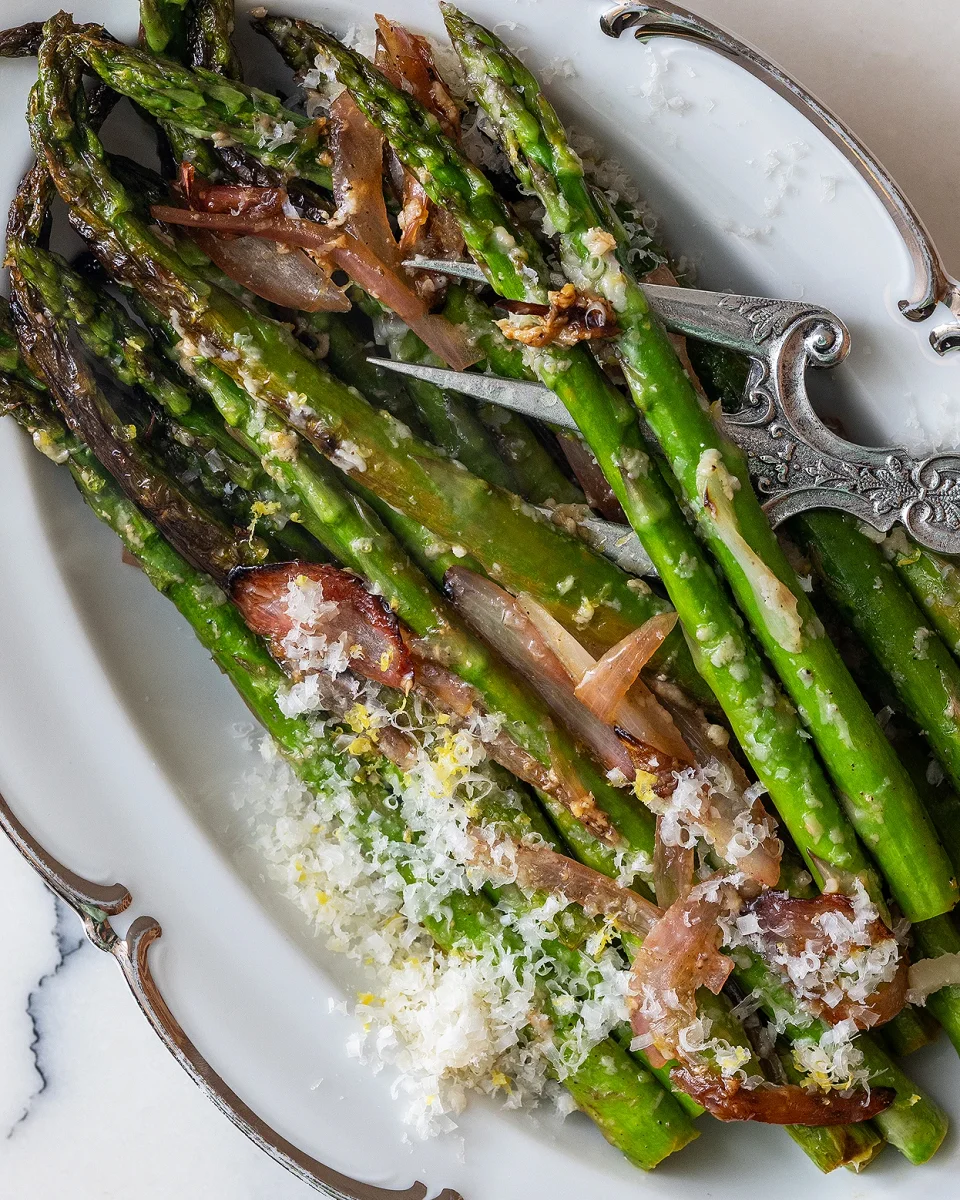
A quick spring side of seared asparagus finished with lemon, shallot and grated Parmigiano-Reggiano. Its bright, savoury flavour pairs easily with grilled chicken, roasted fish, pasta or risotto.
Ingredients
- 15 ml (1 tablespoon), plus more if neededextra-virgin olive oil
- 454 g (1 pound)fresh asparagus, woody ends trimmed
- 1shallot, peeled and thinly sliced lengthways
- 1lemon, juiced and zested
- 21 g (3/4 ounce)Parmigiano-Reggiano, freshly grated
- 3.75 ml (3/4 teaspoon), more or less to tastekosher salt
- to tasteblack pepper
Instructions
- 1
Sear the asparagus
Heat 15 ml olive oil in a wide skillet over medium-high heat until hot. Add the asparagus in an even layer, leaving as little overlap as possible, and cook without moving it for 2 minutes.
- 2
Add the shallot
Scatter the shallot over the asparagus and cook for 3 to 4 minutes, until the asparagus begins to char underneath. Season with 3/4 teaspoon kosher salt and black pepper to taste.
- 3
Add lemon juice
Turn the asparagus with a spatula. Pour in the lemon juice to deglaze the skillet, turning the asparagus quickly to coat it. Cook for another 2 to 3 minutes, turning occasionally, until the asparagus and shallot are tender; the timing depends on the thickness of the asparagus.
- 4
Mix the topping
In a small bowl, combine the grated Parmigiano-Reggiano and lemon zest. Add half of the mixture to the asparagus and toss gently to coat, then turn off the heat.
- 5
Serve the asparagus
Transfer the asparagus to a serving platter and scatter the remaining cheese and lemon zest mixture over the top.
What is lemon-Parmesan asparagus?
It is a simple vegetable side in which asparagus is cooked in a hot pan and finished with lemon and hard cheese. The combination draws on familiar Mediterranean ingredients, though this version is defined by its quick skillet method rather than a specific regional tradition.
A hot pan gives the spears some char, while lemon juice, zest and Parmigiano-Reggiano bring sharpness and savoury depth. It is ready in about 20 minutes and suits both everyday meals and a spring table.
Nutrition and macros by portion
The nutrition label shows one serving as written: 80 calories, 5g protein, 7g carbs, 5g fat.
| Portion | Adjustment | kcal | Protein | Carbs | Fat |
|---|---|---|---|---|---|
| Lighter | Use less olive oil | 56 kcal | 4g | 5g | 4g |
| This serving | As written | 80 kcal | 5g | 7g | 5g |
| Hungry | Serve a larger portion | 120 kcal | 8g | 11g | 8g |
The asparagus and shallot provide most of the carbohydrates and fibre, while the olive oil and Parmigiano-Reggiano contribute most of the fat. The cheese also supplies some protein, alongside a smaller amount from the vegetables. Pair a serving with a protein-rich main and a grain or potatoes for a more complete plate.
Choosing the asparagus
Fresh spears: Choose asparagus that feels firm, with compact tips. Trim away the woody ends so the stalks cook evenly and are pleasant to eat.
Thickness: Thin spears will become tender sooner than thick ones. Keep an eye on them during the final cooking stage and use tenderness, not just the clock, as your guide.
Get a good sear
Pan space: A wide skillet lets the asparagus sit in a mostly single layer. If the spears overlap heavily, they can steam instead of developing char.
Hands off: Leaving the asparagus undisturbed for the first 2 minutes helps it brown. Add the shallot after that initial sear so it cooks alongside the spears without taking over the pan.
Finish with lemon and cheese
Lemon juice: Adding it to the hot skillet loosens the browned bits and quickly coats the asparagus. Turn the spears promptly so the juice is distributed rather than pooling in one place.
Cheese and zest: Mixing the zest with the grated cheese makes a fragrant topping. Adding half while the pan is still warm helps it cling; the rest stays fresh and visible on the platter.
Check for doneness
Tender stalks: The asparagus should be tender when pierced but still hold its shape. The shallot should soften as the asparagus finishes cooking.
Variable timing: The stated 2 to 3 minutes after adding lemon is a guide, since thicker spears need longer than thin ones. Taste a spear near the end and cook briefly longer if needed.
What to serve it with
Main dishes: Serve it alongside grilled chicken or roasted fish, or put it next to pasta or risotto. Its lemony flavour works especially well with dishes that are rich or mild.
At the table: Bring the asparagus to the table soon after cooking so the spears stay warm and the cheese topping retains its fresh, aromatic character.
Recipe notes & tips
- Pat the asparagus dry after washing so it sears rather than steams.
- Use the widest skillet you have to keep the spears in a mostly even layer.
- Trim the ends before cooking and keep the spears whole for easier turning.
- Grate the Parmigiano-Reggiano finely so it coats the asparagus more evenly.
- Taste before serving and adjust the salt, since the cheese is also savoury.
Variations
- Add chilli: Sprinkle in a pinch of chilli flakes for gentle heat.
- Use another hard cheese: Replace the Parmigiano-Reggiano with finely grated Pecorino for a sharper finish.
- Add herbs: Scatter chopped parsley over the platter just before serving.
- Make it dairy-free: Leave out the cheese and finish with extra lemon zest and black pepper.
- Add toasted nuts: Scatter toasted almonds over the finished asparagus for crunch.
Common mistakes to avoid
- Crowded skillet: The spears may steam instead of charring; cook in batches if they do not fit in a mostly even layer.
- Moving too soon: The asparagus needs the first 2 minutes undisturbed to brown; wait before turning it.
- Overcooking: Thin spears can soften quickly; check tenderness during the final 2 to 3 minutes.
- Adding cheese too early: It can lose its fresh finish in the hot pan; add it only after the asparagus is coated with lemon.
- Skipping the trim: Woody ends stay tough; remove them before cooking.
How to store
Refrigerate leftovers in an airtight container for up to 3 days. Reheat briefly in a skillet over medium heat until warmed through; the asparagus will be softer than when freshly cooked.
Frequently asked questions
Can I use thick asparagus spears?
Yes. They may need longer than the stated cooking time, so check that the stalks are tender before taking the pan off the heat.
Can I make this ahead?
It is best served soon after cooking, when the asparagus is warm and the topping is fresh. You can trim the asparagus and prepare the shallot and lemon ahead of time.
How do I stop the asparagus from steaming?
Use a wide, hot skillet and arrange the spears with as little overlap as possible. If needed, cook them in batches.
Can I use pre-grated Parmesan?
Yes, though freshly grated Parmigiano-Reggiano generally has a fresher flavour and coats the asparagus well. Use the same amount.
Can I use frozen asparagus?
Fresh asparagus is best for this quick searing method. Frozen spears can release extra moisture and may not char as readily.
Cook it from the original
This recipe comes from triedandtruerecipe.com. Their page has the author’s own photos, notes and tips — the best place to cook it from.
Open the recipe on triedandtruerecipe.com