
Homemade Chicken Stock
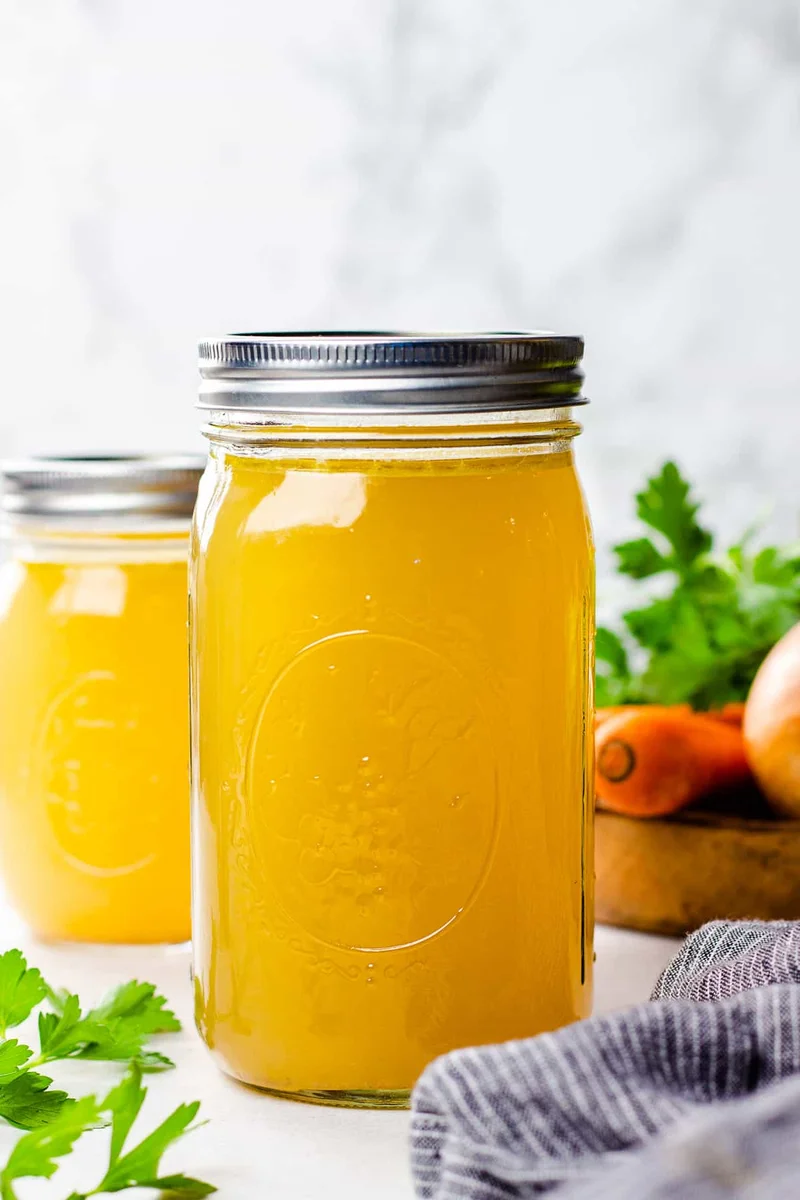
This homemade chicken stock simmers leftover chicken bones with vegetables and herbs to make a savoury base for soups, risotto and stews. It is a practical way to use a chicken carcass and keep stock on hand for other meals.
Ingredients
- 1chicken carcass
- 1 largeonion, unpeeled and cut into quarters
- 3 largecarrots, unpeeled and cut in half
- 2celery ribs, cut in half
- 1 bunchparsley
- 5–10 sprigsfresh thyme
- 3bay leaves
- 5–10whole black peppercorns
- 1–2 tablespoonssalt
- 2.4–2.8 L (10–12 cups)water
Instructions
- 1
Add the carcass
Place the chicken carcass in a large pot.
- 2
Add vegetables and herbs
Add the onion, carrots, celery, parsley, thyme, bay leaves and whole black peppercorns.
- 3
Cover with water
Pour in about 2.4–2.8 L (10–12 cups) of water, covering the ingredients.
- 4
Simmer the stock
Bring the pot to a boil, then lower the heat, cover with a lid and simmer for 2–4 hours.
- 5
Season the stock
About 30 minutes before the stock is done, add salt to taste.
- 6
Strain the liquid
When the stock is ready, remove the large bones and vegetables. Strain the remaining liquid through a fine-mesh strainer into a bowl.
- 7
Cool and refrigerate
Leave the stock to cool, then transfer it to mason jars or airtight containers and refrigerate.
What is chicken stock?
Chicken stock is a savoury liquid made by simmering bones with vegetables and herbs. It is a familiar staple in American home cooking, used as a foundation for soups, stews, sauces and grains.
This version makes use of a chicken carcass and keeps the vegetable and herb preparation simple. A long, gentle simmer draws flavour from the ingredients without requiring complicated steps.
Nutrition and macros by portion
The nutrition label shows one serving as written: 223 calories, 18g protein, 4g carbs, 14g fat.
| Portion | Adjustment | kcal | Protein | Carbs | Fat |
|---|---|---|---|---|---|
| Lighter | Use less added salt | 156 kcal | 13g | 3g | 10g |
| This serving | As written | 223 kcal | 18g | 4g | 14g |
| Hungry | Serve with cooked grains | 335 kcal | 27g | 6g | 21g |
The listed nutrition per serving is 223 kcal, with 18 g protein, 4 g carbohydrates and 14 g fat. The chicken carcass contributes most of the protein and fat, while the vegetables contribute a small amount of carbohydrate; serve the stock in soup with extra vegetables or grains if you want a more substantial meal.
Choosing the ingredients
Chicken carcass: leftover bones give the stock its chicken flavour. Add any attached meat as part of the carcass; the recipe does not call for separate chicken pieces.
Vegetables and herbs: the onion, carrots, celery, parsley, thyme and bay leaves build a rounded savoury flavour. Leaving the onion and carrots unpeeled keeps preparation straightforward.
Pepper and salt: whole peppercorns infuse the liquid as it simmers. Salt is added near the end, so you can taste the stock before deciding how much to use.
Why a gentle simmer matters
Once the pot reaches a boil, reduce the heat and keep it at a low simmer. A covered pot helps the liquid simmer steadily over the recipe's 2–4 hours.
Avoid letting the stock boil vigorously. Gentle heat helps keep the cooking controlled while the bones, vegetables and herbs release their flavour.
Seasoning and straining
Salt timing: wait until about 30 minutes before the stock is finished, then season to taste. This gives you a chance to judge the flavour of the liquid before adding salt.
Straining: remove the large bones and vegetables, then pour the liquid through a fine-mesh strainer into a bowl. Take care with the hot pot and liquid while handling and straining.
How to use the finished stock
Use the stock as a base for soups and stews, or cook risotto with it for a savoury, chicken-forward flavour. It can also stand in for broth in other recipes that call for a liquid cooking base.
If serving it as a soup, add cooked vegetables, grains or shredded chicken separately. The recipe itself strains out the vegetables and bones rather than serving them in the stock.
Cooling and storing
Let the stock cool before transferring it to mason jars or airtight containers, as directed. Refrigerate it once packed, and use clean containers to help keep it fresh.
The recipe does not specify a storage duration or freezing instructions, so follow the usual safe-storage guidance for homemade stock and discard it if its appearance or smell seems off.
Recipe notes & tips
- Use a pot large enough to hold the carcass, vegetables and 2.4–2.8 L of water.
- Keep the onion and carrots unpeeled as specified, but rinse away any visible dirt before adding them.
- Keep the heat low after bringing the pot to a boil, and check occasionally that it remains at a gentle simmer.
- Taste the stock before adding salt, then season it about 30 minutes before it is done.
- Pour the stock through a fine-mesh strainer to catch small pieces of herbs and peppercorns.
- Cool the stock before transferring it to airtight containers for refrigeration.
Variations
- More herbs: Adjust the amount of thyme within the recipe's 5–10 sprig range to suit your preference.
- Peppery stock: Use up to 10 whole black peppercorns for a more noticeable pepper flavour.
- Milder seasoning: Start with less salt and taste before adding more near the end of cooking.
- Soup base: Add cooked vegetables or grains when using the strained stock in a soup.
- Risotto base: Use the stock in place of water or broth when making risotto.
Common mistakes to avoid
- Hard boiling: A vigorous boil can make the cooking difficult to control; lower the heat after the pot reaches a boil.
- Salting too early: The recipe seasons near the end; wait until about 30 minutes before the stock is done and taste first.
- Skipping the strainer: Small herb and pepper pieces can remain in the liquid; strain it through a fine mesh.
- Rushing the simmer: The recipe allows 2–4 hours; give the stock time to simmer rather than stopping early.
- Packing it hot: Let the stock cool before transferring it to jars or airtight containers.
How to store
Cool the stock, transfer it to mason jars or airtight containers, and refrigerate. The recipe does not give a specific storage time, so follow safe-storage guidance for homemade stock.
Frequently asked questions
How long should the stock simmer?
Simmer it, covered and on low heat, for 2–4 hours after bringing it to a boil.
Do I need to peel the onion and carrots?
No. The recipe uses an unpeeled onion and unpeeled carrots; cut them as directed and rinse away visible dirt.
When should I add the salt?
Add salt to taste about 30 minutes before the stock is done. The ingredient list gives 1–2 tablespoons, but you can adjust to your taste.
Can I use this stock for risotto?
Yes. The stock is suitable as a cooking liquid for risotto, as well as for soups and stews.
Why strain the stock?
Straining removes the cooked vegetables, bones and small herb or pepper pieces, leaving a clearer liquid.
Can I freeze the stock?
Freezing instructions are not included in this recipe. If you choose to freeze it, use a suitable freezer-safe container and leave room for expansion.
Cook it from the original
This recipe comes from veronikaskitchen.com. Their page has the author’s own photos, notes and tips — the best place to cook it from.
Open the recipe on veronikaskitchen.com