
Fried Eggplant Recipe with Vegetables
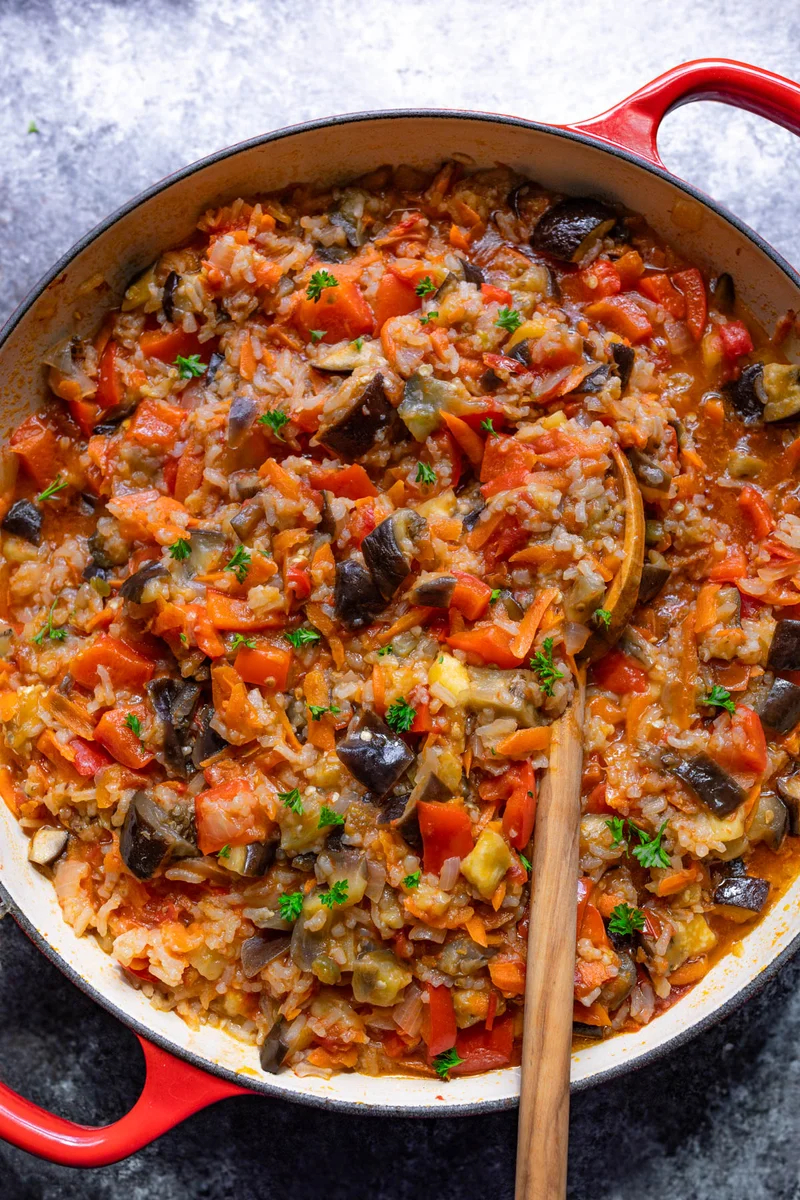
This Ukrainian one-pan dish combines chunky aubergine and vegetables in a savoury, lightly sweet tomato mixture, with rice to make it more substantial. It is a handy way to use up garden produce and can be served warm or chilled.
Ingredients
- 680 g (1½ lb)aubergines, cut into chunks
- 680 g (1½ lb)tomatoes, diced
- 1onion, diced
- 1 clovegarlic, crushed
- 2 largered peppers, cut into chunks
- 2carrots, grated
- 22.5 ml (1½ tbsp)distilled white vinegar
- 22.5 ml (1½ tbsp)salt
- 19 g (1½ tbsp)granulated sugar
- 80 ml (⅓ cup)olive oil
- 160 ml (⅔ cup)uncooked white rice, such as jasmine or short-grain
- 2jalapeño peppers, diced
Instructions
- 1
Chop the vegetables
Cut the aubergines into bite-sized chunks. Dice the tomatoes, red peppers and onion, crush the garlic, and grate the carrots.
- 2
Rinse the rice
Wash and rinse the uncooked rice.
- 3
Cook the mixture
Heat a large, deep frying pan over a medium heat. Add the olive oil and all the remaining ingredients: aubergines, tomatoes, onion, garlic, red peppers, carrots, seasonings, jalapeños and uncooked rice. Cook, stirring often, until the vegetables release liquid and the mixture bubbles, about 8 minutes.
- 4
Simmer and serve
Cover the pan and turn the heat to low. Simmer for 30 minutes, stirring occasionally. Serve warm from the pan, or cool and refrigerate to serve as a salad.
What is Ukrainian eggplant caviar?
Baklazanna ikra, often translated as aubergine caviar, is a Ukrainian vegetable dish; the description also likens this version to vegetable stew. The name refers to a cooked aubergine mixture, not fish roe.
Here the aubergine is kept in chunks and cooked with tomatoes, peppers, carrots and rice. The rice makes this one-pan version heartier than a simple vegetable salad.
Nutrition and macros by portion
The nutrition label shows one serving as written: 206 calories, 3g protein, 28g carbs, 10g fat.
| Portion | Adjustment | kcal | Protein | Carbs | Fat |
|---|---|---|---|---|---|
| Lighter | Use less olive oil | 144 kcal | 2g | 20g | 7g |
| This serving | As written | 206 kcal | 3g | 28g | 10g |
| Hungry | Serve a larger portion | 309 kcal | 5g | 42g | 15g |
The rice and vegetables contribute most of the carbohydrates, while olive oil provides most of the fat. Protein is modest and comes mainly from the rice and vegetables; serve it with a protein-rich side such as beans or yoghurt if you want a more balanced plate.
Why cook the rice with the vegetables?
Rice: Rinsing it first removes loose surface starch. It then simmers in the vegetables’ released liquid, so the dish cooks together in one pan.
The vegetable base
Tomatoes: As they heat, they soften and release liquid that helps braise the other ingredients. The recipe uses diced tomatoes rather than a separate sauce.
Aubergine and peppers: Chunky pieces give the finished dish its substantial texture. Grated carrots soften into the mixture, while onion and garlic add savoury depth.
Getting the simmer right
Initial cooking: Stir the ingredients often over a medium heat for about 8 minutes, until the vegetables release liquid and the mixture starts bubbling.
Covered cooking: Lower the heat before covering the pan and simmering for 30 minutes. Stir occasionally to help the rice and vegetables cook evenly.
How to judge doneness
The vegetables should be soft but still recognisable as chunks, and the rice should be tender after the covered simmer. If the mixture catches on the base, stir it and make sure the heat is low.
How to serve it
Serve the dish warm as a filling vegetable main or side. For a cooler option, let it cool and refrigerate it before serving as a salad.
A fresh, crisp salad makes a simple accompaniment. You can also serve it alongside bread if you would like something to scoop up the juices.
Recipe notes & tips
- Cut the aubergine and peppers into similarly sized chunks so they cook at a similar pace.
- Rinse the rice before adding it to the pan, as directed.
- Use a wide, deep pan with a lid so the vegetables have room to cook.
- Stir frequently during the first 8 minutes, then only occasionally while the mixture simmers.
- Keep the heat low during the covered simmer to reduce the chance of the rice catching.
Variations
- Milder version: Omit the jalapeños if you prefer less heat.
- More heat: Keep the jalapeño seeds in when dicing the peppers.
- Herb finish: Add chopped fresh herbs when serving for a fresh flavour.
- Different rice: Use short-grain white rice instead of jasmine rice, as suggested in the recipe.
- Serve chilled: Cool the cooked mixture and refrigerate it for a salad-style serving.
Common mistakes to avoid
- Skipping the rice rinse: Rinse it before cooking as instructed.
- High heat during simmering: Turn the heat to low before covering the pan so the mixture cooks gently.
- Not stirring at the start: Stir often during the first 8 minutes as the vegetables release liquid.
- Cooking uncovered: Keep the lid on during the 30-minute simmer to braise the mixture.
- Expecting a smooth purée: Leave the vegetables chunky, as this recipe is intended to have texture.
How to store
Cool the dish and refrigerate it in a covered container; the recipe specifically recommends chilling it for serving as a salad. Reheat portions gently in a pan or microwave until hot throughout.
Frequently asked questions
Can I serve this dish cold?
Yes. The recipe suggests cooling and refrigerating it to serve as a salad.
Can I use jasmine rice?
Yes. Jasmine rice is listed as an option, alongside short-grain white rice.
How spicy is it?
The recipe includes two diced jalapeños, so it will have some heat. Omit them or use fewer for a milder dish.
How do I know when it is ready?
After the 30-minute covered simmer, the rice should be tender and the vegetables soft while retaining their shape.
What can I serve with it?
Serve it warm as a vegetable main or side, or chill it for a salad. A crisp salad or bread can accompany it.
Cook it from the original
This recipe comes from alyonascooking.com. Their page has the author’s own photos, notes and tips — the best place to cook it from.
Open the recipe on alyonascooking.com