
Fluffy Turkish Bread - Ramazan Pidesi
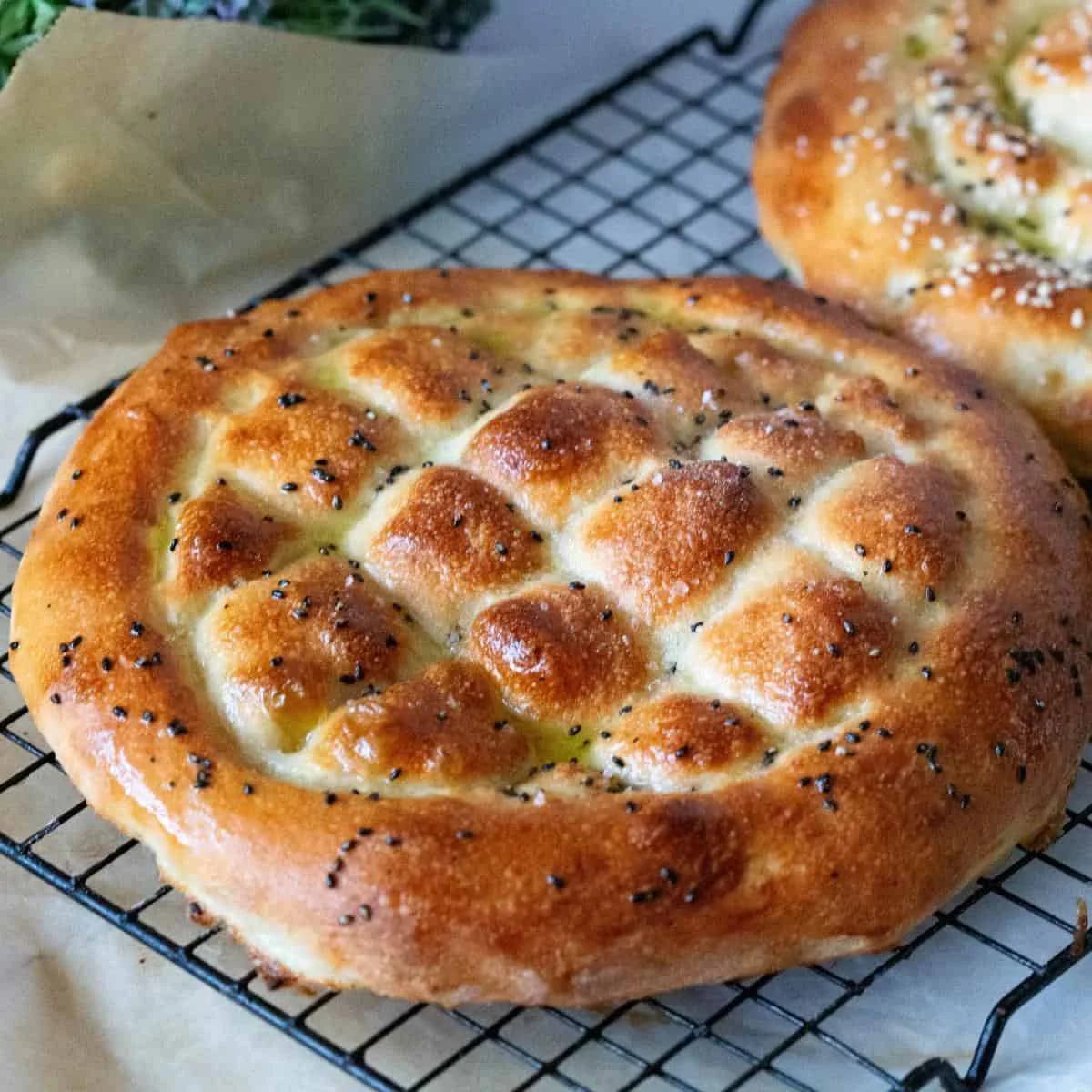
Ramazan pidesi is a soft, fluffy Turkish flatbread with a lightly chewy crust and a dimpled surface. Make it to serve warm alongside a meal, or share it with butter, cheese and olives.
Ingredients
- 240 gwarm water
- 9 ginstant dried yeast
- 15 gsugar or honey
- 60 mlolive oil
- 500 gplain flour
- 6 gsalt
- 60 ml (¼ cup)water
- 1 tbspplain flour
- 1 tbspGreek yoghurt
- ½ mediumegg, beaten
- to tastenigella seeds or sesame seeds, for garnish
Instructions
- 1
Mix the yeast
In a medium bowl, combine the warm water, yeast, sugar or honey and olive oil.
- 2
Make the dough
Mix the flour and salt in a large bowl, then add the yeast mixture and stir until a soft dough forms. Knead on a floured surface for about 10 minutes, until smooth and elastic.
- 3
Let it rise
Put the dough in a greased bowl, cover with a damp cloth and leave it in a warm place for about 1 hour, or until doubled in size.
- 4
Heat the oven
Preheat the oven to 220°C (425°F) and line a baking sheet with parchment paper.
- 5
Shape the dough
Punch down the dough and divide it into two equal portions. Roll each portion into a round or oval about 1.3 cm (½ inch) thick.
- 6
Add the dimples
Press your fingers into the surface of each piece to make indentations all over. Transfer the shaped dough to the prepared baking sheet.
- 7
Brush and garnish
In a small bowl, mix the water, flour, yoghurt and beaten egg. Brush the mixture over each bread, then scatter nigella or sesame seeds on top.
- 8
Bake until golden
Bake for 35–40 minutes, until golden brown and cooked through.
- 9
Cool and serve
Take the bread out of the oven and let it cool slightly. Serve warm, sliced, with butter, cheese, olives or other accompaniments.
What is Ramazan pidesi?
Ramazan pidesi is a Turkish leavened bread traditionally associated with Ramadan. Its characteristic surface is pressed into a dimpled pattern, and it is often finished with nigella or sesame seeds.
This version uses a yeasted dough enriched with olive oil, then coats the shaped loaves with an egg, yoghurt, flour and water mixture before baking. The result is a soft interior beneath a golden crust.
Nutrition and macros by portion
The nutrition label shows one serving as written: 195 calories, 6g protein, 32g carbs, 6g fat.
| Portion | Adjustment | kcal | Protein | Carbs | Fat |
|---|---|---|---|---|---|
| Lighter | Smaller bread portion | 137 kcal | 4g | 22g | 4g |
| This serving | As written | 195 kcal | 6g | 32g | 6g |
| Hungry | Larger bread portion | 293 kcal | 9g | 48g | 9g |
The supplied nutrition per serving is 195 kcal, with 32 g carbohydrate, 6 g fat and 6 g protein. Flour provides most of the carbohydrate, while olive oil and the egg contribute fat; flour, egg and yoghurt contribute protein. Pair a slice with cheese or another protein-rich accompaniment and vegetables for a more balanced plate.
Building a soft dough
Yeast mixture: combine the warm water, yeast, sugar or honey and oil before adding them to the flour. The recipe calls for warm water; avoid using water that feels hot.
Kneading: work the dough for about 10 minutes on a floured surface, as directed, until it feels smooth and elastic. Add flour to the surface for handling rather than making the dough stiff.
Give the dough time
First rise: leave the covered dough in a warm place for about 1 hour, until it has doubled in size. The dough’s growth is the cue to look for, rather than relying on the clock alone.
After rising: punch the dough down, divide it evenly and shape the pieces about 1.3 cm (½ inch) thick. Keeping the portions similar helps them bake at a similar rate.
Make the signature pattern
Dimples: press your fingers over the surface of each shaped loaf to create indentations. This gives the bread its familiar appearance and provides a place for the glaze to settle.
Glaze: brush the water, flour, yoghurt and beaten egg mixture over the loaves before adding the seeds. Coat the surface evenly so the finish is consistent.
Check the bake
Oven: bake at 220°C (425°F) for 35–40 minutes, as specified. The loaves should be golden brown and cooked through before you take them out.
Cooling: let the bread cool slightly after baking, then serve it warm. Cutting it immediately from the oven can make the soft centre harder to slice neatly.
Serving ideas
Traditional accompaniments: serve slices with butter, cheese and olives, as suggested in the recipe. The bread also works alongside a meal or on its own.
For sharing: bring the warm loaves to the table whole and slice them just before serving. The two portions can be divided among the diners as needed.
Recipe notes & tips
- Measure the flour and salt before combining them with the yeast mixture.
- Knead until the dough is smooth and elastic, as the recipe directs.
- Cover the dough with a damp cloth during its rise.
- Divide the dough into two equal pieces for evenly sized loaves.
- Press indentations across the whole surface before applying the glaze.
- Check for a golden-brown finish within the 35–40 minute baking window.
Variations
- Seed choice: use nigella seeds or sesame seeds for the topping.
- Honey option: use honey instead of sugar in the yeast mixture.
- Round shape: roll the portions into rounds rather than ovals.
- Oval shape: shape each portion as an oval instead of a round.
- Table accompaniments: serve with butter, cheese and olives.
Common mistakes to avoid
- Hot water: use warm water for the yeast mixture rather than water that feels hot.
- Short kneading: knead for about 10 minutes, until the dough is smooth and elastic.
- Rushed rise: wait until the dough has doubled in size before shaping.
- Uneven portions: divide the dough equally so both loaves are a similar size.
- Sparse dimples: press indentations over the full surface of each loaf.
- Early removal: bake until the bread is golden brown and cooked through.
How to store
Once completely cool, store the bread in an airtight container at room temperature and use within 2 days. Warm it briefly in the oven before serving.
Frequently asked questions
Can I use sugar instead of honey?
Yes. The ingredient list allows either sugar or honey; use 15 g of whichever you choose.
How do I know the dough has risen enough?
It should have doubled in size. The recipe gives about 1 hour as a guide, but the dough’s size is the cue.
Can I shape the bread as rounds or ovals?
Yes. Roll each of the two portions into either a round or an oval, about 1.3 cm (½ inch) thick.
What seeds go on Ramazan pidesi?
Use nigella seeds or sesame seeds, as listed in the recipe.
How long does the bread bake?
Bake it at 220°C (425°F) for 35–40 minutes, until golden brown and cooked through.
How is Ramazan pidesi usually served?
Serve it warm and sliced. Butter, cheese and olives are suggested accompaniments.
Cook it from the original
This recipe comes from veenaazmanov.com. Their page has the author’s own photos, notes and tips — the best place to cook it from.
Open the recipe on veenaazmanov.com