
Filled doughnuts
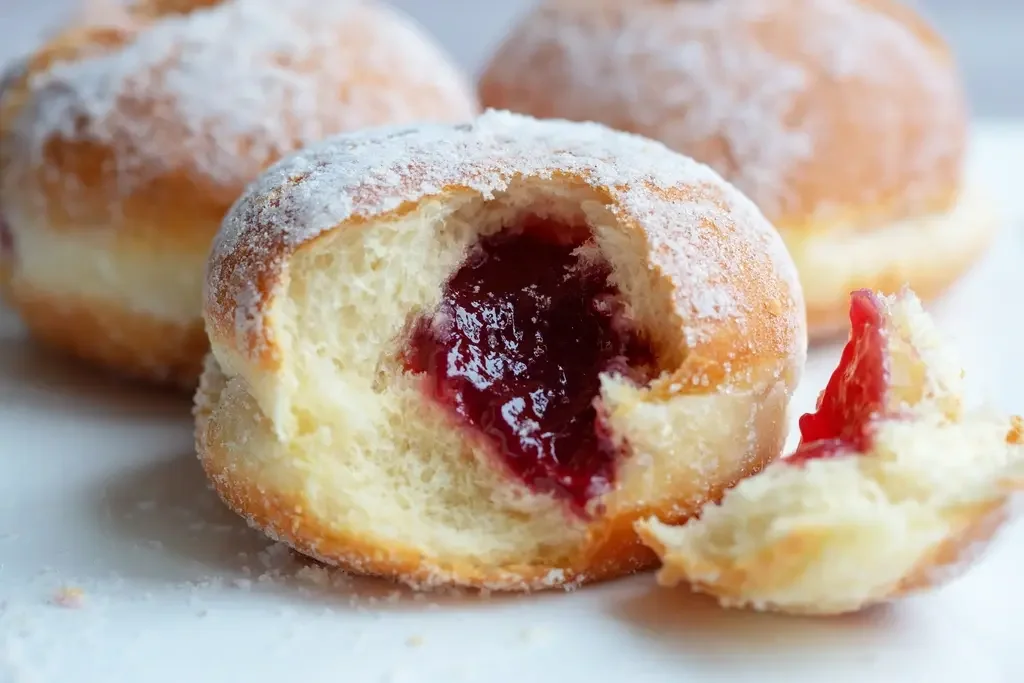
These soft, yeasted doughnuts are filled with raspberry jam and finished with a coating of sugar. They take time to rise, but the method makes a batch of 12 for sharing while still warm.
Ingredients
- 225 mlsemi-skimmed milk
- 7 gyeast
- 250 gsugar
- 500 gplain flour
- 2eggs
- 75 gbutter, at room temperature
- 1 tspsalt
- 200 graspberry jam
- 8 cmround cutter
- 1piping bag
Instructions
- 1
Warm the milk
Heat the milk in a pan until lukewarm, not hot. Take it off the heat and pour it into a bowl.
- 2
Activate the yeast
Add the yeast and 1 tablespoon of the sugar to the milk. Stir briefly and leave for 10 minutes, until the mixture starts to foam.
- 3
Mix the dough
Combine the flour and salt in a large bowl, then beat the eggs. Add the beaten eggs, the sugar and the foaming yeast mixture to the flour, and mix to make a smooth dough.
- 4
Work in butter
Add the butter a little at a time, mixing well after each addition until it is fully incorporated. Knead the dough for at least 10 minutes, until elastic.
- 5
Let dough rise
Cover the bowl with a clean tea towel or cling film. Leave the dough in a warm place until doubled in volume, about 1 hour.
- 6
Cut the doughnuts
Knead the dough briefly, then roll it out to about 2 cm thick. Cut out rounds with the cutter; bring the scraps together, roll them out again and cut more doughnuts.
- 7
Rise again
Arrange the doughnuts on a baking tray lined with baking paper. Cover and leave them to rise for another 30 minutes.
- 8
Heat the oil
Heat the frying oil to 180°C. Prepare a dish of granulated sugar for coating.
- 9
Fry and coat
Fry the doughnuts in batches for about 5 minutes per batch, turning halfway so both sides become golden brown. Drain on kitchen paper, then immediately roll the warm doughnuts in the sugar.
- 10
Fill with jam
Put the raspberry jam in a piping bag fitted with a fine nozzle. Use a sharp knife to make a small hole in the side of each doughnut, reaching towards the centre, then carefully pipe in a little jam.
What are filled doughnuts?
Filled doughnuts are yeasted rounds of dough that are fried and filled after cooking. They are found in many forms across Europe, with fillings and names varying by region.
This version uses raspberry jam and a sugar coating. The two rises help create a soft interior, while filling the doughnuts after frying keeps the jam centred.
Nutrition and macros by portion
The nutrition label shows one serving as written: 410 calories, 6g protein, 69g carbs, 12g fat.
| Portion | Adjustment | kcal | Protein | Carbs | Fat |
|---|---|---|---|---|---|
| Lighter | Smaller doughnut portions | 287 kcal | 4g | 48g | 8g |
| This serving | As written | 410 kcal | 6g | 69g | 12g |
| Hungry | Larger doughnut portion | 615 kcal | 9g | 104g | 18g |
Flour and sugar provide most of the carbohydrates, while butter and absorbed frying oil contribute much of the fat; eggs and milk add some protein. Pair a doughnut with fresh fruit or plain yoghurt for a more balanced plate.
The dough ingredients
Milk and yeast: lukewarm milk helps the yeast start working; if it is too hot, it can hinder the rise. The brief rest should leave the mixture beginning to foam.
Butter and eggs: these enrich the dough and contribute to its tender texture. Add the butter gradually so it blends in rather than leaving greasy patches.
Kneading and rising
Kneading: work the dough for at least 10 minutes, as directed, until it feels elastic. A well-developed dough should stretch more readily than a rough, freshly mixed one.
First rise: give the dough a warm, draught-free place and wait until it has doubled in volume, about 1 hour. The second rise is shorter, at 30 minutes, after shaping.
Shaping the rounds
Rolling: aim for an even thickness of about 2 cm so the doughnuts cook consistently. Press the 8 cm cutter straight down rather than twisting it, which can help keep the edges neat.
Scraps: gather and reroll the leftover dough to make more rounds. Handle it gently and avoid adding extra flour unless the dough is sticking.
Frying and filling
Frying: bring the oil to 180°C and cook in batches for about 5 minutes, turning halfway. Keep an eye on the colour and avoid crowding the pan, which can make the oil temperature drop.
Filling: let excess oil drain, then coat the doughnuts in sugar while they are still warm. Make a small side opening and pipe in jam carefully; stop when you feel the doughnut fill rather than forcing it.
Serving ideas
Serve the doughnuts fresh, when the sugar coating is crisp and the centres are soft. They pair well with coffee or tea.
For a dessert spread, offer them alongside fresh berries or plain yoghurt. Those additions provide a fresh contrast to the sweet filling.
Recipe notes & tips
- Use a thermometer to check that the frying oil has reached 180°C.
- Fry a few doughnuts at a time so they have room to move in the oil.
- Keep the dough covered whenever it is resting to prevent a dry surface.
- Drain each batch briefly before rolling the doughnuts in sugar.
- Use a fine piping nozzle to fill the doughnuts through a small side opening.
Variations
- Change the jam: use another thick fruit jam in place of raspberry.
- Citrus note: add finely grated lemon zest to the dough for a fragrant edge.
- Spiced sugar: mix a little ground cinnamon into the coating sugar.
- Smoother filling: stir the jam until loose enough to pipe before filling the bag.
- Unfilled batch: leave some doughnuts without jam and serve them with jam on the side.
Common mistakes to avoid
- Milk too hot: let it cool until lukewarm before adding the yeast.
- Under-kneading: continue for at least 10 minutes, until the dough feels elastic.
- Rushed rising: wait for the dough to double in volume before shaping.
- Oil too cool: bring it to 180°C before frying so the doughnuts cook as intended.
- Overfilling: pipe in a little jam at a time to avoid splitting the doughnut.
How to store
These doughnuts are best eaten fresh on the day they are made. Keep any leftovers in an airtight container at room temperature for up to 1 day; warm briefly in a low oven before serving, though the sugar coating may soften.
Frequently asked questions
Can I prepare the dough ahead?
The recipe specifies a warm rise of about 1 hour followed by a 30-minute rise after shaping. For best results, follow those timings and fry the doughnuts close to serving.
How can I tell when the oil is ready?
Use a cooking thermometer and wait until the oil reaches 180°C. Keep checking between batches so the temperature stays close to that point.
Why are my doughnuts not golden evenly?
Turn them halfway through frying, as the method directs, and leave enough room for them to move. Frying in batches also helps the oil hold its temperature.
Can I use seedless raspberry jam?
Yes. A smooth jam can be easier to pipe through a fine nozzle; loosen or stir it first if it feels too firm.
Can I bake these instead of frying them?
This method is written for deep-frying at 180°C, so baking would produce a different texture. The recipe does not give oven instructions.
Cook it from the original
This recipe comes from 24kitchen.nl. Their page has the author’s own photos, notes and tips — the best place to cook it from.
Open the recipe on 24kitchen.nl