
Meat Sauce and Spaghetti
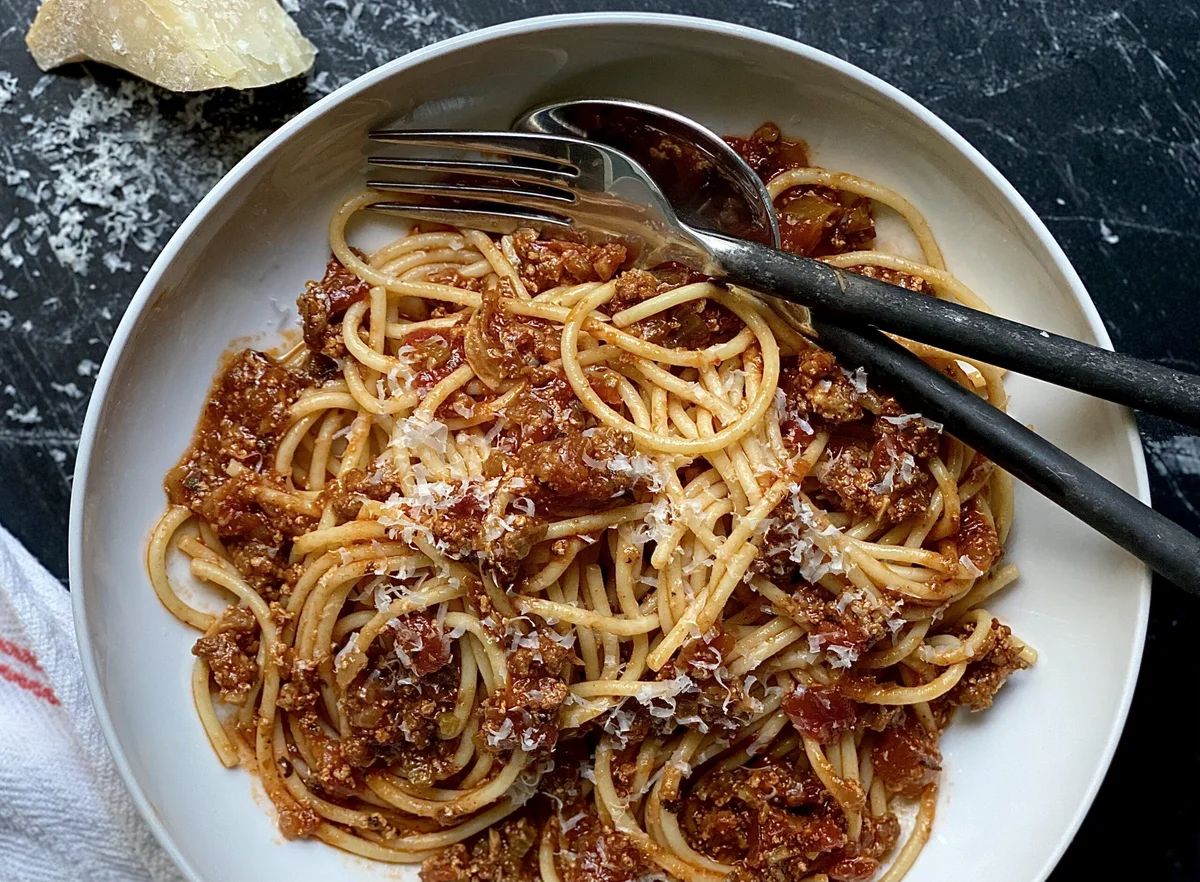
This slow-cooked meat sauce combines beef, pork and bacon with a separately simmered tomato mixture, then finishes by cooking the spaghetti directly in the sauce. It takes time, but the layered process builds a rich, savoury dinner for a crowd.
Ingredients
- 170 g (6 oz)thick-sliced bacon, cut into 2.5 cm pieces
- 2 largeonions, finely chopped
- 1 1/2 teaspoonskosher salt
- 1/2 teaspoonfreshly ground black pepper
- 3whole cloves
- 1whole star anise pod
- 3 stalkscelery, finely chopped
- 5 cloves (3 minced and 2 sliced)garlic
- 3 tablespoons, dividedolive oil
- 227 g (8 oz)coarsely ground beef chuck
- 227 g (8 oz)coarsely ground pork butt
- 300 ml (1 1/4 cups), dividedwhite wine
- 180 ml (3/4 cup)evaporated milk
- 710 ml (3 cups)beef broth
- 28 g (1 oz)dried porcini mushrooms, finely chopped
- 2 cans (794 g / 28 oz each)diced tomatoes
- 1 tablespoondried oregano
- 2 teaspoonsdried basil
- 2 teaspoonsdried marjoram
- 2 tablespoonstomato paste
- 1 tablespoonketchup
- 1 tablespoonsherry vinegar
- 1 teaspoonWorcestershire sauce
- 3.8 litres (1 gallon)water
- 2 tablespoonskosher salt
- 227 g (8 oz)dry spaghetti
- 30 g (1/3 cup)finely grated Parmesan
Instructions
- 1
Cook the aromatics
For the meat sauce, set an 8-quart Dutch oven over low heat and add the bacon. Cook gently for 25 to 30 minutes, until crisp and its fat has rendered, then remove the bacon for another use. Add the onion, 1 1/2 teaspoons salt and pepper, and stir. Put the cloves and star anise in a small spice bag, add it to the pot and stir. Cook uncovered over low heat for 45 to 60 minutes, stirring now and then, until the onions caramelise. Add the celery and 3 minced garlic cloves; cook for about 30 minutes, until the celery is partly translucent. Take out the spice bag.
- 2
Brown the meat
Meanwhile, heat 1 tablespoon olive oil in a wide 4-quart sauté pan over high heat. When the oil shimmers, add the beef and pork. Cook for 4 to 5 minutes, stirring often, until well browned, then transfer the meat to a colander to drain. Return the pan to high heat, pour in 120 ml (1/2 cup) wine and scrape up the browned bits. Tip the bits and any remaining wine into the Dutch oven with the meat.
- 3
Simmer the meat
Add another 120 ml (1/2 cup) wine, the evaporated milk, beef broth and mushrooms to the Dutch oven. Stir, cover and cook over low heat for 3 hours, stirring occasionally.
- 4
Prepare the tomatoes
When the meat sauce has cooked for 1 1/2 hours, heat the sauté pan over medium heat and add 1 tablespoon olive oil. Once it shimmers, add the 2 sliced garlic cloves and cook for 30 to 45 seconds, just until fragrant; do not let them brown. Add the tomatoes, oregano, basil and marjoram, and cook for about 30 minutes, until most of the liquid has evaporated. Stir in the remaining 60 ml (1/4 cup) wine, tomato paste, ketchup, vinegar and Worcestershire sauce. Turn the heat to low and simmer for 30 minutes. Raise the heat to medium-high, add the remaining 1 tablespoon olive oil and cook, stirring constantly, for 2 to 3 minutes.
- 5
Combine the sauces
Transfer the tomato mixture to the meat mixture and stir to combine. Simmer uncovered over low heat, stirring occasionally, while you prepare the pasta.
- 6
Boil the spaghetti
Bring the water and 2 tablespoons salt to a boil over high heat. Carefully add the spaghetti and stir quickly to separate the strands. Cover and bring the water back to a boil, watching that it does not boil over. Once boiling, remove the lid and cook for 5 to 6 minutes, until the pasta is slightly less than al dente. Drain in a colander.
- 7
Finish the pasta
Add the drained spaghetti to the meat sauce and cook over low heat for another 2 to 3 minutes, until al dente. Add the Parmesan and toss to combine. Serve in a large bowl or divide among individual bowls.
What is meat sauce and spaghetti?
Meat sauce with pasta has many forms across Italian and Italian-American cooking, from long-simmered ragù to quicker tomato sauces. This version pairs beef and pork with bacon, then brings together a slow-cooked meat base and a separate, herb-seasoned tomato mixture.
The method gives the onions time to caramelise and the meat time to soften before the two sauces meet. Cooking the spaghetti in the finished sauce helps it take on the sauce's flavour.
Nutrition and macros by portion
The nutrition label shows one serving as written: 740 calories, 34g protein, 75g carbs, 34g fat.
| Portion | Adjustment | kcal | Protein | Carbs | Fat |
|---|---|---|---|---|---|
| Lighter | Use less spaghetti | 518 kcal | 24g | 53g | 24g |
| This serving | As written | 740 kcal | 34g | 75g | 34g |
| Hungry | Add extra spaghetti | 1110 kcal | 51g | 113g | 51g |
The spaghetti and tomatoes supply most of the carbohydrates, while the beef, pork and Parmesan contribute protein. Fat comes mainly from the bacon, meat and olive oil; serve with a green salad or vegetables for a more balanced plate.
Build the savoury base
Bacon fat: letting the bacon render slowly provides the cooking fat for the onions and contributes a savoury foundation. The recipe removes the crisp bacon afterwards, so it is not added back to the sauce.
Spice bag: cloves and star anise steep in the onion mixture, then come out before the long simmer. This makes their flavour easier to control and keeps the whole spices out of the finished dish.
Brown the meat well
Beef and pork: the two meats give the sauce a fuller flavour than either one alone. Brown them in a wide pan so they have room to colour rather than steam.
Pan fond: wine loosens the browned bits left behind after the meat cooks. Scrape the pan thoroughly and tip those savoury bits into the Dutch oven along with the meat.
Give the onions time
Low heat: the onions need 45 to 60 minutes to soften and caramelise, followed by about 30 minutes for the celery to become partly translucent. Keep the heat gentle and stir occasionally to prevent sticking or scorching.
Long simmer: the meat mixture cooks for 3 hours, with the tomato mixture added after the first 1 1/2 hours. Start this dish well ahead of serving and allow for the stages to overlap as described.
Cook the tomato mixture separately
Garlic: cook the sliced cloves only until fragrant, about 30 to 45 seconds. Browning them can make their flavour harsh, so add the tomatoes as soon as the garlic smells aromatic.
Reduce first: cooking the tomatoes until most of their liquid has evaporated concentrates the mixture before the wine, paste and seasonings go in. The final 2 to 3 minutes over medium-high heat, with constant stirring, brings the tomato mixture together.
Finish the spaghetti in the sauce
Slightly undercook: drain the spaghetti after 5 to 6 minutes, while it is still short of al dente. It continues cooking for 2 to 3 minutes in the sauce, so draining it too late can leave it soft.
Serving: toss in the Parmesan at the end so it coats the pasta and sauce. Serve straight away, while the spaghetti is hot and the sauce clings to it.
What to serve alongside
A crisp green salad or simply dressed leaves add freshness alongside the rich, slow-cooked sauce. Warm bread is another option for scooping up any sauce left in the bowl.
Because the pasta and sauce are substantial, keep any sides simple. Extra grated Parmesan can be offered at the table.
Recipe notes & tips
- Use a wide pan for browning the meat so it colours instead of steaming.
- Keep the onions over low heat and stir them occasionally during their long cook.
- Scrape all the browned bits from the sauté pan when deglazing with wine.
- Watch the sliced garlic closely; remove it from the heat before it takes on colour.
- Drain the spaghetti while it is still firmer than you want to serve it.
- Keep the pasta water from boiling over when you cover the pan to bring it back to a boil.
Variations
- Add chilli: stir a pinch of chilli flakes into the tomato mixture with the dried herbs.
- Use fresh herbs: finish the sauce with chopped parsley or basil just before serving.
- Try another pasta: use a similarly sized pasta shape and cook it until just under al dente before finishing it in the sauce.
- Add vegetables: serve the sauce with a side of sautéed greens for a fresher plate.
- Make it cheesier: pass extra grated Parmesan at the table.
Common mistakes to avoid
- Rushing the onions: they need 45 to 60 minutes over low heat; keep the heat gentle and give them time to caramelise.
- Crowding the meat: it can steam rather than brown; use the wide pan and cook in batches if needed.
- Browning the garlic: it can taste harsh; cook it only until fragrant, for 30 to 45 seconds.
- Over-reducing the sauce: keep it at a low simmer and stir occasionally so it does not catch on the bottom.
- Cooking the pasta fully before saucing: it will soften further in the sauce; drain it slightly under al dente.
- Boiling over the pasta water: keep an eye on the covered pan and uncover it as soon as the water returns to a boil.
How to store
Refrigerate leftover sauce and pasta in an airtight container for up to 3 days. Reheat gently in a pan or microwave until piping hot, adding a splash of water if the sauce has thickened; pasta stored separately reheats best with a little water.
Frequently asked questions
Can I make the meat sauce ahead?
Yes. Make the sauce in advance, cool it and refrigerate it in a covered container, then reheat gently before cooking the spaghetti. Cook and combine the pasta close to serving so it does not become soft.
Why are the meat and tomato mixtures cooked separately?
Each mixture gets its own cooking time: the meat base simmers for several hours, while the tomatoes are reduced with garlic, herbs and seasonings. They are combined once both have developed their flavour.
Can I skip the star anise or cloves?
They are part of the recipe's aromatic base, but you can leave out either one if you prefer. Keep them in a spice bag if using them so they are easy to remove.
How do I know when the spaghetti is ready to drain?
After 5 to 6 minutes, it should be slightly less than al dente. It will finish cooking for another 2 to 3 minutes in the sauce.
Can I freeze the sauce?
The meat sauce can be frozen in an airtight, freezer-safe container. For the best pasta texture, freeze the sauce separately and cook fresh spaghetti when serving.
What can I use instead of dried porcini?
You can omit them if you do not have any, though they add an earthy savoury note. The sauce will still cook, but its flavour will be a little different.
Cook it from the original
This recipe comes from altonbrown.com. Their page has the author’s own photos, notes and tips — the best place to cook it from.
Open the recipe on altonbrown.com