
Roast pork
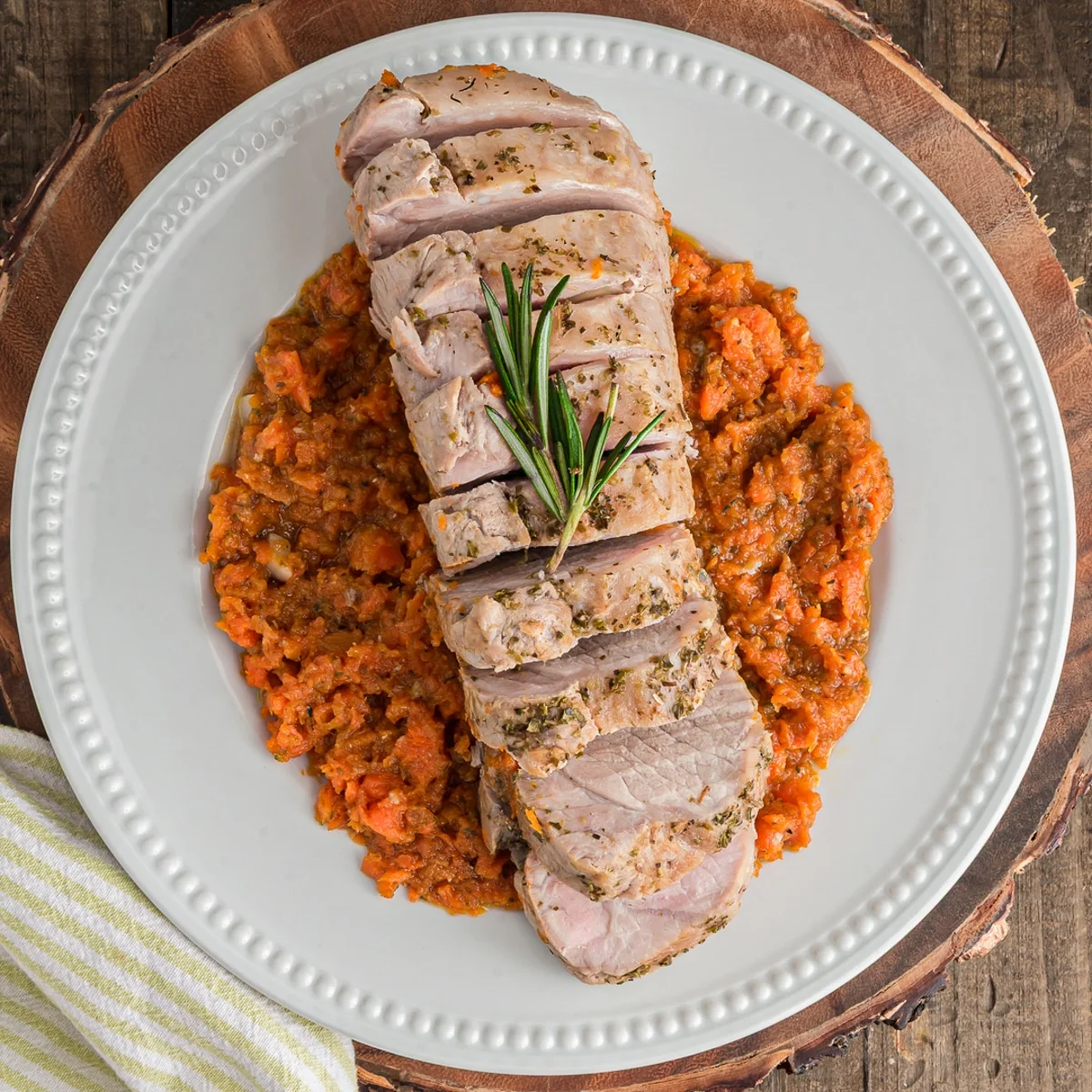
Italian-style roast pork loin is browned with carrots, garlic and herbs, then simmered until tender. It makes a straightforward one-pot family dinner, with the softened carrots mashed into a rustic sauce.
Ingredients
- 907 g (2 lb)pork loin
- 2–3 largecarrots, chopped
- 2 cloves, chopped and dividedgarlic
- 1½ tsporegano
- 1 tspsalt
- 2 sprigsrosemary
- 2 tbspolive oil
- 1 pinchthyme
- 120 ml (½ cup)water
Instructions
- 1
Add the garlic
Use the tip of a sharp knife to make 4–5 slits in total across the top and bottom of the pork. Push a piece of chopped garlic into each slit.
- 2
Brown and season
Heat the olive oil in a large pan and brown the pork on both sides. Add the carrots and remaining garlic, then sprinkle the oregano, thyme, rosemary and salt over the pork and carrots. Pour in the water, bring to the boil and cook for 5 minutes.
- 3
Simmer the pork
Lower the heat, cover the pan and simmer for about 35–45 minutes, or until a thermometer inserted into the meat reads 63°C (145°F).
- 4
Mash the carrots
Remove the roast. Coarsely mash the carrots with a potato masher and taste them, adding salt if needed. Raise the heat and cook until almost all the water has evaporated, or the sauce reaches your preferred thickness.
- 5
Slice and serve
Slice the pork, return it to the pan and heat it thoroughly before serving.
What is Italian roast pork?
Roast pork is a familiar centrepiece in many Italian home-cooking traditions, where herbs, garlic and olive oil provide simple, savoury flavour. This version cooks pork loin on the hob rather than roasting it in the oven.
Carrots simmer alongside the meat and are mashed at the end to make a rustic accompaniment. Browning the pork first builds flavour in the pan before the covered simmer keeps the cooking gentle.
Nutrition and macros by portion
The nutrition label shows one serving as written: 251 calories, 34g protein, 2g carbs, 10g fat.
| Portion | Adjustment | kcal | Protein | Carbs | Fat |
|---|---|---|---|---|---|
| Lighter | Less oil, extra carrots | 176 kcal | 24g | 1g | 7g |
| This serving | As written | 251 kcal | 34g | 2g | 10g |
| Hungry | Larger pork portion | 377 kcal | 51g | 3g | 15g |
Pork loin provides most of the protein, while the carrots contribute most of the carbohydrates; olive oil supplies most of the fat. Serve it with a generous green vegetable, or add a modest portion of potatoes if you want a more filling plate.
Choosing the pork
Pork loin: This relatively lean cut suits a short covered simmer, but it can dry out if cooked for too long. Check it with a thermometer near the end of the stated cooking time.
Garlic: Some chopped garlic is tucked into slits in the meat, while the remainder seasons the carrots and cooking liquid. Cut the pieces small enough to fit into the slits.
Getting a good brown
Sear the pork: Let the olive oil heat in the pan before adding the loin, and brown both sides as directed. This step gives the finished dish a deeper savoury flavour.
Add the vegetables: Once the pork is browned, add the carrots and remaining garlic with the herbs and salt. Sprinkle the seasonings over both the meat and vegetables so they flavour the whole pan.
Keeping the pork tender
Gentle simmer: After bringing the water to the boil for 5 minutes, lower the heat and cover the pan. The recipe gives a simmering range of 35–45 minutes, but the meat's temperature is the more useful doneness cue.
Rest and slice: Remove the pork before mashing the carrots and reducing the liquid. Slice it and return it to the pan only when the sauce is ready, then heat it thoroughly.
Making the carrot sauce
Coarse texture: Mash the carrots with a potato masher rather than blending them smooth. The result is a thick, rustic mixture to serve with the pork.
Sauce thickness: Reduce the remaining water over higher heat until almost evaporated, as the method directs, or stop when the mixture has the consistency you prefer. Taste for salt before serving.
Serving the dish
Serve slices of pork with the mashed carrots and pan juices. The herbs and carrots make a simple accompaniment, while boiled potatoes or crusty bread can help make the meal more substantial.
A crisp green vegetable or salad adds freshness alongside the rich, savoury pork.
Recipe notes & tips
- Use a pan large enough to hold the pork and carrots without crowding them.
- Keep some of the chopped garlic aside for the vegetables after stuffing the pork.
- Turn the pork carefully so both sides brown without dislodging the garlic.
- Check the thickest part of the loin with a thermometer as it approaches the end of the simmer.
- Taste the mashed carrots before adding more salt, since the cooking liquid has already been seasoned.
Variations
- Add onion: Chop an onion and simmer it with the carrots for a sweeter, fuller pan sauce.
- Use fresh herbs: Replace the dried oregano and pinch of thyme with fresh herbs, finely chopped.
- Add lemon: Finish the sliced pork with a little lemon juice for a brighter flavour.
- Make it peppery: Add freshly ground black pepper with the salt and herbs.
- Serve with potatoes: Add boiled or roasted potatoes on the side for a heartier meal.
Common mistakes to avoid
- Skipping the browning: The pork misses a layer of savoury flavour; brown both sides before adding the vegetables.
- Cooking at a hard boil: The meat can become tough; lower the heat and keep the pan covered for the simmer.
- Guessing doneness by time alone: Loin thickness affects cooking; check for 63°C (145°F) with a thermometer.
- Mashing before removing the pork: It is harder to handle the meat; lift it out before working on the carrots.
- Reducing the sauce too far: The carrots can become dry; stop when the liquid is almost gone or the texture suits you.
How to store
Refrigerate leftovers in a covered container within 2 hours and use within 3 days. Reheat the pork and carrots thoroughly in a covered pan with a splash of water if needed.
Frequently asked questions
Can I use a different cut of pork?
Pork loin is the cut specified and cooks relatively quickly. A different cut may need a different cooking time and may not be as lean.
How do I know when the pork is done?
Check the thickest part with a food thermometer; the method specifies 63°C (145°F). The listed 35–45 minutes is an approximate simmering time.
Can I make this without a thermometer?
A thermometer is the clearest way to check doneness. If you do not have one, follow the cooking range and cut into the thickest part to check that it is cooked through.
Why are the carrots mashed?
Mashing them makes a coarse, rustic accompaniment and thickens the pan mixture after the liquid is reduced.
Can I prepare the dish ahead?
You can cook it ahead and refrigerate the pork and carrots together. Reheat them thoroughly in a covered pan, adding a splash of water if the mixture has become too thick.
What should I serve with roast pork?
The mashed carrots are part of the dish; green vegetables, salad, boiled potatoes or crusty bread also work well alongside it.
Cook it from the original
This recipe comes from anitalianinmykitchen.com. Their page has the author’s own photos, notes and tips — the best place to cook it from.
Open the recipe on anitalianinmykitchen.com