
Italian Seafood Pasta Recipe
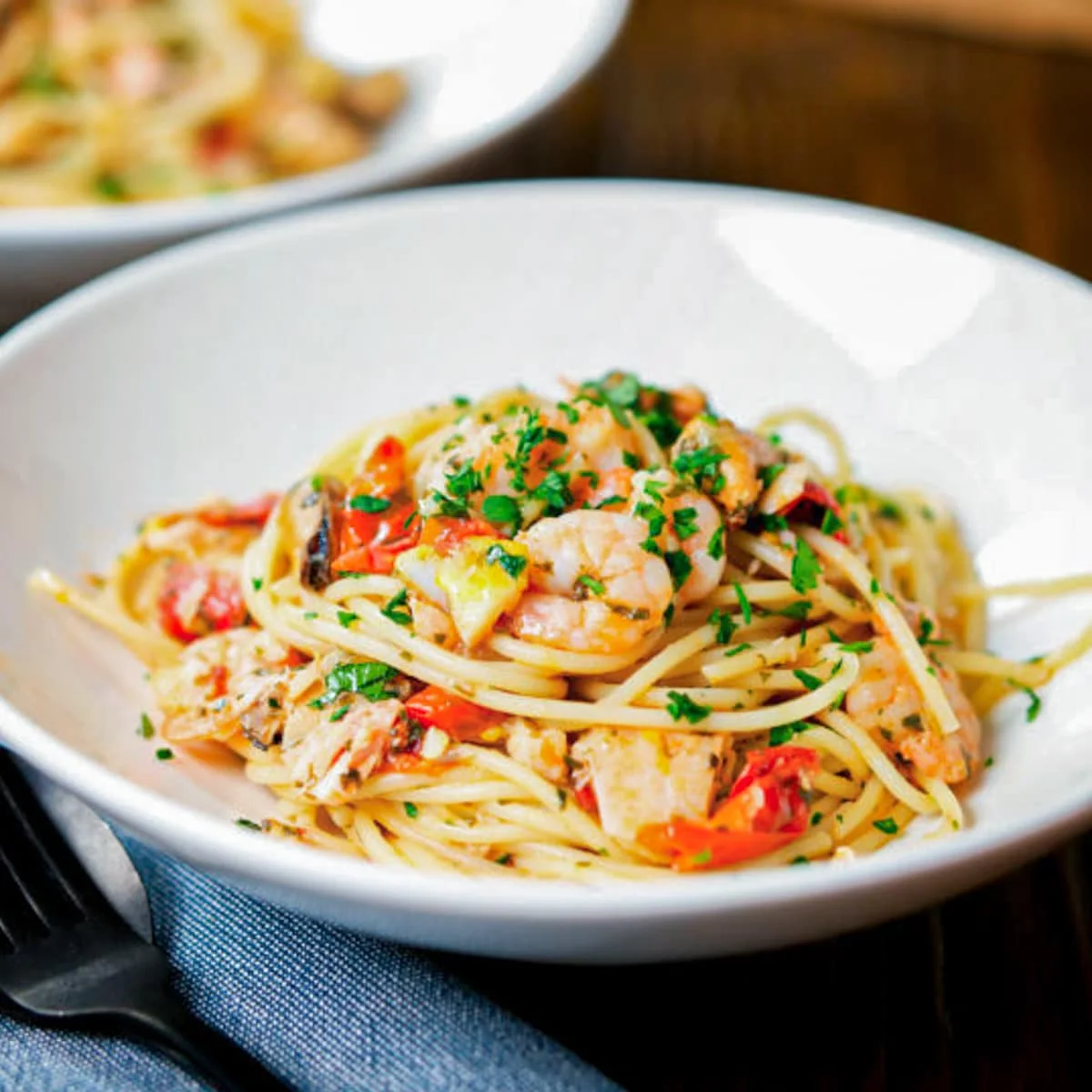
Italian seafood pasta combines pasta and your choice of seafood in a quick sauce of tomatoes, garlic, parsley and olive oil. It is a good choice for a lively weeknight dinner that comes together in about 30 minutes.
Ingredients
- 60 ml (¼ cup)olive oil
- 1–2 clovesgarlic, minced
- 12grape or cherry tomatoes, halved
- 2–4 tablespoonsfresh parsley, chopped
- 1–2 dashes, if desiredhot pepper flakes
- 500 g (1 pound)seafood of choice, such as shrimp, clams, mussels, cut-up halibut or tuna
- 1–2 dashessalt
- 600 g cooked (3 cups cooked; 6–7 oz dry)pasta
Instructions
- 1
Cook the tomatoes
Put the olive oil, garlic, halved tomatoes and chopped parsley in a large pan. Cook over medium heat for about 10 minutes, stirring and pressing the tomatoes often.
- 2
Add the seafood
When the tomatoes begin to blister, add the hot pepper flakes, if using, and the seafood. Cover and cook for about 4 minutes. Uncover, turn up the heat and cook for another 1–2 minutes, tossing often, until the sauce thickens; keep an eye on it so it does not burn.
- 3
Toss with pasta
Add the cooked, drained pasta and 60 ml (¼ cup) pasta water. Toss over high heat for about 1 minute. If it seems too dry, add a little more pasta water; the sauce should look thick and almost creamy. Serve straight away with a sprinkle of freshly chopped parsley.
What is Italian seafood pasta?
Italian seafood pasta brings pasta together with seafood and a simple sauce, here built from tomatoes, garlic, parsley and olive oil. Seafood and pasta are common partners in Italian cooking, with the choice of seafood varying according to what is available.
This version keeps the sauce quick and direct: the tomatoes soften in the pan, then seafood cooks in their juices before pasta water helps everything cling together.
Nutrition and macros by portion
The nutrition label shows one serving as written: 512 calories, 39g protein, 40g carbs, 21g fat.
| Portion | Adjustment | kcal | Protein | Carbs | Fat |
|---|---|---|---|---|---|
| Lighter | Use less olive oil | 358 kcal | 27g | 28g | 15g |
| This serving | As written | 512 kcal | 39g | 40g | 21g |
| Hungry | Add more cooked pasta | 768 kcal | 59g | 60g | 32g |
The pasta supplies most of the carbohydrates, while olive oil contributes much of the fat and the seafood provides protein. Pair a serving with salad or vegetables for a more balanced plate; the supplied nutrition figures are per serving.
Choose the seafood
Seafood mix: shrimp, clams, mussels, halibut or tuna are all listed options, and you can use one type or a combination. Cut larger pieces into manageable portions so they cook evenly.
Build the tomato sauce
Tomatoes: halving them gives them a head start, while pressing them as they cook releases juice and helps form the sauce. Cook for the full 10 minutes over medium heat, stirring regularly.
Garlic and parsley: these go into the pan with the oil and tomatoes, so their flavour has time to infuse the base. Add the pepper flakes only if you want a little heat.
Watch the seafood closely
Covered cooking: the initial 4 minutes under a lid gives the seafood time to cook in the tomato mixture. Seafood varies in size and type, so check its doneness rather than relying on the clock alone.
Thickening: uncover the pan and raise the heat for the final 1–2 minutes, tossing often. Stop once the sauce has thickened, and avoid leaving it unattended because it can catch on the pan.
Use pasta water for texture
Pasta water: add the stated 60 ml (¼ cup) along with the cooked, drained pasta. Toss over high heat for about 1 minute so the sauce coats the pasta.
Final consistency: the sauce should be thick and almost creamy, not dry. Add a little more pasta water if needed, a small amount at a time.
Serve it straight away
This pasta is best served immediately, while the sauce still clings smoothly and the seafood is tender. Finish each serving with freshly chopped parsley.
A simple green salad or cooked vegetables make an easy side, adding freshness without competing with the seafood.
Recipe notes & tips
- Cook and drain the pasta before you start the final tossing step so it is ready to add.
- Keep the pan at medium heat while the tomatoes cook and stir them often.
- Cut larger seafood pieces to a similar size for more even cooking.
- Reserve pasta water before draining the pasta.
- Add extra pasta water gradually so the sauce does not become too thin.
- Serve as soon as the pasta is coated and the seafood is cooked.
Variations
- Extra heat: add the optional pepper flakes to suit your taste.
- Mixed seafood: combine shrimp, mussels and clams for a variety of textures.
- Different pasta: use another pasta shape you have on hand, cooked and drained.
- More herbs: finish with extra freshly chopped parsley.
- Tomato choice: use either grape or cherry tomatoes, as listed.
Common mistakes to avoid
- Rushing the tomatoes: give them about 10 minutes to soften and release their juices.
- Overcooking seafood: check it as it cooks and remove the pan from the heat once it is done.
- Letting the sauce catch: toss often during the final high-heat stage.
- Adding all the pasta water at once: start with 60 ml and add more only if the pasta seems dry.
- Serving late: bring the pasta and sauce together just before serving for the best texture.
How to store
Refrigerate leftovers promptly in a covered container and use within 1–2 days. Reheat gently in a pan with a small splash of water, just until hot, taking care not to overcook the seafood.
Frequently asked questions
Can I use frozen seafood?
Yes. Thaw it safely and drain away excess liquid before adding it to the pan, so the sauce does not become watery.
Can I use a seafood mix?
Yes, a mix works well. If the pieces vary in size, cut larger ones down and check each type for doneness as it cooks.
How do I know when the seafood is cooked?
Check the pieces for the usual signs of doneness for their type and size. The recipe's timing is a guide, since different seafood cooks at different rates.
What if my sauce is too dry?
Toss in a little more pasta water, adding it gradually until the sauce coats the pasta.
Can I make the pasta ahead?
It is best assembled just before serving. You can prepare the pasta in advance, but reheat it briefly with the sauce and a splash of water to help it coat evenly.
Is the hot pepper essential?
No. The recipe makes it optional, so leave it out for a milder sauce.
Cook it from the original
This recipe comes from anitalianinmykitchen.com. Their page has the author’s own photos, notes and tips — the best place to cook it from.
Open the recipe on anitalianinmykitchen.com