
Chinese Postpartum Confinement Porridge
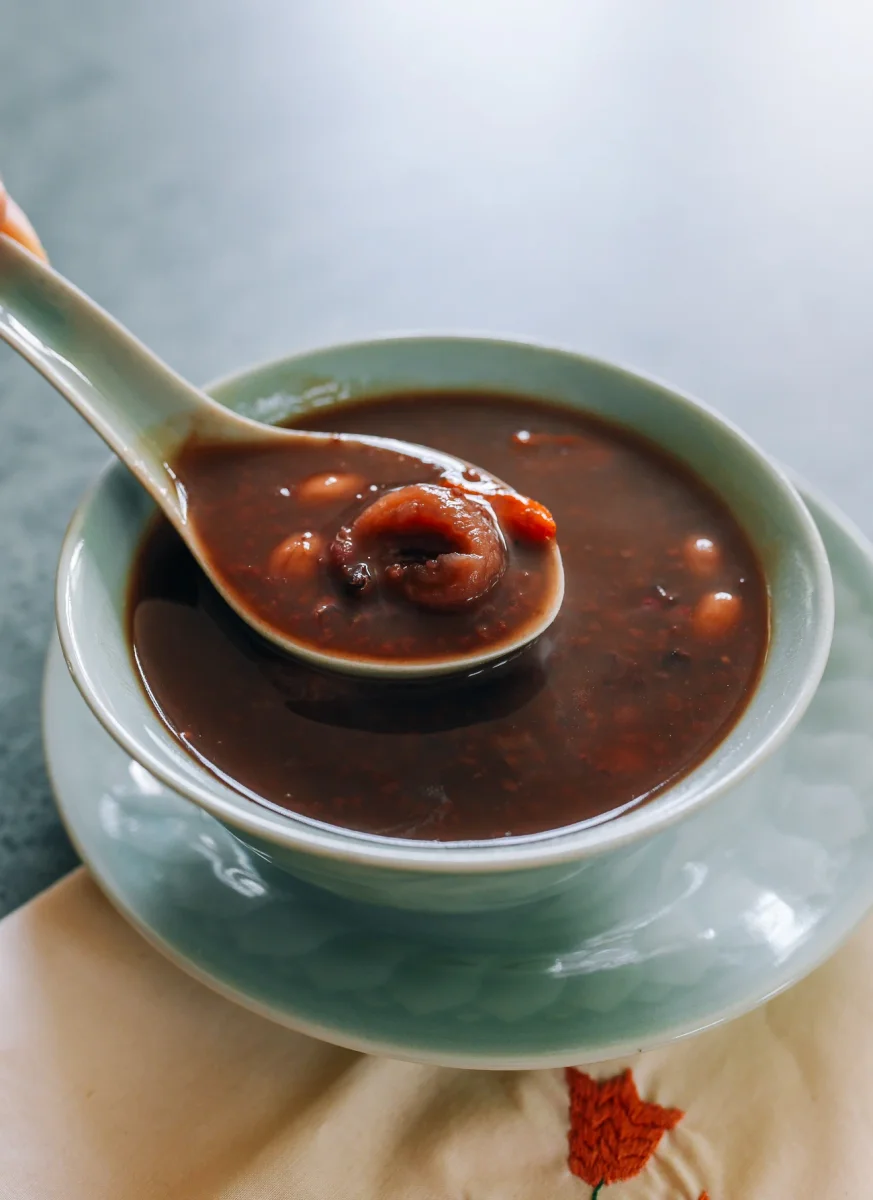
Yuè zi zhōu is a gently simmered Chinese porridge made with grains, beans, dates and other ingredients traditionally eaten during postpartum confinement. This slow-cooked version is easy to adjust to your preferred thickness and sweetness.
Ingredients
- 45 g (¼ cup)millet (小米)
- 50 g (¼ cup)black rice or black glutinous rice (黑米/黑糯米)
- 36 g (¼ cup)raw skin-on peanuts (红衣花生)
- 50 g (¼ cup)red (adzuki) beans (红豆)
- 1.4–1.9 litres (6–8 cups)water, using less for thicker porridge or more for thinner porridge
- 12Chinese red dates (jujubes), pitted
- 8dried longan fruits, optional
- 2 slicesginger
- 2 tablespoonsdried goji berries (枸杞)
- To taste (optional; 2 tablespoons were used)Chinese brown or black sugar (红糖)
Instructions
- 1
Rinse and soak
Rinse the millet, black rice or black glutinous rice, peanuts and red beans to remove any dirt or dust. Put them in a thick-bottomed soup pot with 1.4–1.9 litres (6–8 cups) of water. Soak for 1–2 hours or overnight.
- 2
Prepare the dates
After soaking, open the red dates and remove the pits, using your fingers or cutting around each pit with a paring knife. Add the dates, dried longan if using, and ginger to the pot.
- 3
Simmer the porridge
Bring the porridge to a boil, then cover the pot and turn the heat down low. Simmer for 1 hour. If it threatens to boil over, angle the lid slightly to let steam escape. Keep the heat low enough for a slow simmer, and avoid stirring, as stirring can make the grains stick to the bottom.
- 4
Rest off heat
After 1 hour, turn off the heat and leave the porridge on the stove for another hour so it continues cooking in the residual heat.
- 5
Finish and serve
Add the goji berries and Chinese brown sugar, if using. Bring the porridge to a boil and cook for about 10–15 minutes, until it reaches your preferred thickness. Serve hot.
What is yuè zi zhōu?
Yuè zi zhōu (月子粥) is a Chinese porridge associated with yuè zi, the postpartum confinement period. Recipes vary between households, but commonly combine grains and other pantry ingredients in a soft, slowly cooked dish.
This version brings millet, black rice, peanuts and red beans together with dates, longan, ginger and goji berries. The long simmer softens the grains and beans, while the dates and optional sugar add sweetness.
Nutrition and macros by portion
The nutrition label shows one serving as written: 86 calories, 3g protein, 13g carbs, 3g fat.
| Portion | Adjustment | kcal | Protein | Carbs | Fat |
|---|---|---|---|---|---|
| Lighter | Use less sugar | 60 kcal | 2g | 9g | 2g |
| This serving | As written | 86 kcal | 3g | 13g | 3g |
| Hungry | Serve a larger bowl | 129 kcal | 5g | 20g | 5g |
The millet, black rice and red beans provide most of the carbohydrates, while the peanuts contribute much of the fat and some protein. The supplied nutrition figures are 86 kcal, 3 g protein, 13 g carbohydrates and 3 g fat per serving. For a more balanced plate, pair a serving with vegetables and a protein-rich savoury dish.
Choose the grains and beans
Millet: Rinse it with the other dry ingredients to wash away dust before soaking. It cooks into the porridge and helps give it a soft, cohesive texture.
Black rice: Use regular black rice or black glutinous rice. Either works here; glutinous rice tends to make the porridge feel stickier.
Red beans: Rinsing and soaking them with the grains gives them time in the water before the long cook. Check that they are soft before serving.
Soaking and simmering
Soaking: The recipe allows 1–2 hours or an overnight soak. If soaking overnight, keep the pot covered in the fridge.
Low heat: Once the pot comes to a boil, lower the heat and keep the covered porridge at a gentle simmer for 1 hour. A slight tilt of the lid can help release steam if it starts to boil over.
Keep the texture even
Hands off: Resist stirring during the long simmer, as the recipe notes that stirring can encourage the grains to stick to the bottom of the pot. Use a thick-bottomed pot and keep the heat low.
Final thickness: The porridge continues cooking while it rests off the heat, then thickens further as it boils with the goji berries for 10–15 minutes. Use the final stage to bring it to the consistency you like.
Dates, longan and sweetness
Red dates: Remove the stones before cooking. You can use your fingers to open the dates or cut around each stone with a small knife.
Optional additions: Longan and Chinese brown or black sugar are optional. Add the sugar to taste at the end, so you can judge the sweetness after the fruit has cooked.
Serving the porridge
Serve it hot as a soft breakfast or a small meal. A spoonful of porridge gives you a mix of grains, beans and fruit in each serving.
For a more substantial plate, serve alongside a savoury dish with vegetables and a source of protein. The porridge itself has a sweet, gently spiced flavour from the dates, longan and ginger.
Recipe notes & tips
- Use a thick-bottomed soup pot for the long, slow simmer.
- Soak the grains and beans overnight if that better fits your schedule.
- Keep the heat low after bringing the pot to a boil.
- Angle the lid slightly if steam needs to escape to prevent the porridge boiling over.
- Pit the red dates before adding them to the pot.
- Add the optional sugar gradually during the final cooking stage.
Variations
- Use glutinous rice: Choose black glutinous rice for a stickier porridge.
- Skip the longan: Leave it out if you do not have dried longan or prefer a simpler fruit flavour.
- Adjust the sweetness: Add Chinese brown or black sugar to taste, or omit it.
- Change the water: Use the lower amount for thicker porridge or the higher amount for a thinner result.
- Add more ginger: Increase the ginger if you prefer its flavour to come through more clearly.
Common mistakes to avoid
- Skipping the rinse: Rinse the millet, rice, peanuts and beans to remove dirt or dust.
- Cooking at too high a heat: Lower the heat after boiling and maintain a slow simmer.
- Stirring repeatedly: Leave the porridge alone during the simmer to reduce the chance of grains sticking to the pot.
- Leaving the lid fully closed when it boils over: Angle it slightly to let excess steam escape.
- Forgetting to pit the dates: Open each date and remove its stone before adding it.
- Adding all the sugar automatically: Taste and add it gradually, since it is optional.
How to store
Cool leftovers and refrigerate them in a covered container for up to 3 days. Reheat gently in a saucepan, adding a little water if the porridge has thickened; stir while reheating.
Frequently asked questions
Can I soak the grains and beans overnight?
Yes. The recipe allows an overnight soak; cover the pot and refrigerate it while soaking.
Can I use black glutinous rice?
Yes. The recipe allows black rice or black glutinous rice. The glutinous variety may give the porridge a stickier texture.
How can I make the porridge thicker or thinner?
Use less water for a thicker porridge and more for a thinner one. The recipe gives a range of 1.4–1.9 litres (6–8 cups).
Do I have to add longan and sugar?
No. Both are optional. Add Chinese brown or black sugar to taste, or leave it out.
Why should I avoid stirring while it simmers?
The recipe cautions that stirring can cause grains to stick to the bottom of the pot. Keep the heat low and let the porridge simmer undisturbed.
How long does the porridge take to cook?
The stated total time is 210 minutes, including the initial soak. The method also includes 1 hour of simmering, 1 hour of resting off the heat and about 10–15 minutes of final cooking.
Cook it from the original
This recipe comes from thewoksoflife.com. Their page has the author’s own photos, notes and tips — the best place to cook it from.
Open the recipe on thewoksoflife.com