
Cha Gio Chay (Vegetarian Spring Rolls)
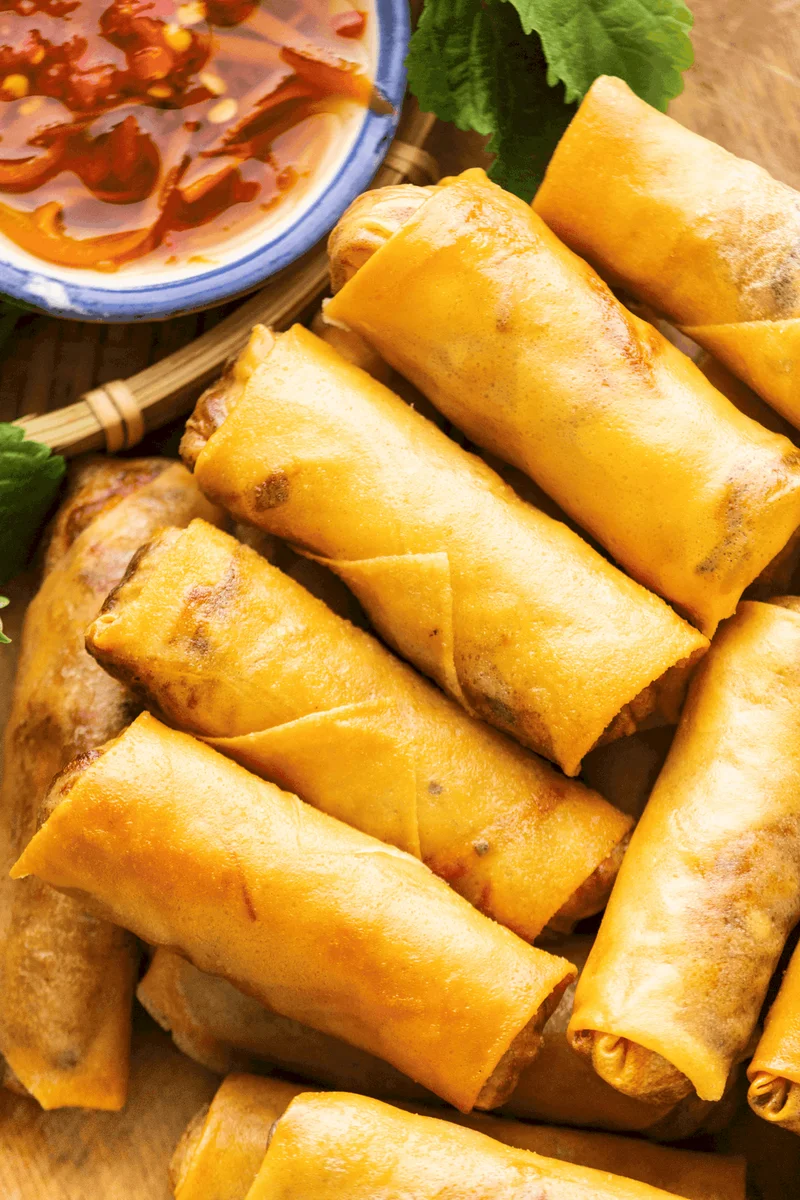
Cha Gio Chay are Vietnamese-style vegetarian spring rolls with a sweet, nutty filling of taro, jicama, cabbage and mushrooms, wrapped and fried until crisp. They take time to prepare but make a satisfying batch to serve fresh or share.
Ingredients
- 600 gtaro
- 20 gshiitake mushrooms, rehydrated and thinly sliced
- 20 gwood ear mushroom, rehydrated and thinly sliced
- 10 ggreen bean thread, soaked
- 100 gcarrot
- 300 gjicama
- 200 gcabbage
- 3 packetsspring roll wrappers
- 2 tsp, or to tastesalt
- 1 1/4 tsp, or to tastesugar
- 1 1/2 tbspvegetable stock powder
- 1/2 tbsppepper
- 2 tbspoil
- 2 tbsppotato starch
- 1 tbsppotato starch
- 2 tbspwater
Instructions
- 1
Prepare the vegetables
Julienne the carrot, taro, cabbage and jicama, then put them in a large mixing bowl.
- 2
Season the filling
Squeeze excess water from the bean threads and both types of mushroom. Add them to the bowl with the pepper, salt, sugar and vegetable stock powder.
- 3
Mix the filling
Combine the ingredients, then add 2 tbsp oil and 2 tbsp potato starch and stir them through.
- 4
Fill the wrappers
Place a wrapper on a plate in a diamond shape. Put roughly 1 tbsp filling near the bottom centre; use more if you have larger wrappers.
- 5
Fold the bottom
Bring the bottom corner up and fold it tightly over the filling. Pull the wrapped filling towards you to make it snug.
- 6
Fold the sides
Bring the left and right corners in until they meet the filling on either side.
- 7
Roll the wrapper
Roll the wrapper tightly upwards.
- 8
Make the slurry
Stir the remaining potato starch with the water until smooth. Wet a finger with the mixture and dab it over the top corner of the wrapper.
- 9
Seal the roll
Continue rolling the Cha Gio Chay until the wrapper is fully sealed.
- 10
Heat the oil
Bring oil in a wok or pan to medium heat. It is ready when wooden chopsticks placed in the oil begin to bubble.
- 11
Fry the rolls
Carefully lower in a few spring rolls at a time and cook each for roughly 3–4 minutes, or until golden all over. Transfer them to a plate lined with paper towels or to a metal colander.
- 12
Serve fresh
Serve the spring rolls fresh.
What are Cha Gio Chay?
Cha Gio Chay are Vietnamese vegetarian spring rolls, made by wrapping a savoury vegetable filling and frying it until crisp. This version combines taro and jicama with cabbage, carrot and mushrooms for a mix of earthy, sweet and savoury flavours.
The recipe’s defining feature is its fresh, finely cut filling rather than a ready-made mixture. Tightly rolled wrappers help keep the vegetables together as the outside turns golden.
Nutrition and macros by portion
The nutrition label shows one serving as written: 658 calories, 19g protein, 130g carbs, 7g fat.
| Portion | Adjustment | kcal | Protein | Carbs | Fat |
|---|---|---|---|---|---|
| Lighter | Fry fewer rolls | 461 kcal | 13g | 91g | 5g |
| This serving | As written | 658 kcal | 19g | 130g | 7g |
| Hungry | Serve extra rolls | 987 kcal | 29g | 195g | 11g |
The taro, bean threads and other vegetables supply most of the carbohydrate, while the mushrooms and vegetables contribute some protein. The listed fat comes mainly from the oil used in the filling and frying. Serve a portion with fresh vegetables to add more variety and balance to the plate.
The filling ingredients
Taro and jicama: These root vegetables make up the hearty base of the filling. Julienne them evenly so they sit neatly in the wrappers.
Mushrooms and bean threads: Shiitake and wood ear add savoury depth and contrasting texture, while the bean threads help make the mixture cohesive. Squeezing out their soaking water keeps the filling from becoming too wet.
Cabbage and carrot: These add colour and a lighter, slightly sweet note. Keep the cuts similar in size to the other vegetables for an even filling.
Keep the filling dry
Excess moisture can soften the wrappers and make the rolls harder to seal. After soaking, squeeze the mushrooms and bean threads well before adding them to the bowl.
The potato starch stirred into the filling helps bind the ingredients, while the second portion is mixed with water to seal the wrappers. Keep those two uses separate as you prepare the recipe.
Roll for a tight seal
Place the filling near the bottom of the diamond-shaped wrapper, leaving enough space to fold the bottom corner over it. Pull the filling gently towards you as you make that first fold so it sits snugly.
Fold both sides in before rolling upwards, then use the starch-and-water mixture to secure the final corner. A tight roll is less likely to open while frying.
Frying and doneness
Use medium heat and test the oil with wooden chopsticks: small bubbles forming around them indicate it is ready, as described in the method. Fry only a few rolls at a time so they can move freely in the pan.
Allow roughly 3–4 minutes per batch, looking for an evenly golden exterior. Drain the cooked rolls on paper towels or in a metal colander.
Serve them fresh
The recipe recommends serving the rolls fresh, when their wrappers are at their crispest. They work well as a snack or as part of a larger meal.
For a more balanced plate, pair them with fresh vegetables or a crunchy salad. A dipping sauce can also be served alongside if desired.
Recipe notes & tips
- Julienne the vegetables evenly so the filling is easier to portion and roll.
- Squeeze excess water from the soaked mushrooms and bean threads before mixing the filling.
- Use roughly 1 tbsp filling per wrapper, adjusting for the size of the wrappers.
- Keep the rolls tightly wrapped and seal the final corner with the starch slurry.
- Fry a few rolls at a time and drain them well after cooking.
Variations
- Adjust the seasoning: Taste the filling before wrapping and change the salt or sugar to suit your preference.
- Change the wrapper size: Use larger wrappers and add more filling, as the method suggests.
- Add a dipping sauce: Serve a sauce on the side for extra flavour.
- Make a smaller batch: Prepare fewer rolls and keep the ingredient proportions consistent.
Common mistakes to avoid
- Wet filling: Squeeze the soaked mushrooms and bean threads thoroughly before adding them.
- Overfilling: Use roughly 1 tbsp filling per wrapper so the edges can fold over it.
- Loose rolling: Pull the wrapped filling towards you during the first fold to make a snug roll.
- Unsealed corners: Dab the wrapper corner with the starch slurry before finishing the roll.
- Crowded pan: Fry only a few rolls at a time so they can cook evenly.
How to store
The recipe is best served fresh. Refrigerate leftover cooked rolls in a covered container and reheat them in a pan or oven until hot and crisp; the wrappers may soften during storage.
Frequently asked questions
How much filling should I put in each wrapper?
Use roughly 1 tbsp, placing it near the bottom centre of the wrapper. Larger wrappers can take more filling.
How do I know when the oil is ready?
Place wooden chopsticks in the oil; the recipe says it is ready when bubbles begin to form around them.
How long do the spring rolls take to fry?
Cook them for roughly 3–4 minutes, until they are golden all over.
Why squeeze the mushrooms and bean threads?
Removing excess soaking water helps keep the filling from becoming too wet, which can make the wrappers harder to handle and seal.
Can I use larger spring roll wrappers?
Yes. The recipe suggests adding more filling to suit the size of larger wrappers.
Can I prepare the rolls ahead?
You can roll them before frying, but the recipe recommends serving them fresh after cooking for the best crispness.
Cook it from the original
This recipe comes from wokandkin.com. Their page has the author’s own photos, notes and tips — the best place to cook it from.
Open the recipe on wokandkin.com