
Cream Scones Recipe
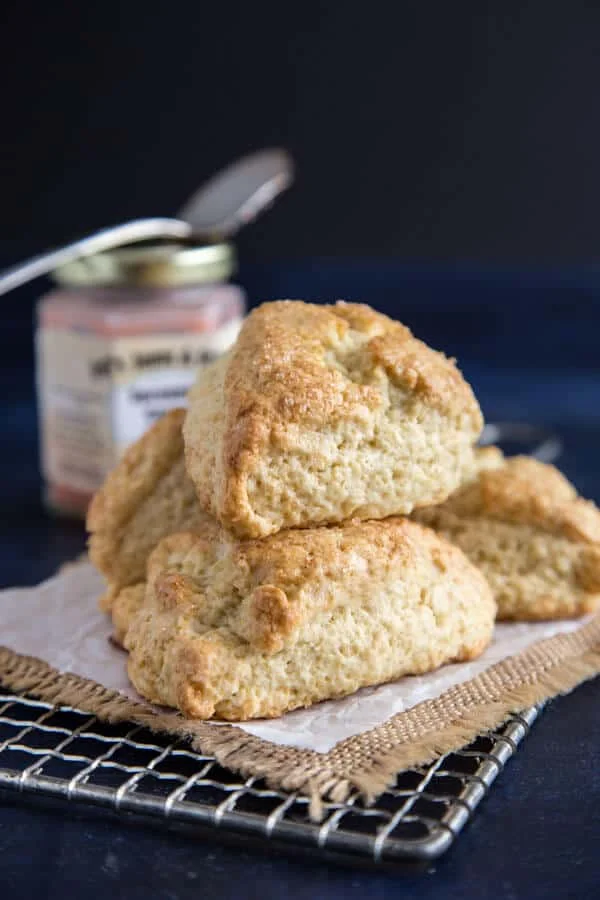
These quick, tender cream scones are made with a simple flour-and-cream dough and finished with a crisp sprinkle of turbinado sugar. Serve them warm with clotted cream or butter and jam for breakfast or afternoon tea.
Ingredients
- 240 g (2 cups)plain flour
- 67 g (⅓ cup)granulated sugar
- 2.5 g (½ teaspoon)kosher salt
- 12 g (1 tablespoon)baking powder
- 1 large egg + cream to make 240 ml (1 cup)egg and cream
- 5 ml (1 teaspoon)vanilla extract
- As neededextra cream
- To tasteturbinado sugar
Instructions
- 1
Heat the oven
Preheat the oven to 200°C (400°F) and line a baking sheet with parchment paper.
- 2
Mix dry ingredients
Put the flour, sugar, salt and baking powder in a medium bowl, then stir to combine.
- 3
Prepare wet mixture
In a measuring jug, add the egg and enough cream to reach 240 ml (1 cup). Add the vanilla and beat until combined.
- 4
Form the dough
Make a well in the centre of the dry ingredients and pour in the egg mixture. Fold with a spatula or wooden spoon until a wet dough forms.
- 5
Shape the scones
Turn the dough onto a lightly floured board, fold it over itself a few times, then shape it into a circle about 2.5 cm (1 inch) thick. Cut into 8 scones.
- 6
Brush and sugar
Arrange the scones on the lined baking sheet. Brush the tops and sides with extra cream and sprinkle generously with turbinado sugar.
- 7
Bake until golden
Bake for 19–20 minutes, until golden brown. Transfer to a wire rack and leave to cool completely.
- 8
Serve with toppings
Serve warm with clotted cream or butter and jam.
What are cream scones?
Scones are quick-baked treats associated with British tea time, though this recipe is presented in an American style. Cream enriches the dough, while a little vanilla gives it a gentle sweetness.
This version is straightforward to mix and shape, making it an easy base for classic toppings such as clotted cream, butter and jam.
Nutrition and macros by portion
The nutrition label shows one serving as written: 234 calories, 0g protein, 0g carbs, 0g fat.
| Portion | Adjustment | kcal | Protein | Carbs | Fat |
|---|---|---|---|---|---|
| Lighter | Use less topping | 164 kcal | 0g | 0g | 0g |
| This serving | As written | 234 kcal | 0g | 0g | 0g |
| Hungry | Serve a second scone | 351 kcal | 0g | 0g | 0g |
The flour and sugar provide most of the carbohydrates, while the cream and egg contribute fat and some protein. Pair a scone with fresh fruit or yoghurt for a more varied breakfast or tea-time plate.
Why cream matters
Egg and cream: the egg helps bind the dough, and the cream supplies moisture and richness. Measuring them together to 240 ml keeps the total liquid amount consistent.
Extra cream: brushing it over the shaped scones helps the sugar adhere and encourages a golden finish.
Mixing a tender dough
Dry ingredients: combine the flour, sugar, salt and baking powder evenly before adding liquid so the raising agent is distributed throughout.
Gentle folding: stop as soon as the mixture forms a wet dough. Excessive mixing can make the baked scones firm rather than tender.
Shaping and cutting
Light flouring: use just enough flour on the board to prevent sticking without working extra flour into the dough.
Even thickness: shape the dough to about 2.5 cm thick, then cut 8 scones so they bake at a similar rate.
When are they done?
Bake for 19–20 minutes at 200°C, checking for a golden-brown surface. If they need more time, continue briefly and keep an eye on the colour.
The method calls for cooling the scones completely on a wire rack before serving. This lets steam escape instead of collecting underneath.
Serving ideas
Serve them warm with clotted cream or butter and jam, as suggested in the recipe. They also suit a pot of tea or a simple breakfast spread.
For a shared serving, offer the toppings separately so everyone can add the amount they prefer.
Recipe notes & tips
- Measure the cream and egg together in a jug to reach the stated 240 ml total.
- Use a light touch when folding so the dough does not become overworked.
- Dust the board lightly rather than adding a heavy layer of flour.
- Cut the scones to a similar size to help them bake evenly.
- Brush the sides as well as the tops with cream before adding the sugar.
- Cool the baked scones on a wire rack to avoid a damp underside.
Variations
- Citrus note: add finely grated lemon zest to the dry ingredients for a fresh aroma.
- Spiced sugar: mix a little ground cinnamon into the turbinado sugar before sprinkling it over the tops.
- Berry addition: gently fold dried berries into the dough just before shaping.
- Chocolate version: fold in small chocolate chips without mixing the dough more than necessary.
- Savoury-style scones: omit the sugar topping and serve the baked scones with a savoury spread.
Common mistakes to avoid
- Overmixing the dough: stop folding as soon as it comes together to help keep the scones tender.
- Adding too much board flour: use only a light dusting so the dough does not become dry.
- Uneven shaping: aim for a circle about 2.5 cm thick so the scones bake at a similar pace.
- Skipping the cream wash: brush the tops and sides so the sugar has a surface to cling to.
- Removing them too soon: bake for the stated 19–20 minutes and look for a golden-brown finish.
- Cooling on the tray: transfer the scones to a wire rack so steam can escape underneath.
How to store
Once completely cool, keep the scones in an airtight container at room temperature for up to 2 days. Warm them briefly in a low oven before serving; they can also be frozen and thawed before reheating.
Frequently asked questions
Can I use a different type of cream?
Use a cream suitable for baking and measuring with the egg to reach 240 ml in total. The recipe does not specify a particular cream type.
How thick should I shape the dough?
Shape it into a circle about 2.5 cm (1 inch) thick before cutting it into 8 scones.
Can I prepare the dough ahead?
The method is designed to be mixed and baked promptly. For the best result, shape and bake the dough soon after mixing.
Can I freeze the scones?
Yes. Freeze them once cool, then thaw and warm briefly in a low oven before serving.
What should I serve with cream scones?
Serve them with clotted cream or butter and jam. They are also a natural match for tea or coffee.
Cook it from the original
This recipe comes from wildwildwhisk.com. Their page has the author’s own photos, notes and tips — the best place to cook it from.
Open the recipe on wildwildwhisk.com