
Cantonese Pork Knuckles with Ginger and Vinegar
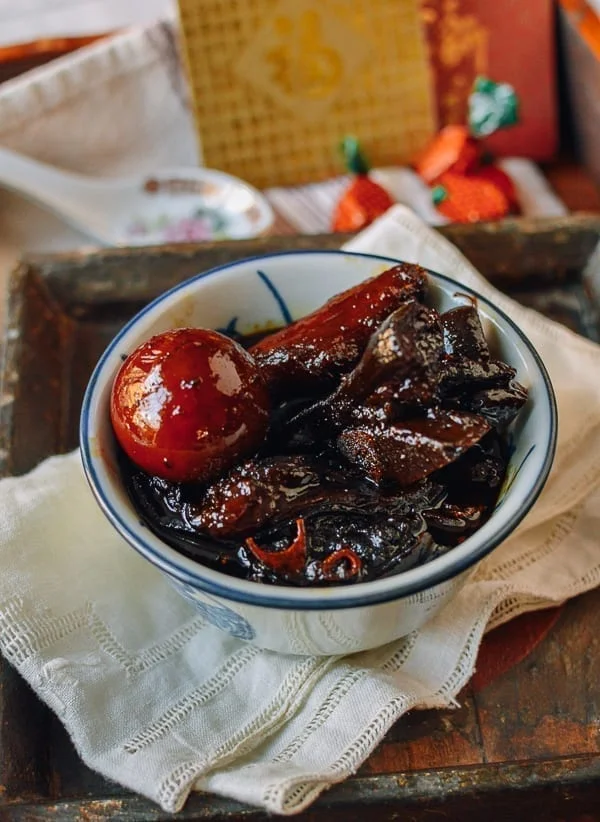
Cantonese pork knuckles with ginger and vinegar is a slow-cooked dish of tender pork, warming ginger and a sweet-sour vinegar broth, finished with hard-boiled eggs. It takes time, but most of that is gentle simmering and an overnight rest that lets the flavours develop.
Ingredients
- 450 g (1 pound)ginger
- 1,200 ml (5 cups)Chinese sweet vinegar
- 120 ml (½ cup)Chinese black vinegar
- 1 pig trotter with shin, about 1 kg (2 pounds)pig trotter with shin (pork knuckle)
- 30 ml (2 tablespoons)Shaoxing wine
- 6hard-boiled eggs
- to tastesalt
Instructions
- 1
Prepare the ginger
Scrape the ginger skin off with the back of a paring knife or a spoon, keeping the pieces large. Rinse and dry it thoroughly, then lightly crush each piece with the flat side of a knife or another heavy, flat tool.
- 2
Dry-cook ginger
Heat a clean, dry wok over medium heat and cook the ginger for 10 minutes, taking care not to burn it. Trim off any scorched areas, as they can make the finished dish bitter.
- 3
Simmer the vinegar
Put the ginger and both vinegars in a large non-reactive pot and cover it. Bring to the boil, lower the heat to medium and simmer for 90 minutes. Taste the mixture and add more black vinegar if you would like it tarter.
- 4
Blanch the pork
Put the pork in a separate pot and cover it with cold water. Add the Shaoxing wine, bring to the boil and boil for 3 minutes. Turn off the heat, drain and rinse the pork, then set it aside.
- 5
Add the pork
After the ginger and vinegar have simmered for 90 minutes, stir in the pork. If you made the ginger-vinegar base ahead, bring it back to the boil before adding the pork.
- 6
Cook until tender
Cover the pot and cook over medium heat for a further 60–90 minutes. The pork is ready when a chopstick passes easily through the skin.
- 7
Boil and peel eggs
While the pork cooks, bring 2.8 litres (3 quarts) of water to the boil in a large pot. Lower in the eggs and boil for 30 seconds, then cover the pot, reduce the heat to low and simmer for 11 minutes. Transfer the eggs to iced water; once cool, crack the shells all over and peel them under a thin stream of running water.
- 8
Rest and serve
When the pork is tender, carefully submerge the peeled eggs and bring the pot to the boil. Turn off the heat and leave it to sit overnight. The next day, reheat, season with salt to taste and serve hot.
What is Cantonese pork knuckle with ginger and vinegar?
Known as zhu jiao jiang in Mandarin, this Cantonese dish brings pork knuckle, ginger and vinegar together in a rich, sweet-sour broth. It has traditionally been associated with postpartum meals, though it is also enjoyed as a comforting dish more broadly.
This version builds flavour in stages: the ginger is dry-cooked, the vinegar simmers on its own, and the pork joins afterwards. Eggs soak up some of the broth during the overnight rest.
Nutrition and macros by portion
The nutrition label shows one serving as written: 650 calories, 39g protein, 41g carbs, 34g fat.
| Portion | Adjustment | kcal | Protein | Carbs | Fat |
|---|---|---|---|---|---|
| Lighter | More greens, less pork | 455 kcal | 27g | 29g | 24g |
| This serving | As written | 650 kcal | 39g | 41g | 34g |
| Hungry | Add steamed rice | 975 kcal | 59g | 62g | 51g |
The pork and eggs contribute most of the protein and fat, while the sweet vinegar supplies much of the carbohydrate and sugar; ginger adds a smaller amount of carbohydrate. Serve a measured portion with rice and a generous side of greens, keeping the amount of broth to your taste.
Why use two kinds of vinegar?
Sweet vinegar: this forms the main body of the cooking liquid and gives the dish its characteristic sweetness.
Black vinegar: a smaller amount adds a sharper, more tangy note. Taste the base after its long simmer and adjust the tartness if needed.
Getting the ginger ready
Large pieces: keeping the ginger chunky makes it easier to fish out or eat according to preference after cooking.
Dry-cooking: heating the pieces in a dry wok deepens their flavour before they go into the vinegar. Keep them moving and trim away any burnt spots to avoid bitterness.
Blanching the pork
The brief boil with Shaoxing wine is a separate preparation step, not the main cooking. Drain and rinse the pork before adding it to the vinegar base.
Use a large enough pot for the knuckle and keep it covered with cold water at the start. This makes it easier to drain and rinse the pieces cleanly after blanching.
How to check for tenderness
The pork needs time for the skin and connective tissue to soften. Start checking after 60 minutes of cooking in the vinegar mixture.
A chopstick should pass easily through the pork skin when it is ready. If it still feels resistant, continue cooking and check again before adding the eggs.
Why let it rest overnight?
The overnight rest gives the pork and eggs time to sit in the ginger-vinegar broth, so their flavours can mingle. Keep the pot covered while it rests.
The next day, reheat the contents thoroughly and adjust the salt just before serving. The dish is traditionally served hot, with some of the broth.
What to serve with it
Plain steamed rice is a useful partner for the strongly flavoured broth and tender pork. Serve a little broth alongside rather than pouring it all over the plate.
For a lighter-feeling meal, add a simply cooked green vegetable. Its mild flavour sits well beside the sweet, sharp vinegar and warming ginger.
Recipe notes & tips
- Use a non-reactive pot, such as stainless steel, for simmering the vinegar.
- Dry the ginger thoroughly before cooking it in the wok.
- Taste the vinegar base after its 90-minute simmer to judge its tartness.
- Keep the pork covered during its simmer so it cooks evenly.
- Use a chopstick to check that the pork skin is tender before adding the eggs.
- Season with salt after reheating, just before serving.
Variations
- More tart: Increase the black vinegar a little at a time after tasting the simmered base.
- Less ginger: Use fewer ginger pieces for a milder ginger flavour.
- Extra eggs: Add more peeled hard-boiled eggs to the pot before the overnight rest.
- Smaller pieces: Ask your butcher to cut the knuckle into manageable pieces before cooking.
- Rice pairing: Serve with steamed rice to make the broth part of the meal.
Common mistakes to avoid
- Burnt ginger: Cook it over medium heat and trim away scorched areas to prevent bitterness.
- Reactive cookware: Avoid aluminium or uncoated iron pots for the vinegar; choose a non-reactive vessel.
- Skipping the blanch: Boil the pork for 3 minutes with the Shaoxing wine, then drain and rinse it.
- Rushing the simmer: Give the pork 60–90 minutes and check that a chopstick passes through the skin easily.
- Adding eggs too early: Submerge the peeled eggs only after the pork is tender.
- Serving straight away: Let the pot rest overnight, then reheat it the next day.
How to store
Once cooled, refrigerate the pork, eggs and broth in a covered container and eat within 3 days. Reheat gently in a saucepan until steaming hot throughout; avoid repeatedly warming the whole batch.
Frequently asked questions
Can I make the ginger-vinegar base ahead?
Yes. Prepare and simmer the ginger and vinegars as directed, then bring the base to the boil before adding the blanched pork.
How do I know when the pork knuckle is cooked?
After 60–90 minutes of simmering, test the skin with a chopstick. It should pass through easily; cook longer if it still feels firm.
Can I use a different kind of vinegar?
The recipe relies on Chinese sweet vinegar for its main flavour and Chinese black vinegar for tartness. Substitutions will change the sweet-sour balance, so taste the base as it simmers.
Do the eggs cook in the vinegar mixture?
They are boiled and peeled separately first. Once the pork is tender, they are added to the pot and left in the broth overnight.
Can I skip the overnight rest?
The recipe includes an overnight rest so the pork and eggs can sit in the broth. If you skip it, the flavours may be less developed; reheat the dish thoroughly before serving.
What should I serve alongside it?
Steamed rice and a simply cooked green vegetable make good accompaniments to the rich, sweet-sour broth.
Cook it from the original
This recipe comes from thewoksoflife.com. Their page has the author’s own photos, notes and tips — the best place to cook it from.
Open the recipe on thewoksoflife.com