
Mnazalet Batinjan (Eggplant Stew)
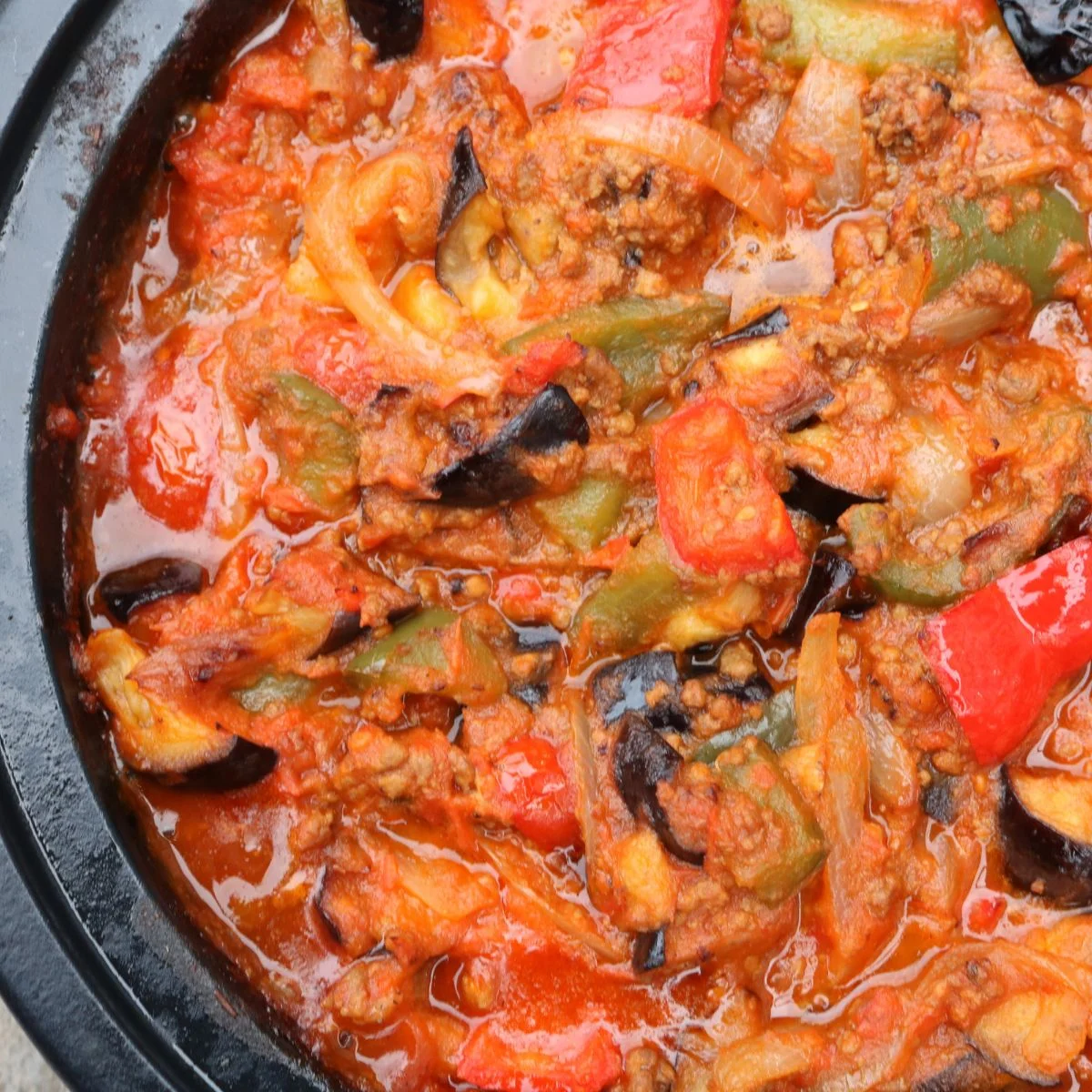
Mnazalet batinjan is a Lebanese baked stew of fried aubergine, peppers and minced meat in tomato sauce. It is a hearty, warmly spiced dish finished in the oven until the vegetables begin to colour at the edges.
Ingredients
- 2 mediumaubergines, cut into 2 cm cubes
- enough for fryingvegetable oil
- 1 large or 2 smallonion, sliced into strips
- 300 gminced lamb or beef, or a mixture of both
- 1green bell pepper (or another colour), chopped into pieces about 2.5 cm wide
- 1/2 teaspoonseven-spice blend
- 1/4 teaspoonpaprika
- 1/4 teaspoonblack pepper
- 1/4 teaspoonground coriander
- about 2 teaspoonssalt
- about 500 gpassata
- 1 handfulplum tomatoes, halved
- 1Thai chilli
Instructions
- 1
Salt the aubergine
Cut the aubergines into cubes about 2 cm across. Sprinkle generously with salt and leave them out for a few hours to release moisture, patting them occasionally with paper towels to absorb excess liquid.
- 2
Fry the aubergine
Pour vegetable oil to a depth of about 5 cm into a frying pan and heat it well. Test it with one aubergine cube; it should sizzle. Fry the cubes in batches until golden, then transfer them to a paper-towel-lined plate.
- 3
Char the onions
In a deep pan or cast-iron dish, heat a generous drizzle of vegetable oil, about 3–4 tablespoons. Sauté the onions over high heat until they char slightly on the outside.
- 4
Cook the pepper
Add the chopped bell pepper and continue frying over high heat for a few more minutes.
- 5
Brown the meat
Add the minced meat and keep stirring. Add the spices and about 2 teaspoons of salt, then cook for 5–10 minutes, until most of the juices from the meat have evaporated.
- 6
Add tomato sauce
Fold in the fried aubergine gently so it does not break down. Add the passata and a little boiling water, enough for the sauce to almost cover the ingredients. Bring the sauce to the boil, taste it and adjust the salt if needed.
- 7
Bake the stew
Arrange the halved plum tomatoes and Thai chilli on top. Transfer the dish to an oven at 180°C (340°F) for around 20 minutes, until the vegetables begin to brown slightly at the edges.
- 8
Serve with bread
Serve with fresh flatbreads or rice.
What is mnazalet batinjan?
Mnazalet batinjan is a Lebanese aubergine stew, with batinjan meaning aubergine in Arabic. Recipes vary, but this version pairs fried aubergine with minced meat, peppers and a tomato sauce, then finishes everything in the oven.
The combination works because the aubergine absorbs the savoury juices while the tomato brings acidity and moisture. A few simple spices give the meat a warm, rounded flavour.
Nutrition and macros by portion
The nutrition label shows one serving as written: 350 calories, 18g protein, 25g carbs, 21g fat.
| Portion | Adjustment | kcal | Protein | Carbs | Fat |
|---|---|---|---|---|---|
| Lighter | Use less frying oil | 245 kcal | 13g | 18g | 15g |
| This serving | As written | 350 kcal | 18g | 25g | 21g |
| Hungry | Serve with extra rice | 525 kcal | 27g | 38g | 32g |
The meat contributes much of the protein and fat, while the aubergine, passata, onion and pepper provide most of the carbohydrates and fibre. Frying oil and the oil used for the onions add further fat, so serve a moderate portion with salad or vegetables alongside.
Choosing the ingredients
Aubergine: Cutting it into 2 cm cubes gives the pieces enough surface area to brown while keeping them substantial in the finished stew. Salting and patting the cubes dry helps remove surface moisture before frying.
Minced meat: Lamb gives the sauce a richer flavour, while beef makes it a little milder; either works, as does a mixture. Passata provides the smooth tomato base, and halved plum tomatoes add distinct pieces on top.
Frying the aubergine
Oil temperature: Test the oil with one cube, as the recipe directs; a steady sizzle is the cue to start frying. Cook in batches so the cubes have room to colour rather than crowding the pan.
Gentle handling: Drain the fried aubergine on paper towels, then fold it into the meat mixture carefully. The cubes soften further in the sauce and oven, so stirring firmly can make them collapse.
Building the sauce
Onions and pepper: Cook the onion over high heat until its edges char a little, then fry the pepper for a few minutes. This gives the vegetables a browned flavour before the meat and tomato go in.
Meat and spices: Stir until most of the meat juices have evaporated, which keeps the sauce from becoming too watery. Add the passata and only enough boiling water for the sauce to almost cover the ingredients.
Checking doneness
Stovetop: Bring the sauce to the boil before transferring the dish to the oven. Taste it at this point and adjust the salt to suit, bearing in mind that the aubergines were salted earlier.
Oven: Bake at 180°C (340°F) for around 20 minutes, looking for slight browning around the vegetables' edges. The aubergine should be tender but still recognisable as cubes.
What to serve alongside
Flatbread: Fresh flatbreads are useful for scooping up the tomato sauce and soft vegetables. Serve them warm alongside the stew.
Rice: Plain rice makes a simple base for the sauce and meat. For a more balanced plate, add a crisp salad or another fresh vegetable side.
Recipe notes & tips
- Pat the salted aubergine dry before it goes into the hot oil.
- Fry the aubergine in batches so the pieces can turn golden.
- Use a deep pan or cast-iron dish that can go from the hob to the oven.
- Add boiling water gradually so the sauce almost covers the ingredients without becoming too thin.
- Fold the fried aubergine in gently to keep the cubes intact.
- Taste the sauce before baking and adjust the seasoning then.
Variations
- Use lamb: Choose minced lamb for a richer, more savoury stew.
- Use beef: Make the dish with minced beef instead, or combine it with lamb.
- Change the pepper: Use a bell pepper of another colour in place of the green one.
- Adjust the heat: Omit the Thai chilli for a milder finish.
- Serve with rice: Spoon the stew over rice instead of serving it with flatbreads.
Common mistakes to avoid
- Wet aubergine: Pat the cubes dry after salting so they do not carry excess moisture into the frying oil.
- Crowded frying pan: Fry the aubergine in batches to give the cubes room to turn golden.
- Rough stirring: Fold the aubergine in gently to stop the softened cubes breaking apart.
- Too much water: Add boiling water a little at a time so the sauce only almost covers the ingredients.
- Skipping the taste check: Taste before baking and adjust the salt while the sauce is still on the hob.
How to store
Cool leftovers and refrigerate them in a covered container for up to 3 days. Reheat thoroughly in a saucepan over a gentle heat or in the oven, adding a splash of water if the sauce has thickened.
Frequently asked questions
Can I use lamb or beef?
Yes. The recipe works with minced lamb, minced beef or a mixture of the two.
Do I need to salt the aubergine?
The method calls for salting the cubes and leaving them for a few hours, with occasional patting using paper towels. This helps draw out moisture before frying.
How do I know the frying oil is ready?
Drop in one aubergine cube as a test. The oil is ready when the cube sizzles.
Can I make the stew less spicy?
Leave out the Thai chilli for a milder dish. Keep or adjust the listed spices to taste.
What can I serve with mnazalet batinjan?
Serve it with fresh flatbreads or rice, as suggested in the recipe. A fresh salad or vegetable side also goes well alongside.
Can I prepare it ahead?
You can cook it ahead and refrigerate it once cooled. Reheat it thoroughly before serving.
Cook it from the original
This recipe comes from zaatarandzaytoun.com. Their page has the author’s own photos, notes and tips — the best place to cook it from.
Open the recipe on zaatarandzaytoun.com