
Mapo Tofu with Pork Mince (麻婆豆腐)
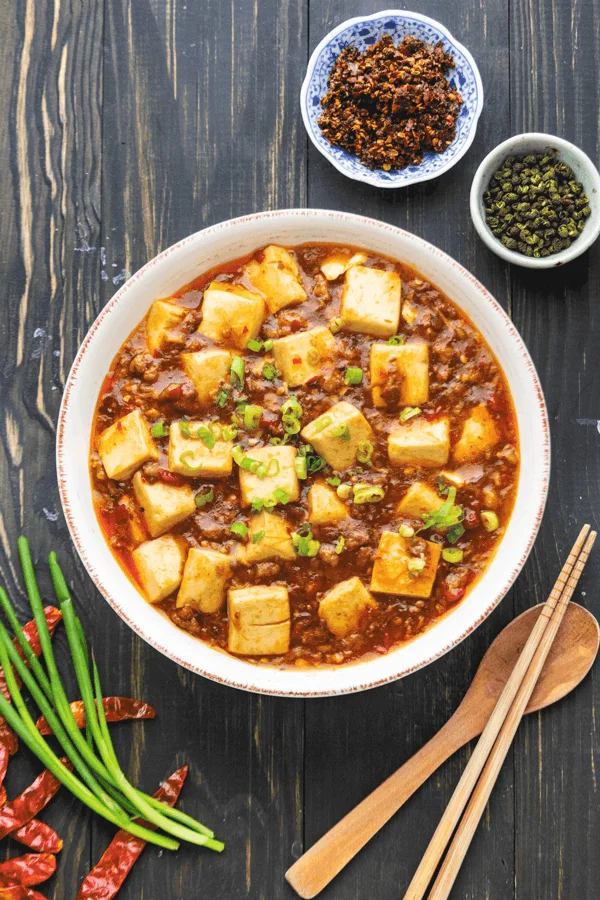
Mapo tofu is a Sichuan dish of tender tofu simmered in a savoury, chilli-rich sauce with minced pork. This version layers dried chilli and green Sichuan pepper with pickled ginger and chilli for a warming, aromatic result.
Ingredients
- 450 g (1 lb)soft tofu
- 150 g (0.33 lb)pork neck
- 25 g (0.06 lb)pickled ginger
- 15 ml (1 tbsp)green Sichuan peppercorns
- 10 g (0.02 lb)dried hot chilli, roughly sliced
- 15 ml (1 tbsp)chilli bean paste (doubanjiang)
- 5 ml (1 tsp)dark soy sauce
- 20 g (0.04 lb)pickled chilli
- ½ a sprigspring onion
- 15 ml (1 tbsp)potato starch, for the starch slurry
- 150 ml (0.6 US cup)water, for the starch slurry
- 120 ml (½ US cup)cooking oil
- 5 ml (1 tsp)sugar, or to taste
- 10 ml (2 tsp; one for boiling the tofu, one for seasoning)salt, season to taste
- 200 ml (0.8 US cup)water
Instructions
- 1
Cube the tofu
Cut the tofu into cubes about 2 cm (0.8 in) thick. Handle it gently, especially if it is very soft, so the cubes do not break apart.
- 2
Boil the tofu
Bring a wok of water to the boil with 1 tsp salt. Gently add the tofu and cook for 2–3 minutes to remove excess liquid.
- 3
Drain the tofu
Lift the tofu into a colander to drain while you prepare the other ingredients.
- 4
Mince the pork
Use a cleaver to chop and work the pork until it has the texture of mince.
- 5
Chop the pickles
Finely chop the pickled ginger, pickled chilli and spring onion.
- 6
Toast the aromatics
Heat a wok over medium heat and add 2 tbsp oil. Turn the heat to low, add the peppercorns and dried chilli, and cook for 10 seconds. Scoop them out onto a chopping board.
- 7
Crush the aromatics
Use a cleaver to crush the toasted peppercorns and dried chilli.
- 8
Chop the mixture
Finely chop the crushed peppercorn and chilli mixture, then set it aside.
- 9
Cook the pork
Pour oil into the wok and turn the heat to high. Add the mince and cook for 2 minutes.
- 10
Add the seasonings
Add the chilli bean paste, pickled ginger and pickled chilli, then stir-fry for 1 minute. Add 1 tsp of the peppercorn and chilli mixture and stir to combine. Taste as you go: the amount you use determines the heat.
- 11
Add tofu and sauce
Pour in the 200 ml water and add the sugar, 1 tsp salt and dark soy sauce. Mix well, then slide in the tofu.
- 12
Simmer gently
Carefully spoon sauce over the tofu so it is mostly covered. Simmer over medium heat for 5 minutes.
- 13
Thicken the sauce
Stir the starch slurry until combined. Add it in three portions, stirring each one through before adding the next.
- 14
Garnish and serve
Scatter over the chopped spring onion and serve hot.
What is mapo tofu?
Mapo tofu is a Sichuan dish traditionally built around tofu, minced meat and a boldly seasoned sauce. Its character comes from chilli heat and the distinctive tingling fragrance of Sichuan pepper.
Here, soft tofu meets pork, doubanjiang, pickled ginger and pickled chilli. Briefly boiling the tofu first helps it hold together as it simmers in the sauce.
Nutrition and macros by portion
The nutrition label shows one serving as written: 132 calories, 9g protein, 7g carbs, 8g fat.
| Portion | Adjustment | kcal | Protein | Carbs | Fat |
|---|---|---|---|---|---|
| Lighter | Use less cooking oil | 92 kcal | 6g | 5g | 6g |
| This serving | As written | 132 kcal | 9g | 7g | 8g |
| Hungry | Serve with extra rice | 198 kcal | 14g | 11g | 12g |
The pork contributes protein and some fat, while the tofu adds protein and a little carbohydrate. Most of the fat comes from the cooking oil, and the tofu and water-based sauce provide much of the dish’s volume; serve it with rice and vegetables, adjusting the rice portion to suit the rest of the meal.
Build the aromatic base
Peppercorns and dried chilli: warming them briefly in oil releases their aroma, but the 10-second cooking time matters because they can scorch quickly over high heat.
Doubanjiang and pickles: the bean paste brings a savoury chilli base, while pickled ginger and chilli add a sharper, tangy note. Taste before adding more of the crushed chilli mixture.
Keep the tofu intact
Soft tofu is delicate, so cut it carefully and slide it into the wok rather than tipping it in roughly. The short salted-water boil is intended to remove excess liquid before the tofu meets the sauce.
Once it is in the wok, spoon sauce over the cubes and stir with care. Gentle handling helps keep the pieces whole through the simmer and thickening.
Get the sauce consistency right
Starch slurry: stir it again immediately before using so the starch is evenly mixed with its water. Add it in three portions, as directed, rather than pouring it all in at once.
The sauce should cling to the tofu after the slurry is stirred through. If it needs more body, allow the mixture to cook briefly after the final addition, while taking care not to break up the tofu.
Adjust the heat
The crushed peppercorn and dried chilli mixture is the main way to control the dish’s intensity. Start with the stated teaspoon, taste the sauce, and add more gradually if you want a stronger kick.
Green Sichuan pepper has a fragrant, tingling quality as well as heat. Keep the toasted mixture aside until the pork and pickled ingredients have cooked together.
Serve it hot
Mapo tofu is best served as soon as the sauce is thickened and the spring onion is added. Steamed rice makes a straightforward accompaniment and soaks up the savoury sauce.
For a more rounded meal, serve it with a simple green vegetable on the side. Keep the side lightly seasoned so it does not compete with the chilli, peppercorn and pickled flavours.
Recipe notes & tips
- Cut the tofu into evenly sized 2 cm cubes so they warm through at a similar pace.
- Keep the toasted peppercorns and chilli moving briefly in the oil and remove them after 10 seconds.
- Taste the sauce before adding more of the crushed chilli mixture.
- Stir the starch slurry again just before adding it to the wok.
- Use a spoon to coat the tofu with sauce rather than stirring vigorously.
- Prepare the pickled ingredients and spring onion before heating the wok.
Variations
- Milder sauce: use less of the crushed peppercorn and dried chilli mixture, tasting as you go.
- More tingle: add a little more of the toasted green Sichuan pepper mixture to taste.
- Extra vegetables: serve with a side of lightly cooked greens.
- Rice accompaniment: spoon the tofu and sauce over steamed rice for a more filling meal.
Common mistakes to avoid
- Scorching the aromatics: keep the heat low and remove the peppercorns and chilli after 10 seconds.
- Breaking the tofu: handle the cubes gently when draining and use a spoon to coat them in sauce.
- Adding too much heat at once: begin with 1 tsp of the crushed mixture and taste before adding more.
- Lumpy slurry: stir the potato starch and water together again immediately before using.
- Over-stirring the sauce: fold and spoon the sauce around the tofu instead of mixing it roughly.
How to store
Cool leftovers promptly and store them in an airtight container in the fridge for up to 2 days. Reheat gently in a saucepan until piping hot, stirring carefully so the tofu stays intact; the sauce may thicken further as it cools.
Frequently asked questions
Can I use a firmer tofu?
Yes, though the texture will be less delicate than with soft tofu. Cut it into cubes and handle it gently during cooking.
How can I make the dish less spicy?
Use less of the crushed peppercorn and dried chilli mixture, adding it gradually and tasting the sauce. The chilli bean paste also contributes heat.
Why boil the tofu first?
The recipe uses a brief boil to remove excess liquid before the tofu goes into the sauce. Drain it gently afterwards so the cubes remain whole.
Can I prepare anything in advance?
You can chop the pickled ginger, pickled chilli and spring onion ahead of time. Toast and crush the peppercorns and dried chilli when you are ready to cook so they can be added promptly.
What should I serve with mapo tofu?
Steamed rice is a natural partner for the savoury sauce. A simple green vegetable also makes a good side.
How do I know when the sauce is thick enough?
After the starch slurry is stirred in, the sauce should cling to the tofu rather than remain watery. Add the slurry in three portions as directed.
Cook it from the original
This recipe comes from wokandkin.com. Their page has the author’s own photos, notes and tips — the best place to cook it from.
Open the recipe on wokandkin.com