
Red Braised Beef (红烧牛肉)
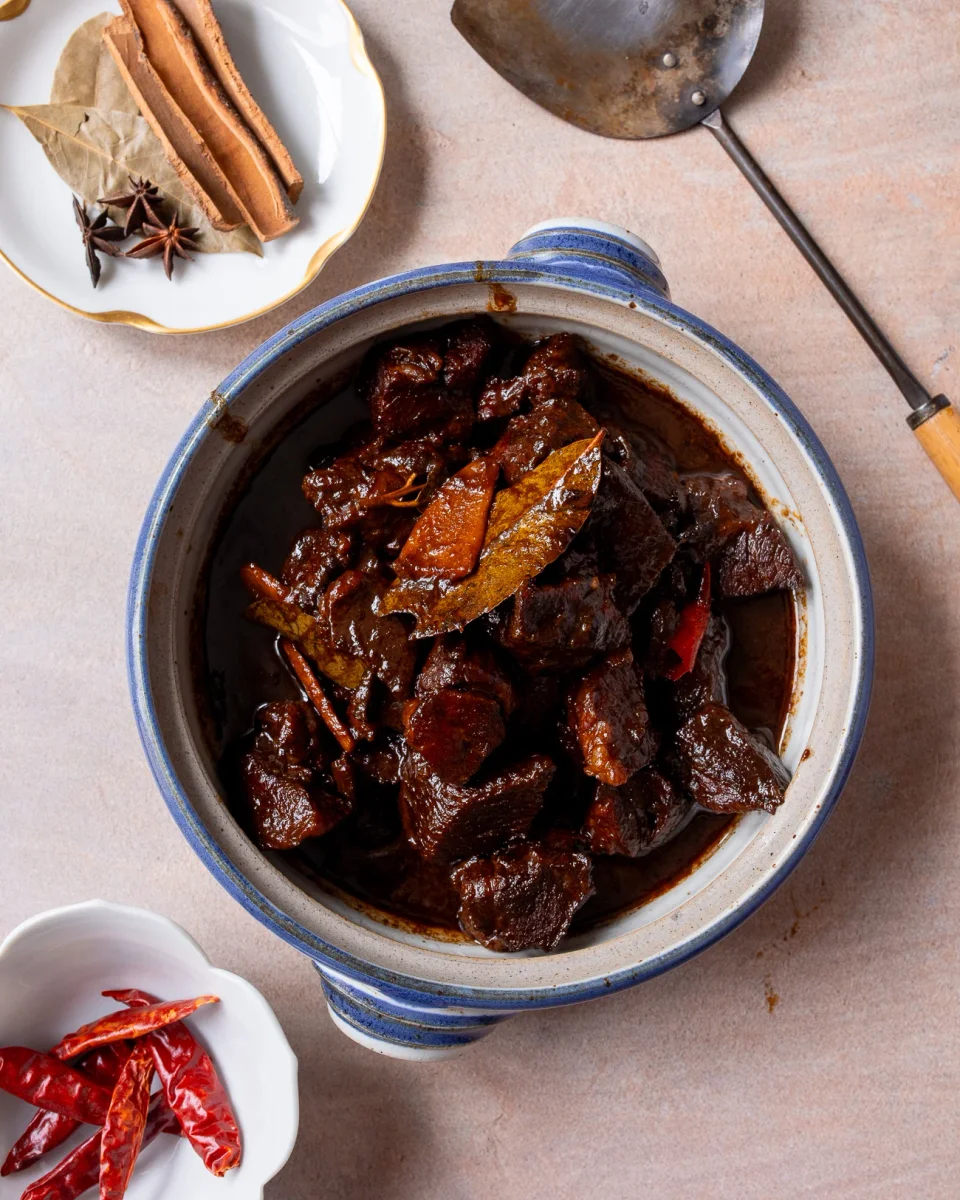
Red braised beef is a Chinese stew of tender beef simmered in a savoury, gently sweet soy-based sauce with ginger and warming spices. It makes a comforting pot to serve over rice, with a vegetable on the side.
Ingredients
- 907 g (2 pounds), cut into 4 cm (1½-inch) chunksboneless beef short ribs or well-marbled beef chuck
- 45 ml (3 tablespoons), dividedShaoxing wine
- 5 slices, dividedginger
- 30 ml (2 tablespoons)neutral oil
- 30 g (7 teaspoons)rock sugar or granulated sugar
- ½ bulb, peeledgarlic
- 30 ml (2 tablespoons)light soy sauce
- 5 ml (1 teaspoon)dark soy sauce
- 15 ml (1 tablespoon)oyster sauce
- 5, choppedscallion whites
- 2star anise
- 3bay leaves
- 1 small stickcassia cinnamon
- 1, deseeded; optionaldried red chilli
- 1.42 litres (6 cups)water
- 15 ml (1 tablespoon), optionalchopped scallion greens, to garnish
Instructions
- 1
Blanch the beef
Put the beef in a pot and cover with cold water. Add 15 ml (1 tablespoon) of the Shaoxing wine and 2 slices of ginger. Bring to the boil and boil for 1 minute. Take the pot off the heat, rinse the beef in a colander, drain and set aside; discard the ginger.
- 2
Brown the beef
Warm a wok over medium heat, then add the oil and rock sugar. Cook until the sugar melts. Add the beef, remaining 3 ginger slices and garlic, then stir-fry over medium heat for 3–4 minutes, until the edges of the beef are lightly browned.
- 3
Add the soy
Pour in the remaining 30 ml (2 tablespoons) of Shaoxing wine and cook for 1 minute. Add both soy sauces and cook for 1 more minute, stirring occasionally.
- 4
Simmer until tender
Add the oyster sauce, scallion whites, star anise, bay leaves, cinnamon stick, dried chilli if using, and 1.42 litres (6 cups) of water. Cover, lower the heat to medium-low and simmer for 1 hour, keeping the liquid at a gentle bubble. Check periodically to prevent sticking. If the beef is not yet fork tender after 1 hour, add more water and cook a little longer.
- 5
Reduce the sauce
When the beef is tender, raise the heat to medium-high or high. Stir continuously as the sauce reduces to your preferred consistency. Sprinkle with scallion greens to serve, if desired.
What is red braised beef?
Hóngshāo niúròu is a Chinese braised beef dish, with hóngshāo referring to a style of cooking in a savoury, often soy-seasoned braising liquid. Recipes vary, but this version pairs beef with ginger, aromatics and a touch of sugar.
The beef is first blanched, then browned and simmered until tender. That sequence helps make a richly flavoured stew with a sauce that can be reduced to suit how you like to serve it.
Nutrition and macros by portion
The nutrition label shows one serving as written: 354 calories, 30g protein, 7g carbs, 22g fat.
| Portion | Adjustment | kcal | Protein | Carbs | Fat |
|---|---|---|---|---|---|
| Lighter | More vegetables, less rice | 248 kcal | 21g | 5g | 15g |
| This serving | As written | 354 kcal | 30g | 7g | 22g |
| Hungry | Larger beef portion | 531 kcal | 45g | 11g | 33g |
The beef supplies most of the protein and fat, while the sugar contributes some carbohydrate; rice served alongside adds more carbohydrates. Pair a serving with a generous portion of vegetables, or adjust the amount of rice to suit your plate.
Choose well-marbled beef
Beef choice: boneless short ribs or well-marbled chuck both suit a long, gentle braise. Cut the meat into even 4 cm chunks so the pieces cook at a similar rate.
Sugar: rock sugar or granulated sugar can be used here. Melt it in the oil before adding the beef, and watch closely so it does not scorch.
Why blanch the beef first?
Blanching: briefly boiling the beef with some of the wine and ginger is the first step in the method. Rinse and drain the pieces well before adding them to the wok.
This short pre-cook is not the braise itself: the beef still needs its covered hour of simmering to become fork tender.
Build the braising flavour
Aromatics: ginger, garlic and scallion whites give the cooking liquid a savoury base, while star anise, bay leaves and cassia add warm spice notes. The dried chilli is optional and should be deseeded as directed.
Soy and oyster sauces: light soy sauce, dark soy sauce and oyster sauce season the beef and liquid. Add them in the order given, allowing the soy sauces a minute in the wok before the water goes in.
Keep the simmer gentle
Heat: once the wok is covered, lower the heat to medium-low and look for small, steady bubbles rather than a vigorous boil. Check from time to time so the beef does not stick.
Doneness: the beef is ready for the final reduction when a fork can pierce it easily. If it is still firm after an hour, add more water and continue cooking until tender.
Reduce to your liking
Sauce: uncover the tender beef and raise the heat to medium-high or high. Stir as the liquid reduces, stopping when it reaches the consistency you prefer.
Serving: spoon the beef and sauce over rice, with a vegetable of your choice alongside. Finish with chopped scallion greens if you like.
Recipe notes & tips
- Cut the beef into similarly sized 4 cm chunks for more even cooking.
- Rinse and drain the blanched beef thoroughly before stir-frying.
- Keep the covered braise at a gentle simmer, not a rolling boil.
- Check the wok periodically during the hour of simmering to prevent sticking.
- Stir frequently while reducing the sauce so the beef does not catch on the bottom.
Variations
- Use chuck: choose well-marbled beef chuck in place of short ribs.
- Skip the chilli: leave out the dried red chilli for a milder braise.
- Choose granulated sugar: use it instead of rock sugar in the same listed quantity.
- Adjust the sauce: reduce it for longer if you prefer a thicker consistency.
- Add a vegetable side: serve the beef with a vegetable of your choice alongside rice.
Common mistakes to avoid
- Skipping the rinse: rinse the blanched beef in a colander before continuing.
- Boiling too hard: keep the covered braise to a gentle simmer with small bubbles.
- Stopping while the beef is firm: add water and simmer longer until it is fork tender.
- Letting the sugar scorch: cook it over medium heat and add the beef once it has melted.
- Reducing without stirring: stir frequently over the higher heat to help prevent sticking.
How to store
Refrigerate leftovers in a covered container and use within 3 days. Reheat gently in a saucepan until piping hot, adding a splash of water if the sauce has become too thick.
Frequently asked questions
Can I use beef chuck instead of short ribs?
Yes. The recipe lists well-marbled beef chuck as an alternative to boneless short ribs.
How do I know when the beef is tender?
It should be easy to pierce with a fork after simmering. If it is still firm after an hour, add more water and cook it longer.
Can I leave out the dried chilli?
Yes. The chilli is optional, so you can omit it.
Can I use granulated sugar instead of rock sugar?
Yes. The recipe gives granulated sugar as an alternative to rock sugar.
How thick should the sauce be?
Reduce it over medium-high or high heat until it reaches your preferred consistency, stirring as it cooks.
What should I serve with red braised beef?
Serve it over rice with a vegetable of your choice. Chopped scallion greens make an optional garnish.
Cook it from the original
This recipe comes from thewoksoflife.com. Their page has the author’s own photos, notes and tips — the best place to cook it from.
Open the recipe on thewoksoflife.com