
Beef Negimaki
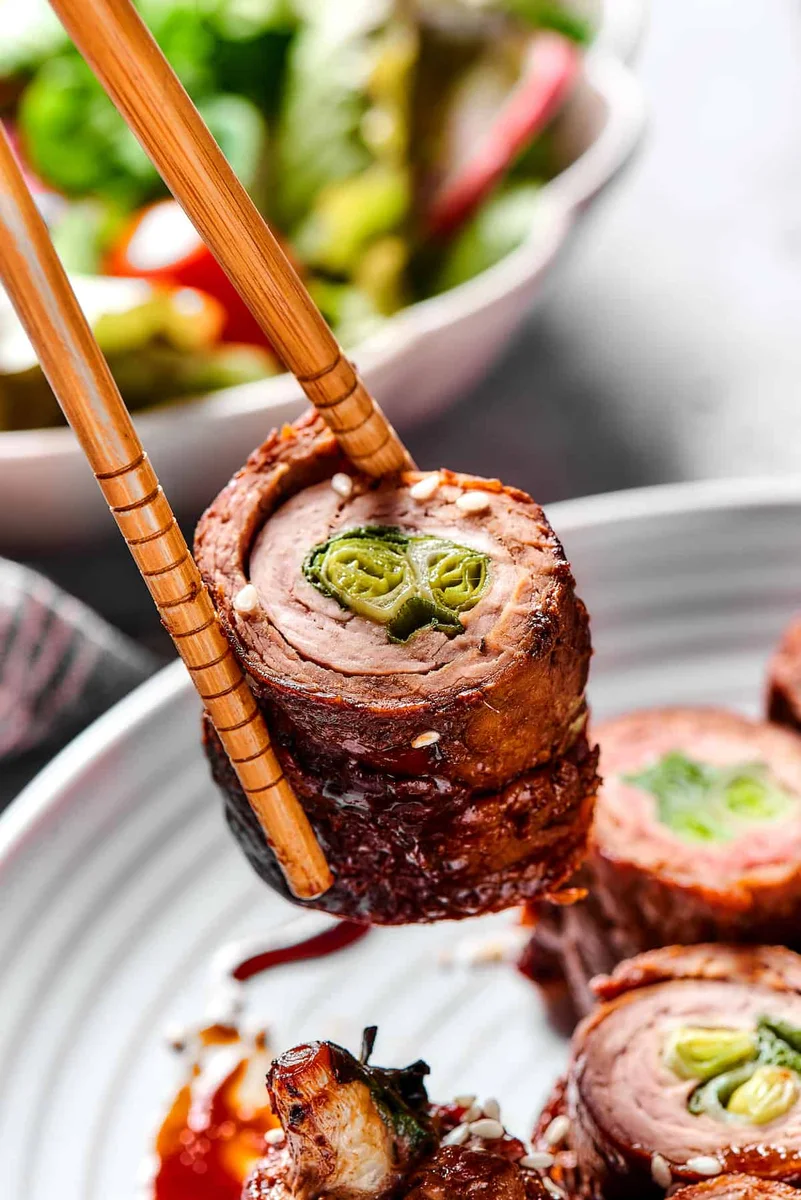
Beef negimaki wraps tender beef around fresh scallions and finishes them in a sweet, savoury sauce of soy, mirin, sugar and sake. It makes a flavourful appetiser or a satisfying meal alongside rice and vegetables.
Ingredients
- 907 g (2 lb)beef tenderloin
- 8scallions
- 10 ml (2 teaspoons)Morton kosher salt
- 5 ml (1 teaspoon)freshly ground black pepper
- 120 ml (½ cup)soy sauce
- 45 ml (3 tablespoons)mirin
- 25 g (2 tablespoons)sugar
- 45 ml (3 tablespoons)sake
Instructions
- 1
Pound the beef
Cut the tenderloin into 4 pieces, slicing against the grain. Put each piece between plastic wrap and pound with a meat tenderiser until about 3 mm (⅛ inch) thick.
- 2
Fill and roll
Lay out the beef and season it with the salt and pepper. Place 2 scallions on each piece, roll the beef tightly around them and secure each roll with toothpicks.
- 3
Simmer the sauce
Combine the soy sauce, mirin, sugar and sake in a small pot and mix well. Bring to the boil over high heat, then immediately lower the heat to medium and simmer for 4–5 minutes.
- 4
Brown the rolls
Heat a large frying pan or griddle over medium-high heat. Add the beef rolls and coat them with the soy sauce mixture twice during cooking. Turn the rolls so each side cooks for 2–3 minutes, until browned.
- 5
Thicken the sauce
Pour the remaining soy sauce mixture over the rolls. Cook for a further 2–3 minutes, until the sauce has thickened and the beef is cooked through.
- 6
Slice and serve
Remove the toothpicks and cut the beef rolls into bite-sized pieces. Serve hot as an appetiser, or make a meal of them with rice and your choice of vegetables.
What is beef negimaki?
Negimaki is a Japanese-style dish of beef rolled around negi, or scallions, then cooked with a savoury-sweet glaze. It is often served as an appetiser, though it also works as part of a meal.
This version uses tenderloin pounded thin, so it can wrap closely around the scallions and cook quickly. Soy sauce, mirin, sugar and sake create a glossy, teriyaki-like finish.
Nutrition and macros by portion
The nutrition label shows one serving as written: 552 calories, 38g protein, 11g carbs, 37g fat.
| Portion | Adjustment | kcal | Protein | Carbs | Fat |
|---|---|---|---|---|---|
| Lighter | More vegetables, less beef | 386 kcal | 27g | 8g | 26g |
| This serving | As written | 552 kcal | 38g | 11g | 37g |
| Hungry | Serve with extra rice | 828 kcal | 57g | 17g | 56g |
The beef provides most of the protein and fat, while sugar and the sauce contribute carbohydrates; the scallions add a small amount of carbohydrate. To balance the plate, serve a portion with plenty of vegetables and rice according to your appetite.
Choosing and preparing the beef
Tenderloin: its tenderness suits quick cooking, while cutting against the grain helps keep the pieces easy to bite. Pounding the beef to about 3 mm makes it flexible enough to roll.
Even pieces: aim for a similar thickness across each piece so they cook at a similar pace. Keep the plastic wrap in place while pounding to contain splashes.
Rolling the scallions
Scallions: use 2 on each piece of beef, arranging them so they fit within the roll. Roll the beef firmly around them to help the filling stay enclosed as the rolls cook.
Toothpicks: secure each roll before it goes into the pan. Remove them before slicing and serving.
Building the sauce
Soy sauce: gives the glaze its savoury base, while mirin and sugar bring sweetness. Sake rounds out the mixture.
Simmering: bring the sauce to the boil, then lower the heat straight away and simmer it for 4–5 minutes. Keep the remaining sauce for the pan, where it will thicken around the beef.
Browning and doneness
Even cooking: turn the rolls so all sides brown, allowing 2–3 minutes per side as directed. Brush or spoon the sauce over them twice while they cook.
Sauce finish: add the remaining mixture and cook for another 2–3 minutes, until it thickens and the beef is cooked through. If the rolls brown quickly, keep turning them rather than leaving one side against the pan.
Serving the rolls
Appetiser: slice the rolls into bite-sized pieces and serve them hot. Their savoury-sweet coating makes them easy to share.
Meal: serve with rice and vegetables of your choice. Plain rice provides a simple base for the extra sauce, while vegetables add colour and crunch.
Recipe notes & tips
- Cut the tenderloin against the grain before pounding it thin.
- Pound the beef evenly so it rolls without thick, chewy patches.
- Arrange the scallions lengthwise to make tight, neat rolls.
- Secure the rolls well with toothpicks before placing them in the pan.
- Turn the rolls regularly so they brown on all sides.
- Remove every toothpick before cutting the rolls into pieces.
Variations
- Add ginger: grate a little fresh ginger into the soy sauce mixture before simmering.
- Use another cut: choose a tender steak that can be sliced and pounded thin.
- Add garlic: stir finely chopped garlic into the sauce as it simmers.
- Serve with noodles: swap the rice for plain noodles to catch the glaze.
- Add sesame: finish the sliced rolls with toasted sesame seeds just before serving.
Common mistakes to avoid
- Uneven beef: pound it to a consistent thickness so the pieces cook more evenly.
- Loose rolls: wrap the beef tightly around the scallions and secure it with toothpicks.
- Crowded pan: cook in batches if needed so the rolls have room to brown.
- Burnt glaze: turn the rolls and keep an eye on the sauce as it thickens.
- Skipped turning: rotate the rolls so each side gets time against the hot pan.
- Forgotten toothpicks: remove them all before slicing and serving.
How to store
Refrigerate leftovers in a sealed container within 2 hours and use within 3–4 days. Reheat gently in a frying pan or microwave until hot throughout; the sauce may thicken further as it cools.
Frequently asked questions
Can I prepare the rolls ahead of time?
You can roll and secure the beef in advance, then keep it covered in the fridge until you are ready to cook. Simmer the sauce and cook the rolls just before serving for the best texture.
How thin should the beef be?
Pound it to about 3 mm (⅛ inch), thin enough to wrap around the scallions without breaking apart.
Can I use a different steak?
Yes, use a tender cut that can be sliced into pieces and pounded thin. Cutting against the grain helps keep the cooked beef easier to chew.
What should I serve with beef negimaki?
Serve it as an appetiser or with rice and vegetables for a meal. Rice is especially useful for the sweet-savoury sauce.
How do I know when the sauce is ready?
After the remaining sauce goes into the pan, cook for 2–3 minutes until it has thickened around the rolls and the beef is cooked through.
Can I make the sauce without sake?
Sake is part of this recipe's sauce. Leaving it out will change the flavour, so use a substitute only if you are happy with that difference.
Cook it from the original
This recipe comes from afarmgirlsdabbles.com. Their page has the author’s own photos, notes and tips — the best place to cook it from.
Open the recipe on afarmgirlsdabbles.com