
Chicken Chow Mein
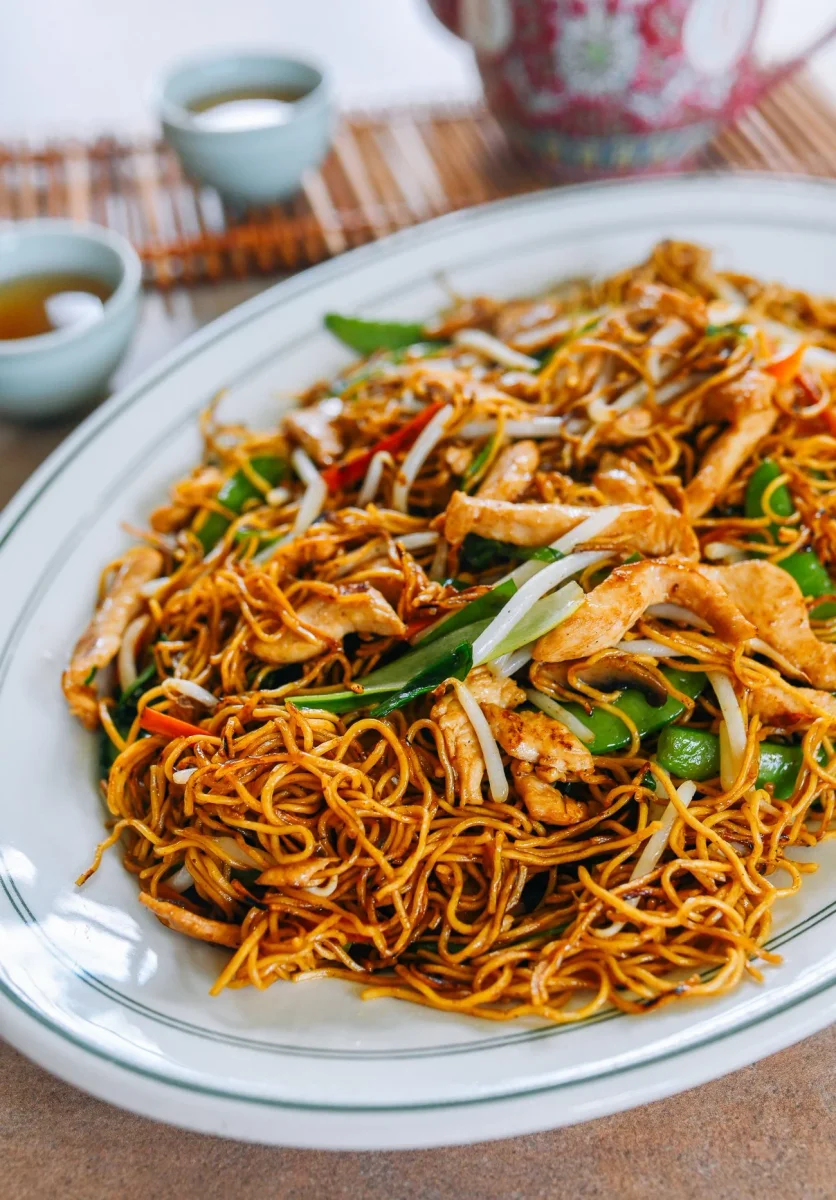
Chicken chow mein pairs thin noodles with tender chicken, crisp vegetables and a savoury soy-based sauce. This version lightly crisps the noodles in the wok before tossing everything together, adding plenty of contrast in texture.
Ingredients
- 340 g (12 oz)boneless, skinless chicken breast, thinly sliced (or boneless, skinless chicken thighs)
- 22.5 ml (1½ tbsp)water
- 15 ml (1 tbsp)oyster sauce
- 5 ml (1 tsp)cornflour
- 5 ml (1 tsp)Shaoxing wine (or dry cooking sherry)
- 5 ml (1 tsp)neutral oil, such as vegetable, rapeseed or avocado oil
- 227 g (8 oz)fresh, thin Hong Kong-style pan-fried noodles
- 15 ml (1 tbsp)hot water
- 1.25 ml (¼ tsp)sugar
- 15 ml (1 tbsp)light soy sauce
- 5 ml (1 tsp)dark soy sauce
- 2.5 ml (½ tsp)sesame oil
- 15 ml (1 tbsp)oyster sauce
- 10 ml (2 tsp)Shaoxing wine
- 0.6 ml (⅛ tsp)white pepper
- 0.6 ml (⅛ tsp)salt
- 60 ml (4 tbsp)neutral oil, such as vegetable, rapeseed or avocado oil
- 10 ml (2 tsp)fresh ginger, finely julienned
- 1 clovegarlic, chopped
- ½ smallcarrot, julienned
- 160 ml (⅔ cup)fresh mushrooms (or dried shiitake mushrooms, soaked for 2 hours in hot water and sliced)
- 240 ml (1 cup)sugar snap peas (or mangetout)
- 240 ml (1 cup)mung bean sprouts
- 2spring onions, finely julienned
Instructions
- 1
Marinate the chicken
Combine the sliced chicken with 22.5 ml water, 15 ml oyster sauce, 5 ml cornflour, 5 ml Shaoxing wine and 5 ml oil. Massage until the chicken has absorbed the liquid and is evenly coated.
- 2
Boil the noodles
Bring 1.9 litres (2 quarts) of water to the boil in a wok or large pan. Cook the noodles for 1 minute, then drain in a colander, rinse under cold water and spread out to drain further.
- 3
Mix the sauce
Stir the hot water and sugar together in a small bowl until the sugar dissolves. Add the light and dark soy sauces, sesame oil, 15 ml oyster sauce, 10 ml Shaoxing wine, white pepper and salt; set aside.
- 4
Crisp the noodles
Heat the wok over medium-high heat and add 30 ml (2 tbsp) oil, coating the surface. Spread the noodles in a thin, even layer and tilt the wok in a circular motion to distribute the oil. Cook for about 2 minutes, adjusting the heat as needed: lower it if the noodles begin to scorch, or raise it to encourage browning. The wok should not be smoking.
- 5
Turn the noodles
Flip the noodles and add 15 ml (1 tbsp) oil around the wok's edge. Cook for 90 seconds, then flip again; it is fine if the noodles do not turn over in one piece. Cook for another 2 minutes, aiming for light browning and some crisp patches, then transfer to a plate.
- 6
Sear the chicken
Heat the wok over high heat until just smoking, then spread the remaining 15 ml (1 tbsp) oil around its edge. Add the chicken in one layer and sear for 30 seconds on each side. Stir-fry for a further 20 seconds, until about 80% cooked, then remove the chicken, leaving any oil in the wok.
- 7
Cook the aromatics
Reduce the heat to medium, add the ginger to the oil and cook for about 15 seconds. Add the garlic, mushrooms and carrot, then stir-fry for 1 minute.
- 8
Toss and serve
Turn the heat to high and add the noodles, sugar snap peas and chicken, including any juices. Pour over the sauce and stir-fry with a lifting motion for about 30–45 seconds, until evenly coated. Add the bean sprouts and spring onions and stir-fry for 1 minute more. Cook until the spring onions wilt while the sprouts remain somewhat fresh and crunchy, then serve.
What is chicken chow mein?
Chow mein is a Chinese noodle dish whose name is commonly translated as “stir-fried noodles”. Its many regional and restaurant versions combine noodles with vegetables and often meat, seasoned with a savoury sauce.
This version uses thin Hong Kong-style noodles, chicken and a mix of crisp vegetables. Briefly frying the noodles before tossing them with the sauce gives them browned, crisp edges while leaving some strands tender.
Nutrition and macros by portion
The nutrition label shows one serving as written: 432 calories, 26g protein, 39g carbs, 19g fat.
| Portion | Adjustment | kcal | Protein | Carbs | Fat |
|---|---|---|---|---|---|
| Lighter | Use less frying oil | 302 kcal | 18g | 27g | 13g |
| This serving | As written | 432 kcal | 26g | 39g | 19g |
| Hungry | Larger noodle portion | 648 kcal | 39g | 59g | 29g |
The noodles supply most of the carbohydrates, while the chicken contributes much of the protein. Oil, sesame oil and the sauces account for a substantial share of the fat; serve with extra steamed vegetables if you want to balance the plate without adding another large portion of noodles.
The noodle choice matters
Fresh noodles: Hong Kong-style pan-fried noodles are thin and cook quickly, so the brief pre-boil keeps them from becoming too soft. Drain them well after rinsing so excess water does not interfere with browning.
Drying time: Spread the drained noodles out rather than leaving them in a mound. Drier noodles are easier to separate and crisp more readily in the wok.
Why velvet the chicken?
The marinade: Water, oyster sauce, cornflour, wine and a little oil coat the sliced chicken. Massaging the mixture in helps it cling evenly before the quick sear.
The cut: Slice the chicken thinly so it cooks rapidly and can be tossed through the noodles without large pieces. Thigh can be used instead of breast, as listed in the ingredients.
Get the noodle texture right
Even layer: Spread the noodles thinly across the oiled wok, and tilt it to help the oil reach the strands. Avoid stirring constantly during this stage; the noodles need contact with the hot surface to develop crisp patches.
Manage the heat: Keep the wok below smoking temperature while frying the noodles. Turn the noodles as best you can, then let the second side brown lightly rather than aiming for a uniformly hard crust.
Work quickly at the finish
Prep first: Have the sauce mixed and the vegetables ready before returning the wok to high heat. The final toss is brief, so there is little time to measure or chop once the cooking starts.
Add in stages: Cook the ginger, then the garlic, mushrooms and carrot before adding noodles, peas and chicken. Bean sprouts and spring onions go in last so they keep some freshness and crunch.
Serving and balance
The noodles make this a filling one-pan meal, with chicken and vegetables distributed through each serving. Serve it as soon as it is tossed, while the noodles still have crisp edges and the sprouts are lively.
For a fuller meal, serve alongside steamed greens or a simple vegetable dish. Keep any extra sauce modest at the table so the noodles do not lose their lightly crisp texture.
Recipe notes & tips
- Slice the chicken and vegetables before heating the wok so the final stir-fry can move quickly.
- Drain the noodles thoroughly after rinsing to help them brown rather than steam.
- Fry the noodles in a thin layer and allow them to sit against the wok between turns.
- Mix the sauce fully before adding it, so the sugar and seasonings are evenly distributed.
- Add the bean sprouts and spring onions at the end to preserve some crunch.
Variations
- Use chicken thighs: Slice boneless, skinless thighs thinly in place of the breast.
- Swap the peas: Use mangetout instead of sugar snap peas.
- Choose shiitake: Soak dried shiitake mushrooms for 2 hours in hot water, then slice them.
- Change the wine: Use dry cooking sherry in the chicken marinade instead of Shaoxing wine.
- Add more vegetables: Increase the carrot or mushrooms while keeping the noodles in the recipe.
Common mistakes to avoid
- Wet noodles: Excess water can make them steam; drain them well and spread them out before frying.
- Smoking wok: The noodles may burn before they crisp; lower the heat if the wok begins to smoke.
- Crowded chicken: Overlapping slices will not sear evenly; spread them in one layer in the wok.
- Overcooked chicken: It cooks again with the noodles; remove it after the stated brief sear and stir-fry.
- Soft sprouts: Adding them too early dulls their crunch; toss them in for the final minute.
How to store
Refrigerate leftovers in an airtight container for up to 3 days. Reheat in a hot wok or frying pan, stirring until piping hot; the noodles will be softer than when freshly made.
Frequently asked questions
Can I use dried noodles?
The recipe is written for fresh, thin Hong Kong-style pan-fried noodles. If using dried noodles, cook them according to their packet directions and drain them well before continuing.
Can I use chicken thighs instead of breast?
Yes. The ingredients list boneless, skinless thighs as an alternative; slice them thinly so they cook quickly.
What can I use instead of Shaoxing wine?
Dry cooking sherry is given as an alternative for the wine in the chicken marinade. The sauce also calls for Shaoxing wine, so use the same substitute there if needed.
How do I stop the noodles sticking?
Drain them well after rinsing, coat the wok with oil and spread the noodles in a thin layer. Avoid letting the wok get so hot that the noodles scorch.
Can I prepare anything ahead?
You can slice the chicken and vegetables and mix the sauce in advance. For the best noodle texture, boil and fry the noodles close to serving time.
Cook it from the original
This recipe comes from thewoksoflife.com. Their page has the author’s own photos, notes and tips — the best place to cook it from.
Open the recipe on thewoksoflife.com