
Chicken Katsu
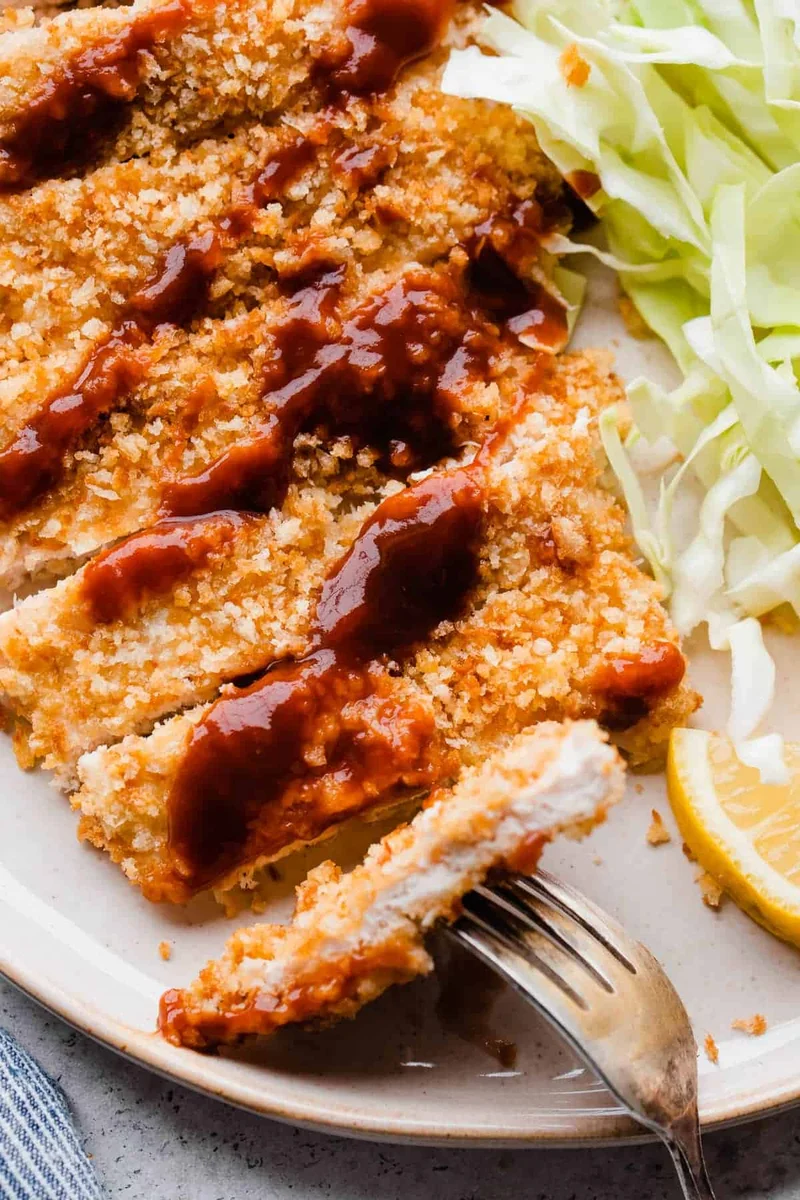
Oven-baked chicken katsu pairs tender chicken with a crisp, golden panko coating. Serve it with shredded cabbage, rice, lemon and tonkatsu sauce for a Japanese-style dinner.
Ingredients
- 4chicken breast cutlets
- ¾ tsp (about 4 g), dividedkosher salt
- ¼ tsp (about 0.5 g)ground black pepper
- 28 g (2 tbsp)unsalted butter
- 60 g (1 cup)panko breadcrumbs
- 30 g (¼ cup)white wholemeal flour or plain flour
- 1 largeegg
- as needednon-stick cooking spray, preferably olive oil spray
- to tastetonkatsu sauce
- to tastefinely shredded cabbage
- to tastelemon wedges
- to tastecooked rice (white, brown or cauliflower)
Instructions
- 1
Heat the oven
Place a rack in the upper third of the oven and preheat it to 220°C (425°F).
- 2
Prepare the tray
Line a rimmed baking tray with baking paper. Set an oven-safe rack on top, coat it generously with non-stick spray and set aside.
- 3
Season the chicken
Gently pound the cutlets to an even thickness of about 1.3 cm (½ inch). Season them with ½ teaspoon of the salt and the black pepper.
- 4
Toast the panko
Melt the butter in a medium frying pan over a medium heat. Stir in the breadcrumbs and remaining ¼ teaspoon of salt, coating the crumbs in butter. Cook, stirring constantly, for about 2 minutes until lightly toasted and turning golden. Tip into a wide, shallow dish.
- 5
Set up coatings
Put the flour in one shallow bowl and beat the egg in a second shallow bowl.
- 6
Coat in flour
Arrange the chicken, flour, egg, panko and prepared tray in order. Working with one cutlet at a time, coat it lightly in flour on all sides, then shake off the excess.
- 7
Dip in egg
Dip each floured cutlet into the beaten egg.
- 8
Add the panko
Press the cutlets into the panko, patting the crumbs so they adhere. Arrange them on the tray without touching, then mist the tops with non-stick spray.
- 9
Bake the chicken
Bake on the upper oven rack for about 12–14 minutes, until cooked through and the centre reaches 74°C (165°F). The chicken can be removed a few degrees early if carry-over cooking will bring it to temperature.
- 10
Rest briefly
Take the chicken from the oven and leave it to rest for 5 minutes.
- 11
Serve the katsu
Slice the chicken thinly if desired and drizzle with tonkatsu sauce. Serve with cabbage, a small bowl of rice and lemon wedges, with extra sauce on the side.
What is chicken katsu?
Katsu is a Japanese dish of meat coated in breadcrumbs and cooked until crisp; chicken katsu uses chicken in place of the pork used for tonkatsu. It is commonly served with shredded cabbage and a savoury-sweet tonkatsu sauce.
This version bakes the cutlets rather than deep-frying them. Toasting the panko in butter first helps it brown in the oven and gives the coating a head start.
Nutrition and macros by portion
The nutrition label shows one serving as written: 344 calories, 41g protein, 16g carbs, 12g fat.
| Portion | Adjustment | kcal | Protein | Carbs | Fat |
|---|---|---|---|---|---|
| Lighter | More cabbage, less rice | 241 kcal | 29g | 11g | 8g |
| This serving | As written | 344 kcal | 41g | 16g | 12g |
| Hungry | Add a larger rice portion | 516 kcal | 62g | 24g | 18g |
The chicken provides most of the protein, while the panko, flour and rice contribute carbohydrates. Butter and the egg contribute fat, with the crumb coating adding some more. For a balanced plate, serve with a generous portion of cabbage and a modest bowl of rice.
Why toast the panko first?
Golden crumbs: A quick toast in butter colours the panko before it goes onto the chicken. Keep stirring so the crumbs brown evenly and do not scorch.
Good coverage: Let the toasted crumbs sit in a wide, shallow dish. There is room to press each cutlet into them without scraping off the coating.
How to get an even coating
Flour first: A light dusting gives the egg something to cling to. Shake off excess flour so it does not form a thick, powdery layer.
Press gently: Let the egg coat the cutlet, then pat on the panko. Set each piece down with space around it so the hot air can reach the edges.
Check the chicken for doneness
Thickness matters: Pounding the cutlets to an even 1.3 cm (½ inch) helps them cook at a similar rate. Very uneven pieces may need different cooking times.
Use a thermometer: Check the thickest part for 74°C (165°F). The stated 12–14 minutes is a guide; start checking towards the early end of that range.
Serving the katsu
Fresh sides: Shredded cabbage and a squeeze of lemon bring a crisp, bright contrast to the buttery crumb. Serve the tonkatsu sauce alongside or drizzle it over just before eating.
Rice: White rice is traditional, while brown rice or cauliflower rice are alternatives listed for this meal. Keep extra sauce in a small bowl for dipping.
Timing and texture
Work efficiently: Arrange the flour, egg and panko in sequence before coating the chicken. This keeps the process orderly and makes it easier to keep one hand for dry ingredients and one for wet.
Rest before slicing: Five minutes of resting gives the cutlets time to settle after baking. Slice just before serving to keep the coating crisp for as long as possible.
Recipe notes & tips
- Use cutlets of similar thickness so they finish cooking at about the same time.
- Stir the panko continuously as it toasts, since the crumbs can go from golden to burnt quickly.
- Shake off loose flour before dipping the chicken in egg.
- Pat the panko onto the chicken instead of brushing it off when arranging the cutlets.
- Leave space between the cutlets on the rack for the coating to crisp.
- Check the thickest cutlet with a thermometer rather than relying on colour alone.
Variations
- Try brown rice: Serve with cooked brown rice instead of white rice.
- Use cauliflower rice: Choose cauliflower rice for a vegetable-based alternative to cooked rice.
- Change the flour: Use plain flour or white wholemeal flour as listed.
- Add lemon: Squeeze a lemon wedge over the chicken just before eating.
- Serve sauce on the side: Keep the coating crisp by offering tonkatsu sauce for dipping.
Common mistakes to avoid
- Uneven cutlets: Pound them to an even thickness so thinner areas do not dry out before thicker parts cook.
- Burnt breadcrumbs: Stir constantly and remove the panko from the pan as soon as it is lightly toasted.
- Too much flour: Shake off the excess before dipping in egg to avoid a gummy coating.
- Loose panko: Pat the crumbs gently onto the chicken so they adhere.
- Crowded tray: Arrange the cutlets without touching so they can bake evenly.
- Skipping the temperature check: Check the centre of the thickest piece reaches 74°C (165°F).
How to store
Refrigerate leftover chicken katsu in an airtight container for up to 3 days. Reheat in an oven or air fryer until hot to help restore some crispness; the coating may soften in the microwave.
Frequently asked questions
Can I use plain flour instead of white wholemeal flour?
Yes. The recipe lists plain flour as an alternative, and the coating method stays the same.
How do I know when the chicken is done?
Check the thickest part with a thermometer; it should reach 74°C (165°F). The 12–14 minute baking time is a guide and can vary with the cutlets.
Can I prepare the chicken ahead?
For the crispiest result, coat and bake the cutlets just before serving. You can set out the flour, beaten egg and toasted panko in advance.
What should I serve with chicken katsu?
Serve it with shredded cabbage, cooked rice, lemon wedges and tonkatsu sauce. The recipe also suggests brown rice or cauliflower rice as alternatives.
Can I leave the chicken whole rather than slicing it?
Yes. Slicing is optional; serve the cutlets whole if you prefer.
Cook it from the original
This recipe comes from wellplated.com. Their page has the author’s own photos, notes and tips — the best place to cook it from.
Open the recipe on wellplated.com