
Char Kuey Teow '炒粿条'
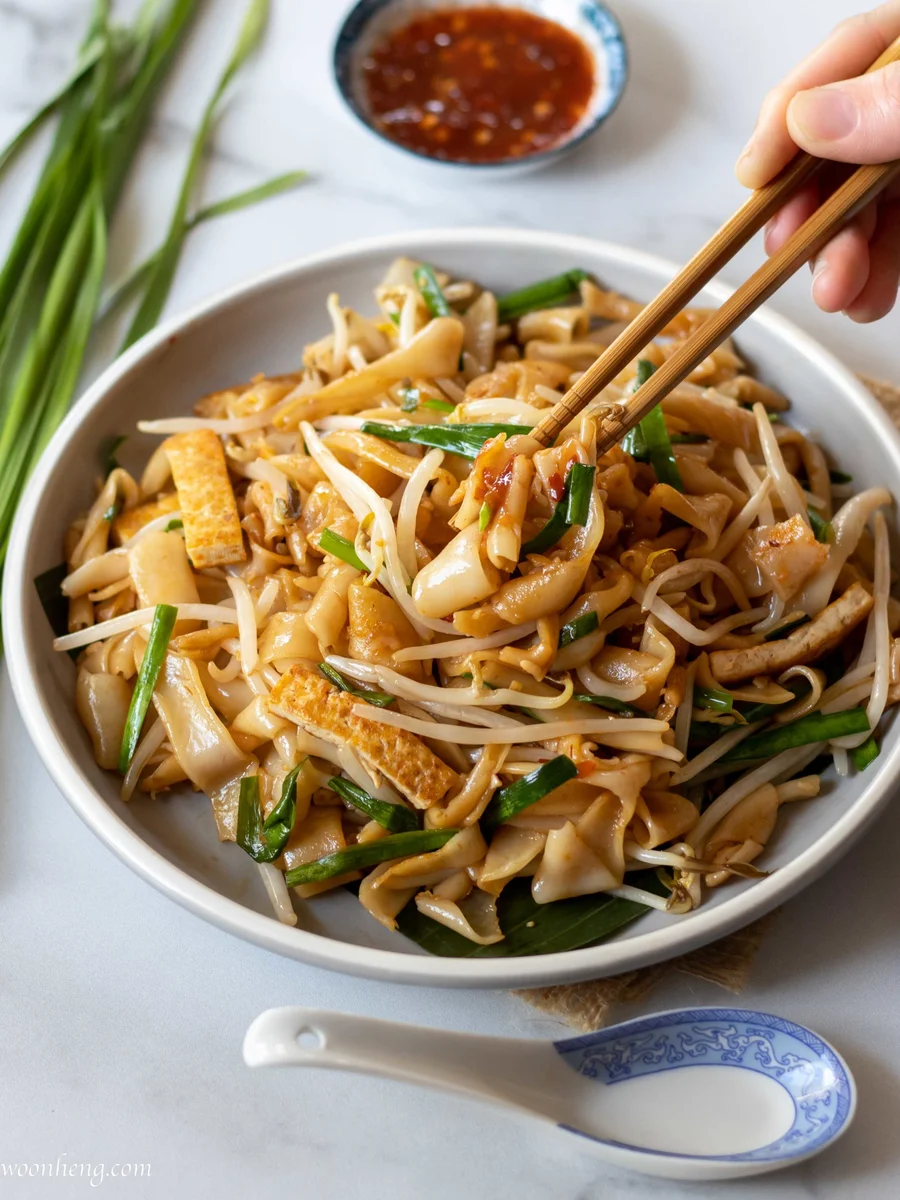
Char kuey teow is a quick stir-fry of flat rice noodles, tofu and crisp vegetables in a savoury, chilli-spiked sauce. This vegan version makes a handy lunch or dinner, with fresh noodles and a hot pan doing most of the work.
Ingredients
- 2 servings (about 420 g)fresh flat rice noodles
- 130 g (5 oz)firm tofu, pressed and cut into your preferred size
- about 100 g (1 cup)mung bean sprouts
- about 30 g (½ cup)Chinese chives, chopped
- 3 clovesgarlic, finely minced
- 1½ tablespoonssambal oelek or another chilli sauce
- for cookingoil
- to tastesalt
- ½ teaspoondark soy sauce, thick version
- 2 tablespoonslight soy sauce
- a pinchsugar
Instructions
- 1
Fry the tofu
Cut the tofu into your preferred shapes. Heat oil in a non-stick pan and fry the tofu until golden on all sides, then transfer it to a bowl.
- 2
Mix the sauce
Combine the sauce ingredients in a bowl and stir until well mixed. Set aside until needed.
- 3
Cook garlic
Heat 1 tablespoon of oil in a non-stick pan. Sauté the garlic until aromatic, then add the sambal oelek and tofu and stir briefly.
- 4
Toss the noodles
Add the noodles and sauce, tossing until everything is well combined. Cook for about 30 seconds so the noodles can absorb the sauce.
- 5
Add the vegetables
Add the vegetables and toss again until they are cooked through. Taste and adjust the seasoning as needed.
- 6
Serve warm
Serve the noodles warm with chilli on the side.
What is char kuey teow?
Char kuey teow is a Southeast Asian stir-fry of flat rice noodles, commonly associated with Malaysian and Singaporean cooking. Its name refers to the flat rice noodles and the act of frying them.
This version keeps the mix plant-based, pairing tofu with bean sprouts and Chinese chives. Fresh noodles and a quick toss in soy and chilli give it its savoury, aromatic character.
Nutrition and macros by portion
The nutrition label shows one serving as written: 430 calories, 15g protein, 60g carbs, 16g fat.
| Portion | Adjustment | kcal | Protein | Carbs | Fat |
|---|---|---|---|---|---|
| Lighter | Use less oil | 301 kcal | 11g | 42g | 11g |
| This serving | As written | 430 kcal | 15g | 60g | 16g |
| Hungry | Add more tofu | 645 kcal | 23g | 90g | 24g |
The rice noodles supply most of the carbohydrates, while tofu contributes much of the protein and some of the fat. Cooking oil and soy sauces add further fat and sodium; serve with extra fresh vegetables if you want to balance the noodles with more produce.
The noodles and tofu
Flat rice noodles: fresh noodles are soft and ready for a brief stir-fry, so handle them gently to keep them intact. If they are stuck together, loosen them carefully before they go into the pan.
Tofu: pressing it helps remove excess water, and browning the pieces first gives them a firmer surface. Set them aside while you cook the aromatics, then return them to the pan with the chilli.
Building the sauce
Soy sauces: light soy sauce brings saltiness, while the small amount of thick dark soy adds deeper colour and flavour. Stir the sauce ingredients together before cooking so they can be added evenly.
Chilli: sambal oelek gives the dish its heat and aromatic edge. You can choose another chilli sauce, but its saltiness and strength may vary, so taste before adding extra salt.
A quick, hot stir-fry
Hot pan: heat the pan before adding the oil and garlic, then keep the ingredients moving as you stir-fry. The garlic should smell fragrant; take care not to let it darken too much.
Short finish: once the noodles and sauce are combined, cook for about 30 seconds to let the noodles take up the sauce. Add the vegetables at the end so they warm through without losing all their crunch.
Serving and seasoning
Final taste: soy sauce and sambal both contribute salt, so check the seasoning after tossing everything together. Add salt only if the finished noodles need it.
On the side: serve straight away with chilli for anyone who would like more heat. A simple side of fresh vegetables can make the meal more substantial.
Recipe notes & tips
- Press the tofu before cutting so it browns rather than releases excess water in the pan.
- Prepare and measure the sauce ingredients before heating the pan; the stir-fry moves quickly.
- Use a non-stick pan and toss gently to help keep the fresh noodles from breaking.
- Keep the garlic moving in the hot oil and add the sambal as soon as it smells aromatic.
- Taste the finished dish before adding salt, since the soy sauces and chilli sauce can already be salty.
Variations
- More heat: add extra sambal at the table to suit individual tastes.
- Milder noodles: reduce the sambal and serve additional chilli separately.
- Extra vegetables: add sliced greens with the bean sprouts and chives so they cook briefly.
- Different protein: replace the tofu with another firm plant-based protein and brown it before setting it aside.
- Fresh herbs: finish with chopped coriander for a fresh note.
Common mistakes to avoid
- Overcooking the noodles: they can turn soft and break; toss them briefly and stop once they have absorbed the sauce.
- Crowding the pan: the ingredients may heat unevenly; use a pan large enough to toss everything comfortably.
- Burning the garlic: it can turn bitter; stir it in the hot oil only until aromatic.
- Adding salt too early: the soy sauces and sambal are already seasoned; taste the finished stir-fry first.
- Skipping the tofu browning: pale tofu has less texture; fry it until golden on all sides before setting it aside.
How to store
Refrigerate leftovers in an airtight container for up to 2 days. Reheat in a pan over medium heat with a small splash of water, tossing until hot; the noodles may soften as they are stored.
Frequently asked questions
Can I use dried flat rice noodles?
Yes, cook them according to their packet instructions first, then drain them well before stir-frying. Avoid overcooking them, as they will soften further in the pan.
Do I need to press the tofu?
Pressing helps remove excess moisture so the tofu can brown more easily. Pat it dry before frying for a better surface.
Can I make the dish less spicy?
Use less sambal oelek, then serve extra chilli separately. The heat level can vary between different chilli sauces.
Why are my rice noodles breaking?
They may be too soft or being stirred too forcefully. Loosen them carefully and toss gently just long enough to coat them in the sauce.
Can I prepare anything ahead?
You can press and cut the tofu, chop the vegetables and mix the sauce ahead of time. Cook the noodles just before serving for the best texture.
Cook it from the original
This recipe comes from woonheng.com. Their page has the author’s own photos, notes and tips — the best place to cook it from.
Open the recipe on woonheng.com