
Pasta with Pumpkin
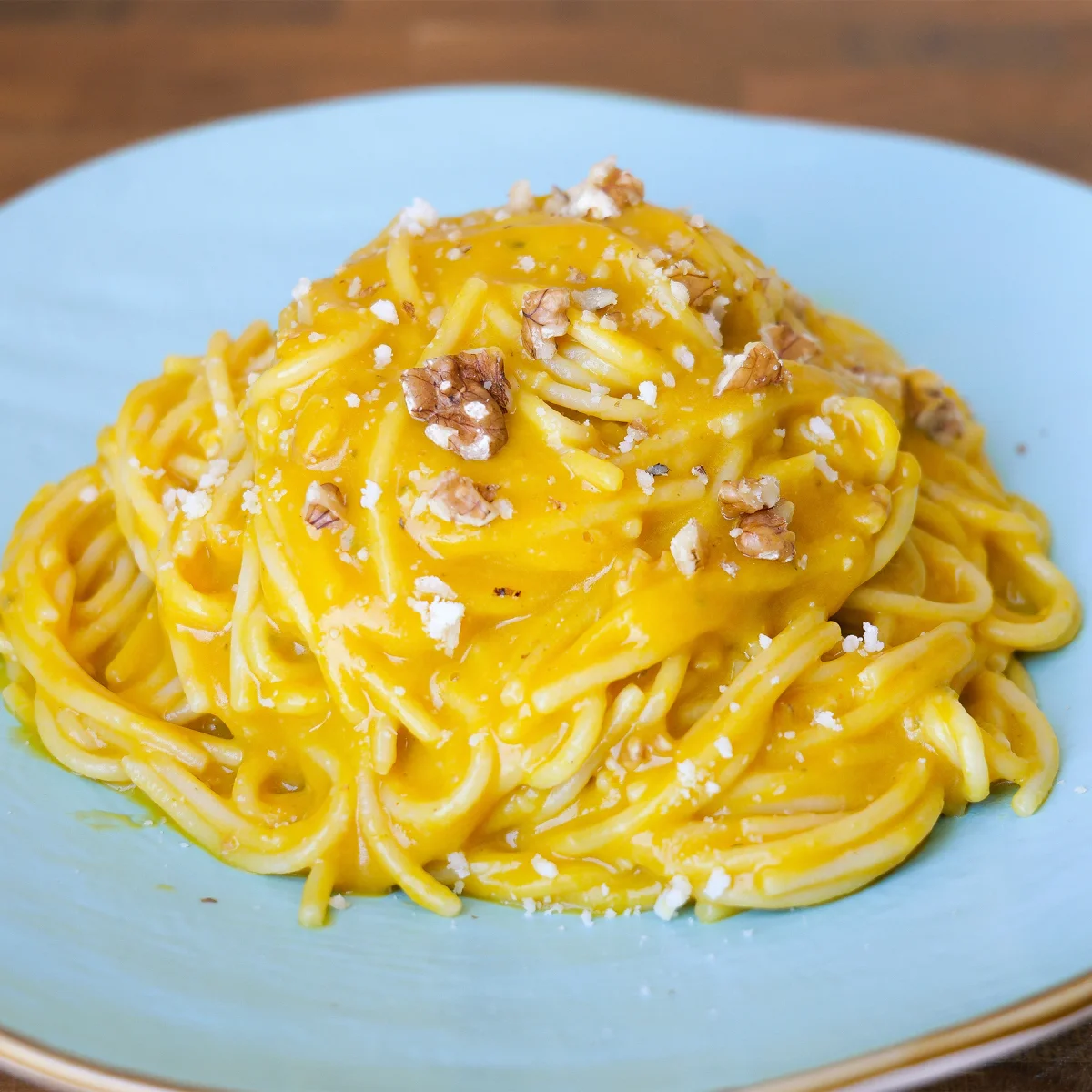
Roasted pumpkin is blended with garlic, rosemary and olive oil to make a creamy sauce for spaghetti, finished with Pecorino Romano and crunchy walnuts. It’s a warming, meat-free meal that makes the most of pumpkin’s sweetness without using cream.
Ingredients
- 1 kg (2.2 lb)pumpkin
- 300 g (10.6 oz)spaghetti
- 2 cloves, peeledgarlic
- 1 fresh bunchrosemary
- 6–7 tbspPecorino Romano
- 9Californian walnuts, crushed
- a generous amount, plus extra as neededextra virgin olive oil
- to tastesalt and freshly ground black pepper
- 1 tbsprock salt, for the pasta water
Instructions
- 1
Prepare pumpkin
Slice the pumpkin and remove its skin.
- 2
Arrange slices
Line a baking tray with baking paper and lay the pumpkin slices on it.
- 3
Season pumpkin
Drizzle a generous amount of extra virgin olive oil over the pumpkin. Strip the rosemary leaves from the sprig and scatter them over the slices, then season with salt and freshly ground black pepper.
- 4
Roast pumpkin
Put the two garlic cloves on the tray. Roast until the pumpkin is soft, checking after 20 minutes to ensure it is not burning and turning the slices so they roast evenly on both sides.
- 5
Blend the sauce
Transfer the roasted pumpkin, rosemary and garlic to an immersion blender container. Add a generous amount of extra virgin olive oil and blend until creamy, adding more oil if the mixture is difficult to blend. Set aside.
- 6
Cook the pasta
Bring a large pot of water to the boil, add 1 tablespoon of rock salt and let it dissolve. Add the pasta and cook according to the packet instructions, stirring occasionally.
- 7
Loosen the cream
When the pasta has very little cooking time left, scoop out a mugful of pasta water. Add some to the pumpkin cream with a sprinkle of Pecorino, then blend again. Add more pasta water if the sauce is too thick.
- 8
Smooth the sauce
Stir the pumpkin cream further with a spoon until it has a smooth, creamy consistency.
- 9
Warm the sauce
Heat a little extra virgin olive oil in a large pan and add a splash of pasta water along with the pumpkin cream. Swirl a little more pasta water around the blender to collect the remaining cream, then add it to the pan. Stir, adding more pasta water if the sauce seems too dry.
- 10
Coat the pasta
Transfer the pasta to the pan and toss until evenly coated. Add pasta water as needed to keep the mixture creamy.
- 11
Finish and serve
Turn off the heat and add some Pecorino and crushed walnuts, reserving a portion of each for garnish. Toss to combine.
What is pasta with pumpkin?
Pumpkin pasta is a comforting autumn dish found in several forms across Italian cooking, where seasonal squash is often paired with pasta and cheese. This version turns roasted pumpkin into a smooth sauce rather than leaving it in chunks.
Roasting brings out the pumpkin’s sweetness, while garlic, rosemary and Pecorino give the sauce savoury depth. Walnuts provide a crunchy contrast without making the dish feel heavy.
Nutrition and macros by portion
The nutrition label shows one serving as written: 570 calories, 18g protein, 75g carbs, 24g fat.
| Portion | Adjustment | kcal | Protein | Carbs | Fat |
|---|---|---|---|---|---|
| Lighter | Use less olive oil | 399 kcal | 13g | 53g | 17g |
| This serving | As written | 570 kcal | 18g | 75g | 24g |
| Hungry | Add pancetta or speck | 855 kcal | 27g | 113g | 36g |
Most of the carbohydrates come from the spaghetti, while pumpkin adds further carbohydrates and fibre. Olive oil and walnuts contribute much of the fat, and Pecorino provides protein along with some fat. Balance the plate with a green salad or vegetables alongside.
Choosing the pumpkin
Pumpkin: Choose a firm pumpkin with flesh that softens readily when roasted. Removing the skin before roasting also makes the slices easier to blend into a smooth sauce.
Rosemary and garlic: Fresh rosemary lends a fragrant, savoury note, and roasting the peeled garlic alongside the pumpkin softens its flavour. Keep an eye on the tray so the garlic does not burn.
Build a creamy sauce
Olive oil: The recipe uses extra virgin olive oil to help the roasted pumpkin blend smoothly, rather than relying on cream. Add it gradually while blending, stopping when the sauce is creamy.
Pasta water: Starchy cooking water helps loosen the pumpkin mixture and bring it together with the pasta. Add it in small splashes so the sauce stays thick enough to cling.
Roast for softness
Check the pumpkin after 20 minutes, as directed, and turn the slices for even roasting. The method does not specify a temperature or total roasting time, so use softness as the key doneness cue and watch for any signs of burning.
The pumpkin should blend without effort once roasted. If it still feels firm, continue roasting and check it again before making the sauce.
Finish the pasta in the pan
Reserve a mugful of pasta water near the end of cooking, then add it to the pumpkin cream a little at a time. This lets you adjust the consistency both in the blender and in the pan.
Toss the cooked pasta with the sauce while it is warm so each strand is coated. Turn off the heat before adding the finishing Pecorino and walnuts.
Serve with something fresh
Serve the pasta straight away, with the reserved Pecorino and walnuts scattered over the top. A crisp green salad or simply dressed vegetables make a fresh accompaniment to the rich, sweet sauce.
For a heartier plate, the recipe description suggests adding pancetta or speck. Keep the meat separate until browned, then combine it with the finished sauce.
Recipe notes & tips
- Cut the pumpkin into slices of similar thickness so they roast at a similar rate.
- Check the pumpkin after 20 minutes and turn the slices to encourage even roasting.
- Reserve the pasta water near the end of cooking, when it is ready to use for loosening the sauce.
- Add olive oil and pasta water gradually while blending to avoid making the sauce too thin.
- Save some Pecorino and crushed walnuts to garnish each serving.
Variations
- Add pancetta: Brown it separately and fold it through the finished pasta for a meatier version.
- Use speck: Add browned speck for a smoky, savoury variation.
- Change the pasta: Use another pasta shape that holds the pumpkin sauce well.
- Boost the herbs: Add a little more fresh rosemary for a more pronounced herbal note.
- Adjust the cheese: Add Pecorino gradually and season to taste, as it brings a salty sharpness.
Common mistakes to avoid
- Uneven slices: Cut the pumpkin to a similar thickness so some pieces do not burn while others stay firm.
- Burnt pumpkin or garlic: Check the tray after 20 minutes and turn the slices as needed.
- Thick sauce: Blend in pasta water a little at a time until the pumpkin cream loosens.
- Watery sauce: Add pasta water in small splashes and stop once the sauce coats the pasta.
- Missed pasta water: Scoop out a mugful near the end of cooking before draining or transferring the pasta.
How to store
Refrigerate leftovers in an airtight container and use within 3 days. Reheat gently in a pan with a splash of water, stirring until the sauce loosens; add fresh walnuts after reheating for the best crunch.
Frequently asked questions
What type of pumpkin works best?
Choose a firm pumpkin with flesh that becomes soft when roasted. The recipe does not specify a particular variety.
How long should I roast the pumpkin?
The method gives no oven temperature or total roasting time. Check after 20 minutes, turn the slices and continue until they are soft and not burning.
Can I make the sauce without a blender?
An immersion blender is used in the recipe to make the sauce smooth. If using another blender, transfer the roasted ingredients carefully and blend until creamy.
Can I make this without meat?
Yes. The pumpkin, rosemary, Pecorino and walnuts make a complete meat-free version; pancetta or speck are optional additions.
How do I stop the sauce from getting too thick?
Add reserved pasta water gradually while blending and again in the pan, until the sauce is creamy and coats the pasta.
When should I add the walnuts?
Add most of the crushed walnuts after turning off the heat, then toss them through and save some for the garnish.
Cook it from the original
This recipe comes from vincenzosplate.com. Their page has the author’s own photos, notes and tips — the best place to cook it from.
Open the recipe on vincenzosplate.com