
No Knead Focaccia Bread
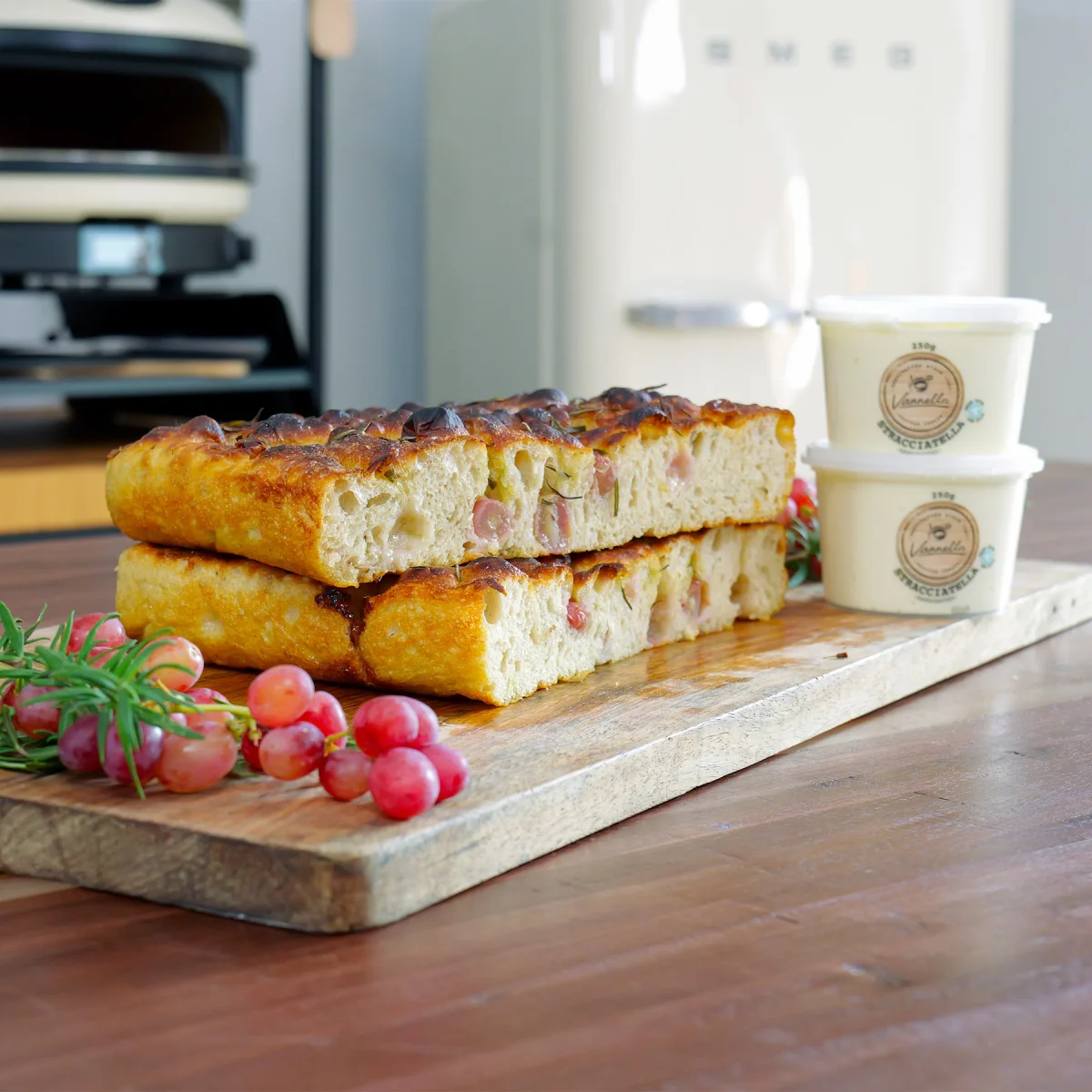
This no-knead focaccia pairs a crisp, dimpled crust and soft crumb with sweet red grapes, rosemary and Stracciatella cheese. Its long, hands-off fridge rise develops the dough without requiring kneading or special equipment.
Ingredients
- 430 gcool water
- 7 gdried yeast
- 540 gplain flour
- 11 gsea salt
- 12 gextra-virgin olive oil
- 30 gextra-virgin olive oil
- 30 graw sugar
- 2 sprigsrosemary
- 300 gorganic red seedless grapes
- 250 gStracciatella cheese
Instructions
- 1
Dissolve the yeast
Pour the cool water into a mixing bowl and stir in the dried yeast to begin dissolving it.
- 2
Mix the dough
Add the flour, sea salt and 12 g extra-virgin olive oil. Mix until combined, cover the bowl with cling film and leave the dough at room temperature for 30 minutes.
- 3
Fold the dough
Lightly oil your hands, lift the dough from underneath, stretch it and fold it over itself. Turn the bowl a quarter-turn and repeat three more times, making four folds in total. Cover again and leave for 30 minutes.
- 4
Build the structure
On a work surface, stretch and fold the dough from top to bottom, bottom to top, left to right and right to left. Gently lift and shape it into a ball.
- 5
Chill the dough
Coat the sides of the bowl with extra-virgin olive oil, return the dough and turn it so it is coated. Cover with cling film and ferment in the fridge for at least 8 hours, or up to 24 hours.
- 6
Oil the dish
After fermentation, spread extra-virgin olive oil all over the casserole dish.
- 7
Stretch the dough
Transfer the dough to the dish and slowly stretch it with your fingers until it reaches across the base.
- 8
Make the dimples
Press your fingertips gently into the dough, making indentations from one end to the other.
- 9
Add the toppings
Sprinkle over the raw sugar. Tear the rosemary leaves and scatter them across the dough, then add the grapes, pressing them in gently.
- 10
Rest the dough
Drizzle the top with extra-virgin olive oil and leave the dough to rest at room temperature for 30 minutes.
- 11
Bake the focaccia
Heat the oven to 210°C (410°F). Once the dough has rested, make a final set of dimples with oiled fingers and bake at 210°C (410°F) for 15 minutes.
What is grape focaccia?
Focaccia is a flat Italian bread, typically finished with olive oil and finger-made dimples. This version brings sweet grapes and rosemary together on a soft, airy base.
A long, cold fermentation gives the dough time to develop flavour while keeping the method hands-off. Stracciatella adds a creamy contrast to the baked bread and fruit.
Nutrition and macros by portion
The nutrition label shows one serving as written: 940 calories, 24g protein, 126g carbs, 37g fat.
| Portion | Adjustment | kcal | Protein | Carbs | Fat |
|---|---|---|---|---|---|
| Lighter | Less cheese, more salad | 658 kcal | 17g | 88g | 26g |
| This serving | As written | 940 kcal | 24g | 126g | 37g |
| Hungry | A larger focaccia slice | 1410 kcal | 36g | 189g | 56g |
Most of the carbohydrates come from the flour, with additional sugars from the grapes and raw sugar. Olive oil and Stracciatella contribute much of the fat, while the flour and cheese provide most of the protein. Balance a portion with a generous salad or vegetables.
The dough’s simple method
No kneading: The dough is mixed, rested and strengthened with folds rather than worked continuously. Handle it gently so it keeps its air as it develops.
Cool water: It gives the yeast a starting point for dissolving and suits the slow rise that follows. Mix until the flour is incorporated before covering the bowl.
Why the folds matter
First folds: Stretching and folding the dough in the bowl helps it gain structure without a long kneading session. Oil your hands lightly to make the sticky dough easier to handle.
Final folds: Folding in four directions on the work surface helps shape the dough into a ball before its fridge rest. Lift it gently rather than pressing out the air.
The slow rise
Fridge time: Allow at least 8 hours for fermentation, or leave the dough for up to 24 hours if that suits your schedule. Keep it covered so the surface does not dry out.
Before baking: Stretch the chilled dough gradually across the oiled dish, then let it rest for 30 minutes at room temperature. If it resists stretching, give it a little time to relax rather than forcing it.
Dimples and toppings
Finger marks: Press down gently with your fingertips to create dimples across the dough. A final poke with oiled fingers just before baking restores the characteristic uneven surface.
Grapes and rosemary: Press the grapes in lightly so they sit on the dough, and scatter the torn rosemary leaves over the top. The sugar adds sweetness to the savoury, herby flavours.
When it is ready
Bake: The recipe gives a temperature of 210°C and a baking time of 15 minutes. Look for a golden surface and a set, baked-through centre; ovens and dishes can affect how quickly the bread colours.
To serve: Stracciatella is listed in the ingredients but is not included in the supplied method. Serve it alongside or spoon it over the focaccia after baking so its creamy texture remains distinct.
Serving ideas
Serve the focaccia warm, when the crust is crisp and the crumb is soft. Cut it into portions and pair it with a green salad or a simple vegetable soup.
The grapes and Stracciatella make this bread rich enough to enjoy as a light meal, or cut it into smaller pieces to share as part of a spread.
Recipe notes & tips
- Use a bowl large enough to leave room for the dough to expand during fermentation.
- Lightly oil your hands before folding or dimpling the sticky dough.
- Coat the whole base of the casserole dish with oil to help the focaccia release.
- Stretch the dough gradually; pause briefly if it springs back.
- Press the grapes in gently so they stay on top as the dough rises.
- Serve the Stracciatella after baking for a cool, creamy contrast.
Variations
- Black grapes: Swap in seedless black grapes for a deeper fruit flavour.
- Herb change: Use fresh thyme instead of rosemary for a different aromatic note.
- Cheese finish: Spoon Stracciatella over the baked focaccia just before serving.
- Savoury edge: Omit the raw sugar for a less sweet topping.
- Extra crunch: Scatter a few chopped nuts over the top before baking.
Common mistakes to avoid
- Skipping the folds: The dough may lack structure; complete all four folds during the bowl stage.
- Forcing the dough: It can tear or spring back; stretch it in stages and let it relax.
- Drying the surface: Uncovered dough can form a skin; cover it during both rests and fermentation.
- Too much pressure: Hard pressing can flatten the dough; make dimples gently with your fingertips.
- Adding cheese too early: Stracciatella is not included in the baking method; add it after baking or serve it on the side.
How to store
Keep leftover focaccia in an airtight container at room temperature for up to 2 days, or refrigerate for up to 3 days, especially if topped with Stracciatella. Reheat the bread briefly in a 180°C oven; store the cheese separately and add it after warming.
Frequently asked questions
Can I leave the dough in the fridge for 24 hours?
Yes. The method allows at least 8 hours and up to 24 hours of refrigerated fermentation. Keep the bowl covered during that time.
Do I need to knead this dough?
No. The recipe builds structure through stretches and folds instead of conventional kneading.
What if the dough will not stretch across the dish?
Stretch it gently in stages and let it rest briefly if it keeps springing back. Avoid pulling hard enough to tear it.
When should I add the Stracciatella?
The supplied method does not say when to add it. For a creamy finish, serve it alongside or spoon it over the focaccia after baking.
Can I use a different type of grape?
Seedless grapes are easiest to eat on the finished bread. Black seedless grapes can be used in place of the red ones.
How do I know when the focaccia is baked?
Bake it for the stated 15 minutes at 210°C and check that the top is golden and the centre is set. If it still looks underbaked, continue baking and check it again shortly.
Cook it from the original
This recipe comes from vincenzosplate.com. Their page has the author’s own photos, notes and tips — the best place to cook it from.
Open the recipe on vincenzosplate.com