
Chicken Livers in Pomegranate Molasses (Sawdet Djaj b Rub Ruman)
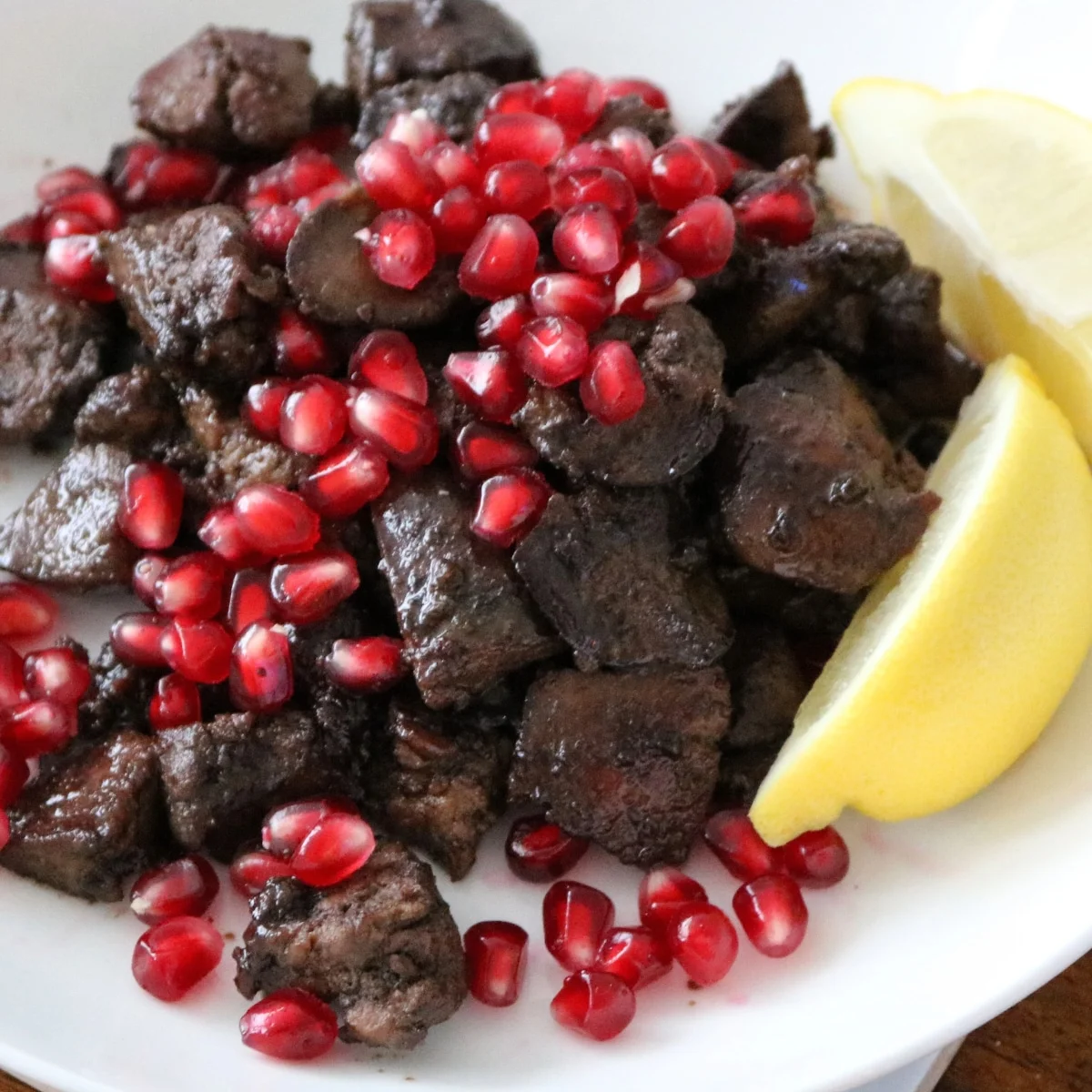
Chicken livers are cooked with garlic, lemon and pomegranate molasses for a savoury-sweet Lebanese dish with a gentle spice note. It comes together quickly and is well suited to serving with bread, pickles and fresh herbs.
Ingredients
- Approx 300 gcleaned chicken livers
- 2–3garlic cloves, roughly chopped
- 3 tbspregular olive oil or vegetable oil
- 2 tbsppomegranate molasses
- 1lemon, juiced
- Pinch, optionalsumac
- Pinch7-spice
- To tastesalt and black pepper
Instructions
- 1
Prepare the livers
Check the chicken livers for any remaining grit, then cut them into small, bite-sized pieces.
- 2
Warm the garlic
Put the roughly chopped garlic and regular olive oil in a pan. Heat gently until the garlic is very slightly golden, taking care not to burn it, then lift it out and set aside.
- 3
Fry the livers
Turn the heat up and add another drizzle of regular olive oil. Fry the chicken livers for about five minutes, then drain any excess liquid in the sink.
- 4
Add the spices
Lower the heat and add a good sprinkle of salt, sumac, 7-spice and black pepper. Cook for a few more minutes, drizzling in a little oil if the pan looks dry.
- 5
Add garlic and molasses
Return the garlic to the pan and add a good drizzle of pomegranate molasses. Fry for another 2 minutes.
- 6
Finish with lemon
Add the lemon juice a minute before turning off the heat. Taste and adjust the seasoning as needed.
- 7
Serve the livers
Serve with a side of lemon and extra pomegranate molasses in a dipping plate. Garnish with pomegranate seeds if you like.
- 8
Add accompaniments
Serve with fresh bread, pickles, radishes and herbs.
What are sawdet djaj b rub ruman?
Sawdet djaj b rub ruman is a Lebanese preparation of chicken livers with pomegranate molasses. This version combines the molasses’ sweet-tart flavour with garlic, lemon and a restrained amount of spice.
The quick cooking keeps the dish practical for a weeknight, while the bright, rich flavours make it especially suited to a spread of small plates.
Nutrition and macros by portion
The nutrition label shows one serving as written: 400 calories, 26g protein, 18g carbs, 28g fat.
| Portion | Adjustment | kcal | Protein | Carbs | Fat |
|---|---|---|---|---|---|
| Lighter | Use less oil | 280 kcal | 18g | 13g | 20g |
| This serving | As written | 400 kcal | 26g | 18g | 28g |
| Hungry | Add more bread | 600 kcal | 39g | 27g | 42g |
Chicken livers provide most of the protein, while the olive or vegetable oil contributes much of the fat. The molasses, garlic and lemon account for most of the carbohydrates. Serve with plenty of radishes, herbs and pickles, and choose how much bread to add to balance the plate to your appetite.
Choose and prepare the livers
Clean livers: check for grit and cut them into small, even pieces so they cook at a similar pace.
Keep the pieces bite-sized: they are easier to cook quickly and serve alongside bread and pickles.
Keep the garlic gentle
Start low: gently warming the garlic in oil brings out its aroma without making it harsh.
Lift it out while it is only very slightly golden. Garlic can darken quickly, so keep an eye on the pan and return it only when the molasses goes in.
Manage moisture and doneness
Fry in a hot pan: the recipe calls for turning up the heat before adding the livers, then draining away excess liquid after about five minutes.
Finish carefully: cook for a few more minutes with the spices, then add the molasses and fry for another 2 minutes. Chicken livers should be cooked through; avoid relying on colour alone to judge doneness.
Balance the sweet and sharp flavours
Pomegranate molasses: its concentrated tang and sweetness coat the livers, so add a drizzle as directed and taste before adding more at the table.
Lemon and seasoning: lemon juice goes in just before the heat is turned off. Taste at the end and adjust the salt, pepper or lemon to suit.
Build a Lebanese-style spread
Fresh bread: use it to scoop up the livers and their glossy sauce.
Crisp sides: pickles, radishes and fresh herbs add contrast to the soft, rich livers. A little extra lemon or pomegranate molasses can be served alongside for dipping.
Recipe notes & tips
- Cut the livers into similarly sized pieces so they cook more evenly.
- Keep the heat gentle while warming the garlic and remove it as soon as it is very slightly golden.
- Drain the excess liquid after frying the livers, as directed, before adding the seasonings.
- Add the lemon juice just a minute before turning off the heat to keep its flavour fresh.
- Taste the dish before serving and adjust the seasoning rather than adding extra salt automatically.
Variations
- Extra sumac: add another pinch for a more pronounced tang.
- More molasses: serve extra at the side for a sweeter, sharper finish.
- Pomegranate garnish: scatter pomegranate seeds over the dish if available.
- Vegetable oil: use it instead of regular olive oil for a more neutral flavour.
- Herb finish: serve with the fresh herbs suggested in the method for a brighter accompaniment.
Common mistakes to avoid
- Burnt garlic: keep the heat low and remove it as soon as it is very slightly golden.
- Crowded or wet pan: drain excess liquid after frying the livers so they are not left sitting in it.
- Dry pan: drizzle in a little oil during the spice stage if the livers look dry.
- Overcooked livers: follow the stated cooking stages and check that the pieces are cooked through without extending the frying unnecessarily.
- Lemon added too early: wait until a minute before turning off the heat, as the method directs.
How to store
Refrigerate leftovers promptly in a covered container and eat within 1–2 days. Reheat gently in a pan until steaming hot throughout; avoid prolonged heating, which can make the livers firm.
Frequently asked questions
Can I use vegetable oil instead of olive oil?
Yes. The recipe allows either regular olive oil or vegetable oil.
Is sumac essential?
No, it is optional. The dish still has its main sweet-tart flavour from the pomegranate molasses and lemon.
When should I add the lemon juice?
Add it a minute before turning off the heat, then taste and adjust the seasoning.
What should I serve with the livers?
The method suggests fresh bread, pickles, radishes and herbs, with lemon and extra pomegranate molasses on the side.
Can I prepare the dish ahead?
It is best cooked just before serving. You can clean and cut the livers ahead, then keep them covered in the refrigerator until ready to cook.
Cook it from the original
This recipe comes from zaatarandzaytoun.com. Their page has the author’s own photos, notes and tips — the best place to cook it from.
Open the recipe on zaatarandzaytoun.com