
Kabsa (Meat and rice)
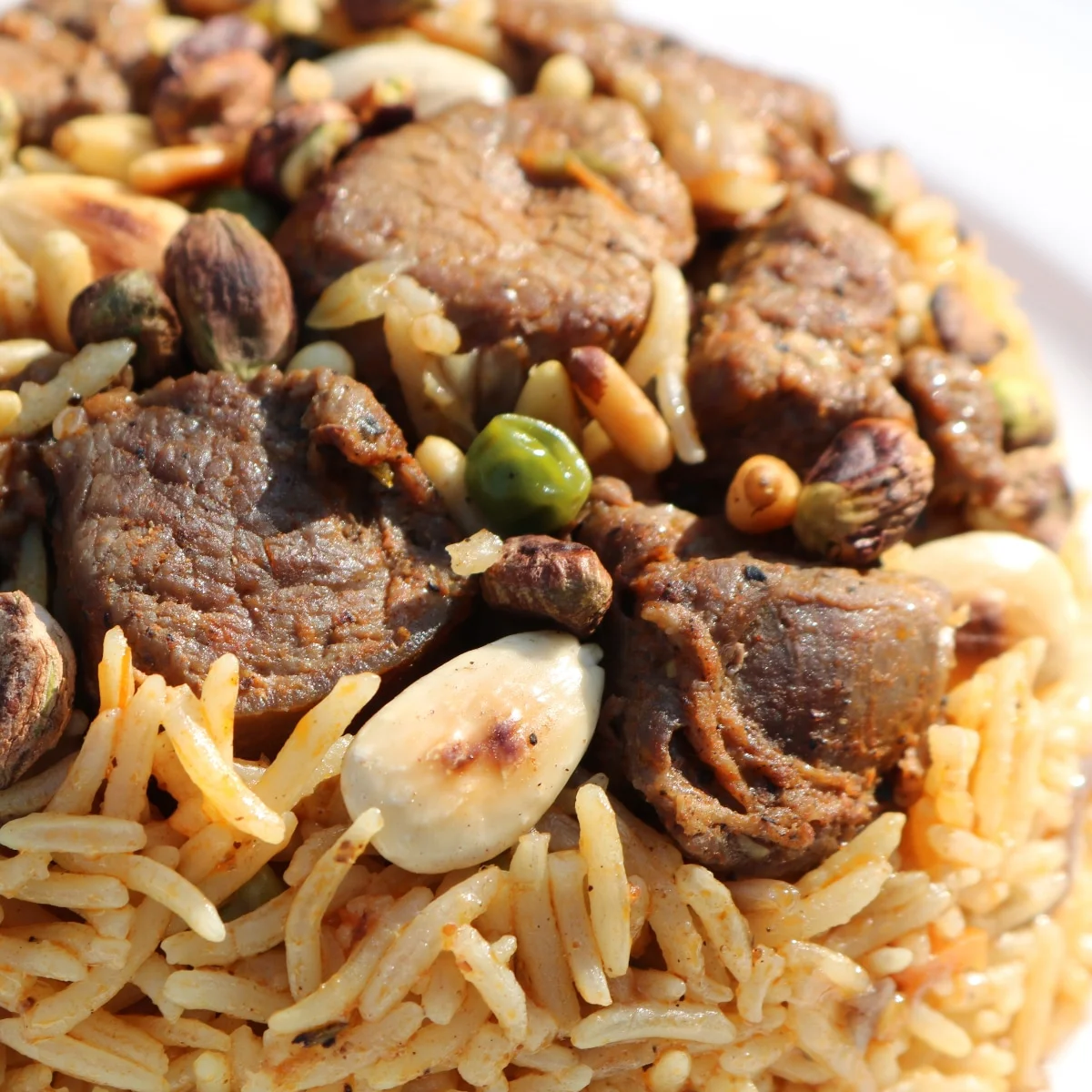
Kabsa is a fragrant Arab rice dish in which spiced rice cooks with meat and a rich broth. This version builds flavour by simmering lamb or beef with whole spices, then finishing the rice with vegetables, peas and toasted nuts.
Ingredients
- 700 glamb or beef fillet, chopped into cubes
- 30 ml (approx. 2 tablespoons)mild olive oil
- 1onion, peeled
- 1carrot, peeled
- 1celery stick
- 1cinnamon stick
- 3black cardamom pods
- 3green cardamom pods
- 10–15black peppercorns
- 5cloves
- 3bay leaves
- 1 tablespoonsalt
- 2 litresboiling water
- 380 g (2 cups)rice
- 1 largeonion, finely chopped
- 1carrot, finely chopped
- 2 clovesgarlic, finely chopped
- ½ teaspoonginger, finely chopped
- 2 tablespoonstomato concentrate
- 1 teaspoonkabsa spice
- ¼ teaspoonpaprika
- ½ teaspoon7 spice
- ½ teaspoonground coriander
- ¼ teaspooncumin
- ¼ teaspoonground dried lime
- 75 g (½ cup)petit pois
- 480 ml (2 cups)meat broth
- 360 ml (1½ cups; recipe also notes approx. 2½ cups)boiling water
- 140 g (1 cup)assorted nuts, lightly toasted
- 1 small handfulfresh coriander (cilantro)
Instructions
- 1
Toast the nuts
In a non-stick pan, toast the assorted nuts lightly until just golden, watching closely so they do not burn. Remove them from the pan and set aside.
- 2
Brown the meat
In the same pan, flash-fry the meat cubes over high heat for about five minutes to seal the outsides.
- 3
Add broth aromatics
Transfer the meat to a stockpot with the whole onion, peeled carrot, celery, cinnamon, peppercorns, both types of cardamom, cloves, bay leaves and 1 tablespoon of salt.
- 4
Simmer the broth
Bring the pot to the boil, then simmer for an hour, skimming off any fat that rises to the surface.
- 5
Strain the broth
Lift out the meat and set it aside. Strain the liquid through a fine sieve to make a clear broth.
- 6
Rinse the rice
Wash the rice until the water runs mostly clear, then put it in a bowl, cover with water and leave it to soak.
- 7
Soften the onion
In a casserole dish, sauté the finely chopped onion in a drizzle of mild olive oil until golden, about 10 minutes.
- 8
Cook the vegetables
Add the chopped carrot, ginger and garlic, and sauté for another five minutes. Add the kabsa spice, 7 spice, cumin, coriander, turmeric, paprika and tomato concentrate.
- 9
Combine meat and rice
Add the cooked meat to the onion and spice mixture and sauté for a few minutes. Drain the rice, add it to the meat, and sauté for a few more minutes.
- 10
Add cooking liquid
Pour in 2 cups of meat broth and about 1½ cups of boiling water, making sure the rice is covered by around 2.5 cm.
- 11
Season the rice
Add the dried lime, fresh coriander and petit pois. Add approximately a teaspoon of salt, depending on how salty the broth is, and taste to adjust.
- 12
Cook until tender
Bring the liquid to the boil, then reduce the heat to a simmer. Cover and cook for 25 minutes, until the rice is cooked and mostly free from moisture.
- 13
Plate and garnish
Arrange the rice on a platter with the meat on top, then garnish with the toasted assorted nuts.
What is kabsa?
Kabsa is a well-known Arab rice dish, often associated with the Arabian Peninsula, where rice is cooked with meat and a warmly spiced broth. Its defining quality is that the rice takes on the flavour of the meat and aromatics as it cooks.
This version makes its own broth from lamb or beef, whole spices and vegetables, then combines that meat with rice, tomato concentrate and seasonings. Peas add a little sweetness, while toasted nuts bring a crisp finish.
Nutrition and macros by portion
The nutrition label shows one serving as written: 650 calories, 37g protein, 70g carbs, 24g fat.
| Portion | Adjustment | kcal | Protein | Carbs | Fat |
|---|---|---|---|---|---|
| Lighter | Less rice, more vegetables | 455 kcal | 26g | 49g | 17g |
| This serving | As written | 650 kcal | 37g | 70g | 24g |
| Hungry | Larger rice portion | 975 kcal | 56g | 105g | 36g |
Rice supplies most of the carbohydrates, while the lamb or beef contributes much of the protein and fat; olive oil and nuts add further fat. Serve a moderate scoop of rice and meat with a generous side salad or vegetables to balance the plate.
Build flavour in the broth
Brown the meat: a brief sear gives the cubes colour before they simmer, while the onion, carrot, celery and whole spices infuse the broth over the hour-long cook.
Skim as needed: removing fat from the surface helps keep the strained broth clear. The broth is also the main source of seasoning for the rice, so taste it before adding more salt later.
Prepare the rice and spice base
Rinse and soak: washing the rice until the water is mostly clear removes excess surface starch. Drain it well before adding it to the casserole so the cooking liquid stays close to the recipe's intended balance.
Cook the aromatics: give the chopped onion time to turn golden, then sauté the carrot, ginger and garlic before stirring in the spices and tomato concentrate. This lets their flavour spread through the base before the rice goes in.
Get the liquid right
Measure the broth: the method calls for 2 cups of meat broth and about 1½ cups of boiling water, with the rice covered by around 2.5 cm. The ingredient list also gives a water note of approximately 2.5 cups, so use the coverage cue as a practical check.
Cook gently: once the pot comes to the boil, lower it to a simmer and keep the lid on for the 25-minute cooking time. Avoid frequent lifting, which lets steam escape and can slow the rice's cooking.
Check the rice before serving
Look for tender grains and a pot that is mostly free of moisture at the end of cooking. If the rice is still firm while liquid remains, keep it covered at a gentle simmer and check it again shortly afterwards.
Rest the finished rice briefly if convenient, then fluff it gently as you arrange it on the platter. Keep the meat visible on top and scatter the toasted nuts over just before serving.
Serve it as a complete meal
The rice, meat and peas make kabsa substantial enough to serve on its own. A crisp salad or simply dressed vegetables can add freshness and contrast to the warm spices.
Offer extra fresh coriander at the table if you like, and serve the toasted nuts separately for anyone who prefers to add their own.
Recipe notes & tips
- Keep a close eye on the nuts as they toast, since they can go from golden to burnt quickly.
- Use a fine sieve to strain the broth and remove the whole spices and vegetables.
- Drain the soaked rice thoroughly before adding it to the meat mixture.
- Taste the broth before adding the final salt, as its saltiness can vary.
- Scatter the toasted nuts over the platter just before serving to retain their crunch.
Variations
- Choose the meat: use lamb or beef fillet, as listed, according to your preference.
- Adjust the heat: add a little extra paprika if you want a more pronounced warmth.
- Change the nuts: use a different assortment of nuts while keeping the same lightly toasted finish.
- Add more greens: increase the petit pois for extra green colour in the rice.
- Serve with salad: pair the kabsa with a crisp, simply dressed salad for freshness.
Common mistakes to avoid
- Burnt nuts: toast them gently and remove them as soon as they turn slightly golden.
- Skipped searing: flash-fry the meat for about five minutes so the outsides are sealed before simmering.
- Unskimmed broth: remove fat from the surface during simmering for a clearer strained liquid.
- Wet rice: drain the soaked rice well before it goes into the casserole.
- Lifting the lid: keep the casserole covered during the 25-minute simmer so the rice cooks in the trapped steam.
- Over-salting: taste the broth and rice mixture before adding the final teaspoon of salt.
How to store
Refrigerate leftover kabsa in a covered container for up to 3 days. Reheat until steaming hot, adding a splash of water if the rice has dried out; keep the nuts separate until serving if possible.
Frequently asked questions
Can I use lamb instead of beef?
Yes. The recipe allows either lamb or beef fillet, cut into cubes; use the same method for both.
Do I need to soak the rice?
The method calls for washing the rice until the water runs mostly clear, then soaking it in water. Drain it before adding it to the casserole.
How can I tell when the rice is cooked?
After 25 minutes of covered simmering, the rice should be tender and the pot mostly free of moisture. If it is still firm, continue cooking gently and check again.
How much water should I add to the rice?
The method specifies 2 cups of broth and about 1½ cups of boiling water, with the rice covered by around 2.5 cm. The ingredient list also mentions approximately 2.5 cups of water, so use the liquid level over the rice as a guide.
Can I make the broth ahead?
Yes. You can simmer and strain the broth ahead, then refrigerate it until you make the rice. Chill the cooked meat separately with it.
What is 7 spice?
It is a spice blend whose ingredients can vary by maker. Use the amount specified in the recipe and check the blend's label for its contents.
Cook it from the original
This recipe comes from zaatarandzaytoun.com. Their page has the author’s own photos, notes and tips — the best place to cook it from.
Open the recipe on zaatarandzaytoun.com