
Rajma Recipe (Rajma Masala / Rajma Chawal)
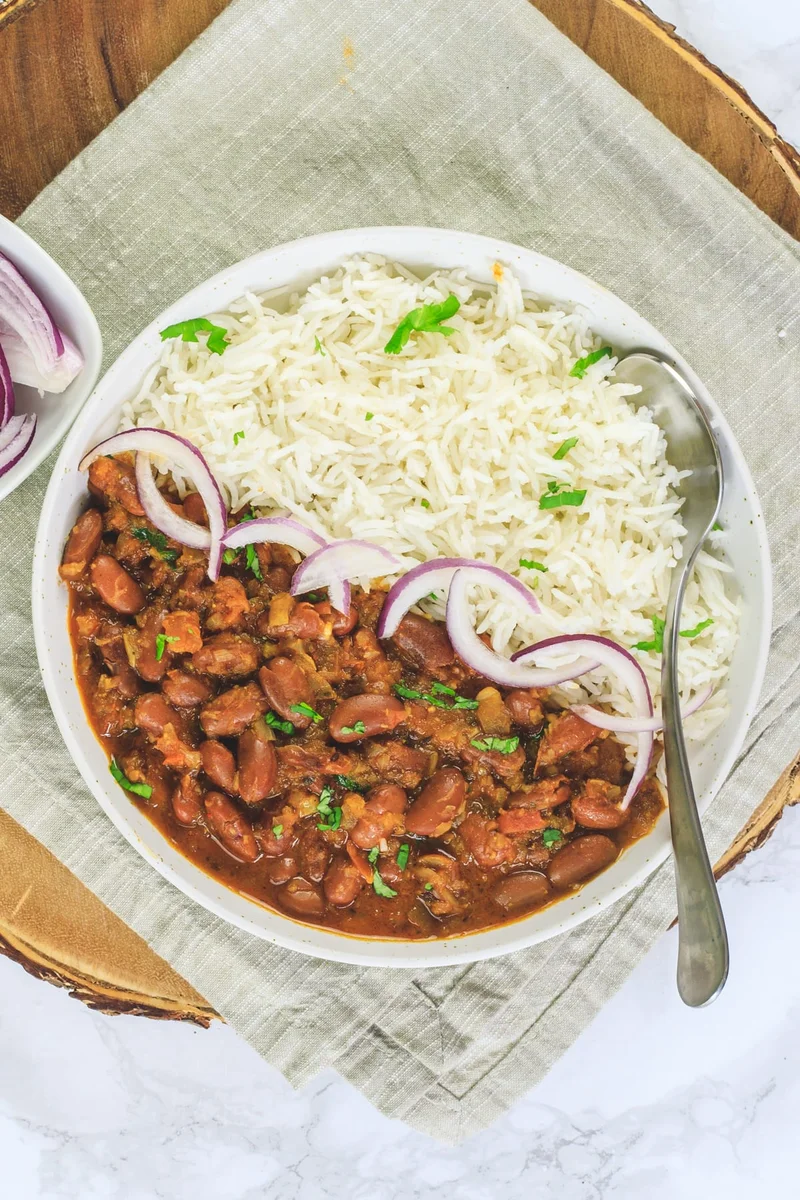
Rajma masala is a Punjabi kidney bean curry with a rich, warmly spiced tomato gravy, served here with basmati rice as rajma chawal. It is a comforting meal built from pantry staples, with the beans and rice cooked while you prepare the masala.
Ingredients
- 190 g (1 cup)rajma (red kidney beans; Chitra variety if available)
- 2.5 ml (½ teaspoon)salt, for pressure-cooking the rajma
- 590 ml (2½ cups)water, for pressure-cooking the rajma
- 185 g (1 cup)basmati rice, or another variety of rice
- 240 ml (1 cup)water, for cooking the rice
- 2.5 ml (½ teaspoon)salt, for the rice
- 2.5 ml (½ teaspoon)ghee (clarified butter), for the rice
- 45 ml (3 tablespoons)oil
- 1bay leaf
- 1black cardamom
- 5 ml (1 teaspoon)cumin seeds
- 150 g (1 cup)red onion, finely chopped or food-processed (about 1 large onion)
- 15 ml (1 tablespoon)ginger-garlic paste, or crushed ginger and garlic (a 2.5 cm piece of ginger and 5–6 garlic cloves)
- 240 g (1 cup)tomatoes, crushed (about 2 medium Roma tomatoes)
- 1.25 ml (¼ teaspoon)turmeric powder
- 7.5 ml (1½ teaspoons)Kashmiri red chilli powder
- 15 ml (1 tablespoon)coriander powder
- 180–240 ml (¾–1 cup)water, to adjust the gravy consistency
- 5 ml (1 teaspoon)salt
- 2.5 ml (½ teaspoon)garam masala
- 5 ml (1 teaspoon)kasoori methi (dried fenugreek leaves), crushed between your palms
- 30 ml (2 tablespoons)ghee (clarified butter)
- 30–45 ml (2–3 tablespoons)fresh coriander leaves, finely chopped
Instructions
- 1
Rinse the beans
Put the kidney beans in a large bowl and rinse them 2–3 times with cold tap water, gently rubbing them with your fingers until the water is clear.
- 2
Soak overnight
Cover the beans with enough water to sit 5–7.5 cm (2–3 inches) above them. Leave to soak for at least 8 hours or overnight; they will roughly double in size.
- 3
Prepare the inserts
Discard the soaking water and put the beans in a steel insert for an Instant Pot or pressure cooker. Add 590 ml (2½ cups) fresh water and 2.5 ml (½ teaspoon) salt.
- 4
Rinse the rice
Rinse the rice until the water runs clear. Put it in a separate insert with 240 ml (1 cup) water, 2.5 ml (½ teaspoon) salt and 2.5 ml (½ teaspoon) ghee. If using a small stovetop pressure cooker, cook the rice separately in a saucepan.
- 5
Stack the inserts
Pour a glassful of water into the electric pressure cooker and place a rack in the centre. Set the beans insert on the rack, then place the rice insert on top and cover the rice insert with a lid.
- 6
Pressure-cook both
Cover the pressure cooker with its lid. For a stovetop pressure cooker, cook for 1 whistle over high heat, then turn the heat to low and cook for 10 minutes. For an Instant Pot, cook on Manual at high pressure for 8 minutes.
- 7
Release the pressure
Let the pressure release naturally before opening the lid. Take out the rice container, fluff the rice and keep it covered to one side.
- 8
Check the beans
Press a bean between your thumb and finger. It should be soft and easy to mash; some beans may have split open.
- 9
Heat the whole spices
Heat 45 ml (3 tablespoons) oil in a pan over medium heat. When hot, add the bay leaf and black cardamom and sauté for 30 seconds.
- 10
Sizzle the cumin
Add the cumin seeds and let them sizzle briefly.
- 11
Brown the onions
Add the chopped onions and sprinkle in some salt to help them cook. Stir and cook until brown, rather than pale pink, stirring occasionally so they do not stick to the bottom of the pan.
- 12
Cook the aromatics
Add the ginger-garlic paste, mix and sauté for 1 minute, or until its raw smell has gone.
- 13
Reduce the tomatoes
Add the crushed tomatoes and stir. Cook until the moisture has evaporated and the mixture has become a thick paste.
- 14
Fry the spices
Add the turmeric, Kashmiri chilli powder and coriander powder. Mix and cook for 1 minute, or until oil begins to show at the edges of the masala.
- 15
Add the beans
Add the cooked rajma along with its cooking water, then add the remaining salt.
- 16
Simmer the curry
Mix and bring to the boil. Simmer over medium-low heat for 15 minutes, or until the gravy has thickened and is no longer watery, stirring occasionally to prevent sticking or burning.
- 17
Season with methi
Add the garam masala and crushed kasoori methi, then mix well.
- 18
Stir in ghee
Add 30 ml (2 tablespoons) ghee. Let it melt, then mix it into the curry.
- 19
Garnish and serve
Finish with the chopped coriander leaves and serve with the rice.
What is rajma masala?
Rajma masala is a North Indian, especially Punjabi, curry of red kidney beans cooked in a spiced onion-and-tomato gravy. Served with rice, the combination is known as rajma chawal.
This version builds flavour by browning the onions and reducing the tomatoes before adding the cooked beans. A finishing spoonful of ghee and crushed dried fenugreek leaves gives the gravy a rounded, fragrant finish.
Nutrition and macros by portion
The nutrition label shows one serving as written: 528 calories, 15g protein, 73g carbs, 20g fat.
| Portion | Adjustment | kcal | Protein | Carbs | Fat |
|---|---|---|---|---|---|
| Lighter | Less finishing ghee | 370 kcal | 11g | 51g | 14g |
| This serving | As written | 528 kcal | 15g | 73g | 20g |
| Hungry | Larger rice portion | 792 kcal | 23g | 110g | 30g |
The rice and kidney beans provide most of the carbohydrates, while the beans also contribute protein. Oil and ghee account for much of the fat; serve the curry with a generous portion of fresh salad or vegetables if you want to balance the plate.
The beans and rice
Soaking: Give the rajma at least 8 hours in plenty of water, then discard that water before pressure-cooking. Soaking helps the beans cook evenly, but they still need to be checked for tenderness.
Rice: Rinsing until the water runs clear removes excess surface starch. The recipe cooks the rice in its own insert; if your stovetop cooker is small, cook it separately in a saucepan as directed.
Build the masala patiently
Whole spices: Let the bay leaf and black cardamom warm in the oil for 30 seconds, then add the cumin and let it sizzle. This brief start perfumes the cooking oil without requiring the spices to brown deeply.
Onions and tomatoes: Cook the onions until brown, stirring now and then, then sauté the ginger-garlic paste until its raw aroma fades. Reduce the crushed tomatoes to a thick paste before adding the powdered spices.
Judge the texture
Tender beans: A rajma bean should mash easily between your fingers. Some beans may split during cooking; that is fine and can help the gravy feel fuller.
Thick gravy: After adding the beans and their cooking water, simmer until the sauce is no longer watery. Stir occasionally and keep an eye on the base of the pan so the thickening masala does not catch.
Get the timing right
Pressure-cooker timing: The stovetop method calls for 1 whistle on high heat followed by 10 minutes on low. The Instant Pot method uses high pressure for 8 minutes, with natural pressure release in either case.
Finish: The 15-minute simmer happens after the beans enter the masala. Add garam masala, kasoori methi and ghee at the end so their aroma stays noticeable.
Serve it as rajma chawal
Rice: Spoon the thick curry over the cooked basmati rice, or serve the two side by side. Fluff the rice just before serving so it stays light rather than clumping.
On the side: A crisp salad or plain yoghurt can offer a cool contrast to the rich, spiced gravy. Add either alongside the curry rather than stirring it into the pot.
Recipe notes & tips
- Use a bowl large enough to let the beans expand as they soak.
- Rinse the rice until the water runs clear for a less sticky result.
- Keep the rice insert covered while you finish making the curry.
- Stir the onion mixture regularly as it browns, especially near the end of cooking.
- Crush the kasoori methi between your palms just before adding it.
- If the gravy thickens more than you like, adjust it with the recipe’s reserved water as needed.
Variations
- Adjust the heat: Use less Kashmiri chilli powder for a milder curry.
- Choose your rice: Serve with another variety of rice instead of basmati.
- Use fresh aromatics: Replace the paste with crushed ginger and 5–6 garlic cloves as listed.
- Make it richer: Add the full amount of finishing ghee for a silkier, richer gravy.
- Change the beans: Use another red kidney bean variety, allowing for any difference in cooking time.
Common mistakes to avoid
- Skipping the soak: The beans may cook unevenly; soak them for at least 8 hours or overnight.
- Keeping the soaking water: Discard it and pressure-cook the beans in fresh water.
- Pale onions: They will not give the masala the same depth; cook them until brown, stirring to prevent sticking.
- Watery tomatoes: The sauce can stay thin; cook the tomatoes down to a thick paste before adding the spices.
- Rushing the simmer: The gravy needs time to thicken; simmer for 15 minutes and stir occasionally.
- Overcooking the rice insert: Follow the specified pressure-cooking time and fluff the rice after removing it.
How to store
Refrigerate leftover rajma and rice separately in covered containers and use within 3 days. Reheat until piping hot; warm the curry gently in a pan, adding a splash of water if it has thickened, and reheat the rice with a little water or in the microwave.
Frequently asked questions
How long should I soak rajma?
Soak the beans for at least 8 hours or overnight, with water 5–7.5 cm (2–3 inches) above them. Discard the soaking water before cooking.
How do I know when the kidney beans are cooked?
Press one between your thumb and finger: it should be soft and easy to mash. Some beans may split open during cooking.
Can I cook the rice separately?
Yes. The method specifically recommends cooking the rice in a saucepan if you are using a small stovetop pressure cooker.
Why is my rajma gravy still watery?
Let it simmer over medium-low heat for the full 15 minutes, stirring occasionally, until it thickens. The tomatoes should also be cooked down to a thick paste before you add the beans.
Can I make rajma masala ahead?
Yes. Cook the curry, cool it and refrigerate it in a covered container, separate from the rice. Reheat the curry until piping hot, loosening it with a little water if needed.
What can I serve with rajma masala?
Serve it with the basmati rice in this recipe to make rajma chawal. A simple salad or plain yoghurt also works alongside it.
Cook it from the original
This recipe comes from spiceupthecurry.com. Their page has the author’s own photos, notes and tips — the best place to cook it from.
Open the recipe on spiceupthecurry.com