
how to make a brioche loaf
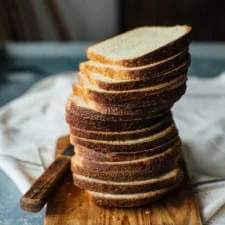
Brioche is a rich French yeasted loaf with a soft, tender crumb and a lightly buttery flavour. This version is shaped from three dough balls in a loaf tin, making it easy to pull apart or slice for toast.
Ingredients
- 300 ml (1¼ cups)warm milk
- 2 teaspoonsactive dry yeast
- 31 g (2½ tablespoons)sugar
- 3 largeeggs, divided
- 400 g (3⅓ cups)bread flour
- 1½ teaspoonssalt
- 35 g (2½ tablespoons), plus extra for coating the tinunsalted butter, cut into cubes
Instructions
- 1
Activate the yeast
Whisk the warm milk, yeast and sugar together in a large measuring jug, then leave for 5 minutes. Add 2 eggs, reserving the third for the egg wash, and whisk to combine.
- 2
Mix the dry ingredients
Put the flour, salt and butter in the bowl of a stand mixer. Using the paddle attachment, mix until the butter is incorporated and no large pieces remain.
- 3
Make the dough
With the mixer on low, pour in the milk mixture. Once combined, raise the speed to medium-low and mix for 5–8 minutes, until the dough is smooth and elastic. It will remain wet and sticky, more like a thick batter than a ball. Scrape down the bowl with a rubber spatula.
- 4
First rise
Cover the bowl with a damp tea towel and leave at room temperature until the dough has doubled in size, 1–3 hours.
- 5
Prepare the tin
Heat the oven to 200°C (400°F). Generously butter a 23 × 13 cm (9 × 5-inch) loaf tin and set it aside.
- 6
Turn out dough
Tip the risen dough onto a lightly floured work surface. It should still feel a little wet and sticky.
- 7
Divide the dough
Use a floured bench scraper, large knife or pizza wheel to cut the dough into three equal pieces.
- 8
Shape the balls
Gently flatten each piece and bring its edges up towards the centre. If the dough is too sticky to shape, dust the top with a little flour. Turn each piece seam-side down onto an unfloured area of the work surface, then cup your hands around it and roll gently into a smooth ball.
- 9
Proof in tin
Set the three balls in the prepared tin, one after another. Cover loosely with cling film and leave until the dough rises about 4 cm (1½ inches) above the rim, around 30 minutes to 1 hour or longer depending on the room temperature.
- 10
Brush with egg
Beat the remaining egg with a splash of water. Brush it over the dough; if you do not have a pastry brush, use a folded napkin or paper towel.
- 11
Rest the dough
Loosely cover the tin with a tea towel and leave for about 30 minutes. The dough should look slightly puffed and relaxed rather than dense; allow more time if needed before baking.
- 12
Bake the loaf
Bake at 200°C (400°F) for 10 minutes, then reduce the oven to 190°C (375°F) and bake for a further 30–35 minutes. If the top browns too quickly, cover it loosely with foil. Check that the centre reaches about 91–93°C (195–200°F).
- 13
Cool and slice
Leave the loaf in its tin for about 10 minutes, then transfer it to a wire rack to cool completely for 1–2 hours. Slice with a large serrated bread knife. Once cool, wrap in plastic wrap and keep at room temperature.
What is brioche?
Brioche is a French enriched bread, made with ingredients such as eggs, milk, sugar and butter alongside flour and yeast. These additions give it a tender crumb and a richer taste than a lean everyday loaf.
This version uses a soft, sticky dough and shapes it into three rounded portions in a loaf tin. The separate pieces create an inviting top and make the loaf straightforward to pull apart.
Nutrition and macros by portion
The nutrition label shows one serving as written: 2230 calories, 81g protein, 341g carbs, 52g fat.
| Portion | Adjustment | kcal | Protein | Carbs | Fat |
|---|---|---|---|---|---|
| Lighter | Use less butter | 1561 kcal | 57g | 239g | 36g |
| This serving | As written | 2230 kcal | 81g | 341g | 52g |
| Hungry | Serve a larger slice | 3345 kcal | 122g | 512g | 78g |
For the stated serving of one whole loaf, most of the carbohydrates come from the bread flour, with additional carbohydrate from the sugar and milk. The eggs and flour provide much of the protein, while butter, eggs and milk contribute most of the fat. In practice, share the loaf into slices and pair a slice with fruit and a protein-rich food for a more balanced meal.
The enriched dough
Milk and eggs: These bring moisture and richness to the dough. The recipe uses two eggs in the mixture and keeps the third for brushing on top.
Butter: Mixing the cubes into the flour first helps distribute them through the dough. Use butter softened enough to mix in, but not melted.
What to expect from the dough
Sticky texture: This dough is meant to be wet and soft rather than forming a neat ball in the mixer. Resist adding lots of extra flour, which can make the finished loaf heavier.
Handling: A light dusting on the work surface and a floured scraper make dividing easier. The dough is easier to shape after its first rise.
Shaping and proving
Three portions: Tuck the edges of each piece towards the centre before rolling it smooth. Place the balls seam-side down in the tin.
Second rise: Use the dough’s appearance as well as the clock. It should rise above the tin’s rim and look puffy; a cool room may require more time than a warm one.
Baking cues
Two temperatures: The initial hotter bake sets the loaf, while the lower temperature gives it time to cook through. If the top is already deeply coloured, loosely tent it with foil.
Centre temperature: A reading of about 91–93°C (195–200°F) is the recipe’s cue that the middle is baked. Let the loaf cool fully before slicing so the crumb can settle.
How to serve it
Serve slices plain, toasted, or with butter and jam. The mild sweetness also makes the loaf a good base for French toast.
For a more balanced plate, pair a slice with fruit and a protein-rich accompaniment such as yoghurt or eggs.
Recipe notes & tips
- Warm the milk gently; it should feel warm, not hot, when you add the yeast.
- Scrape the mixer bowl during mixing so the flour and butter are incorporated evenly.
- Use just enough flour on your hands and work surface to manage the sticky dough.
- Judge each rise by the dough’s size and appearance, since room temperature affects the timing.
- Keep an eye on the crust during the second part of baking and tent it with foil if it browns too quickly.
- Cool the loaf completely before cutting for neater slices.
Variations
- Citrus note: Add finely grated lemon or orange zest to the flour for a fragrant loaf.
- Spiced brioche: Mix a little ground cinnamon into the dry ingredients for a gently spiced flavour.
- Chocolate pieces: Fold chocolate pieces into the dough after mixing for a sweeter loaf.
- Dried fruit: Add raisins or other dried fruit after the dough is mixed, distributing them evenly.
- Seeded topping: Sprinkle seeds over the egg wash before baking for a savoury contrast.
Common mistakes to avoid
- Adding too much flour: The dough is naturally sticky; use a light dusting rather than working in extra flour.
- Rushing the first rise: Wait until the dough has doubled, allowing more time if the room is cool.
- Over-proofing the shaped loaf: Check that it is puffed and above the rim, but do not leave it to collapse.
- Skipping the temperature check: Test the centre with a thermometer and look for about 91–93°C (195–200°F).
- Slicing while hot: Cool the loaf completely on a rack so the crumb has time to set.
- Leaving the top uncovered when browning quickly: Loosely tent the loaf with foil while it finishes baking.
How to store
Once completely cool, wrap the loaf and keep it at room temperature; it is best eaten within 1–2 days. Toast slices to refresh them, or warm them briefly in a low oven.
Frequently asked questions
Why is the dough so sticky?
This recipe makes a very soft, enriched dough, and it is not expected to form a firm ball in the mixer. Use a little flour for handling, but avoid adding much more to the mixture.
How can I tell when the dough has doubled?
Mark its starting level on the bowl if helpful, then wait until it has grown to roughly twice that volume. The first rise is given as 1–3 hours, but the room temperature affects the timing.
Can I make the dough without a stand mixer?
The method is written for a stand mixer, which helps handle the wet dough. Without one, mix and knead by hand until smooth and elastic, expecting the dough to remain sticky.
What if I do not have a thermometer?
A thermometer is the clearest check in this recipe. Watch the crust so it does not overbrown, and allow the full stated baking time of 10 minutes at 200°C (400°F), followed by 30–35 minutes at 190°C (375°F).
Can I skip the egg wash?
Yes. The method presents it as optional; without it, the loaf will not have the same brushed finish.
How should I use leftover brioche?
Toast slices, or use them for French toast. Keep the loaf wrapped at room temperature and aim to eat it within 1–2 days.
Cook it from the original
This recipe comes from theclevercarrot.com. Their page has the author’s own photos, notes and tips — the best place to cook it from.
Open the recipe on theclevercarrot.com