
Meat broth
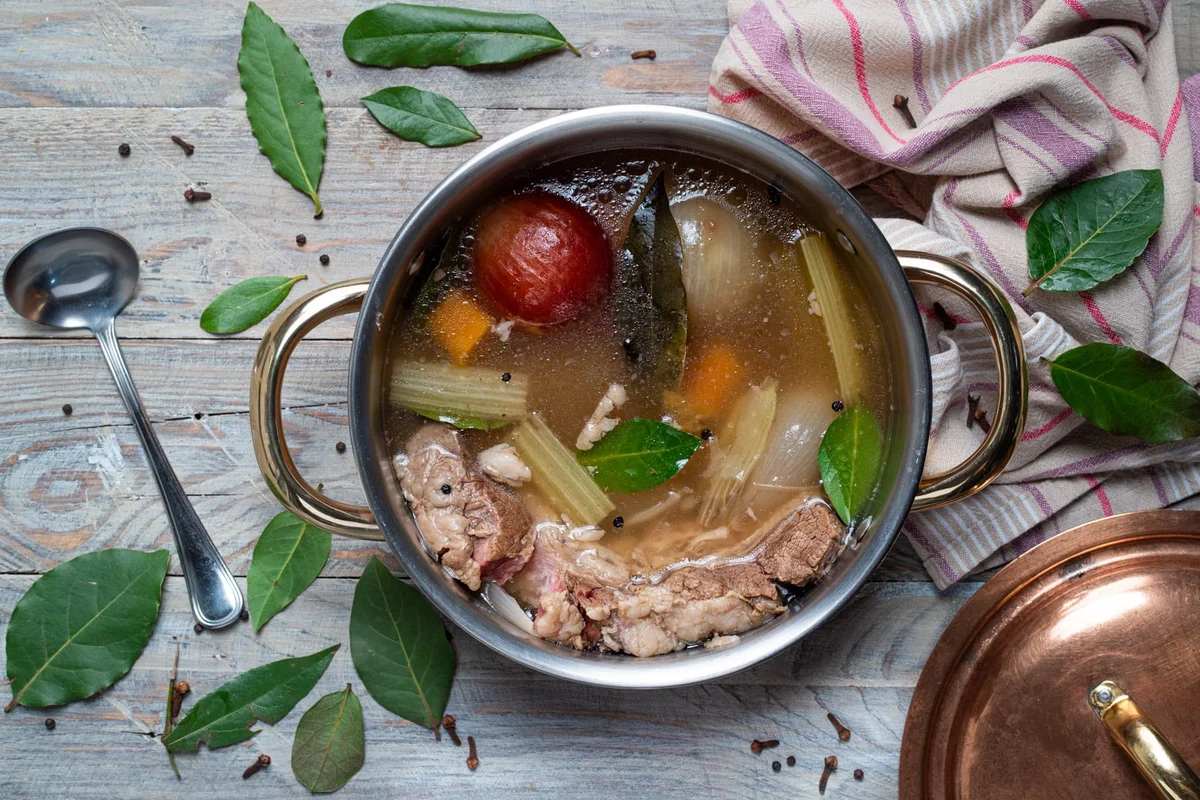
A slow-simmered beef broth made with bones, meat and aromatic vegetables, then strained and chilled. Keep it on hand to add depth to soups, sauces and other dishes.
Ingredients
- 6 lwater
- 1 kgbeef or veal bones
- 300 gbeef plate, shoulder or chuck
- 300 gonions
- 200 gcarrots
- 200 gcelery
- 3 leavesbay leaves
- 6peppercorns
- 6cloves
- to tastesalt
Instructions
- 1
Rinse the bones
Rinse the bones under cold running water to remove any impurities and clotted blood, then put them into a very large stockpot.
- 2
Prepare the vegetables
Wash the vegetables. Peel the carrots and cut them into chunks; do the same with the celery, then add both to the pot. Wash the onions without peeling them and trim off the root ends. Halve them and push the cloves into the cut sides so they stay in place during cooking, then add them to the pot. Crush the peppercorns and add them with the bay leaves and the beef plate. Leave the fat on the meat, as it contributes flavour to the broth.
- 3
Simmer the broth
Pour in 6 litres of cold water. Bring the pot to the boil, then lower the heat and simmer gently for at least 4 hours. Skim off impurities that rise to the surface as the bones cook, using a skimmer or ladle.
- 4
Strain and cool
When the broth is ready, pass it through a fine-mesh sieve. Season with salt to taste, leave it to cool, then refrigerate.
- 5
Remove the fat
The following day, the fat will have solidified on the surface. Lift off all or some of it with a ladle; the broth is then ready to use.
What is meat broth?
Meat broth is a clear, savoury cooking liquid made by gently simmering bones, meat and vegetables in water. It is a staple in Italian and French cooking, where it can form the base of soups, sauces and risottos.
This version combines beef or veal bones with a piece of beef and simple aromatics. A long, gentle simmer draws flavour into the liquid, while chilling makes it easy to remove the fat from the surface.
Nutrition and macros by portion
The nutrition label shows one serving as written: 45 calories, 5g protein, 2g carbs, 2g fat.
| Portion | Adjustment | kcal | Protein | Carbs | Fat |
|---|---|---|---|---|---|
| Lighter | Skim off more fat | 31 kcal | 4g | 1g | 1g |
| This serving | As written | 45 kcal | 5g | 2g | 2g |
| Hungry | Serve a larger bowl | 68 kcal | 8g | 3g | 3g |
The meat and bones contribute most of the broth’s protein and fat, while the vegetables add a small amount of carbohydrate. A 750 ml serving is a generous bowl; pair it with vegetables and bread or another filling accompaniment for a more substantial meal.
The bones and meat
Bones: rinsing them first helps clear away visible impurities and clotted blood. Beef or veal bones both suit this method.
Meat: the beef plate, shoulder or chuck adds savoury flavour. The recipe leaves its fat on during cooking, then lets you decide how much to remove after chilling.
Vegetables and aromatics
Vegetables: carrots and celery are cut into chunks so they can simmer alongside the bones. The onions are left unpeeled, as directed, and halved.
Spices: crush the peppercorns before adding them. Press the cloves into the cut onion so they are easier to find and remove when the broth is strained.
Keep the simmer gentle
Heat: bring the pot to the boil, then lower the heat to a gentle simmer for at least 4 hours. A steady, low simmer is easier to manage than vigorous boiling.
Skimming: impurities rise to the surface during cooking. Remove them regularly with a skimmer or ladle, as the recipe directs.
Straining and chilling
Strain: use a fine-mesh sieve to separate the liquid from the bones, meat and vegetables once cooking is complete. Season with salt to taste after straining.
Chill: allow the broth to cool before refrigerating. By the following day, the fat should be firm on top and can be lifted off completely or partially.
How to use the broth
Use the finished broth as a savoury liquid for soups, sauces or other recipes that call for stock. Its flavour comes from the bones, meat, vegetables and long cooking rather than from added seasoning alone.
For a meal, serve it as a soup with a filling accompaniment, or use it as a base for a dish with vegetables and a source of carbohydrates.
Recipe notes & tips
- Use a pot large enough to hold the bones, vegetables and 6 litres of water.
- Keep the onions unpeeled as specified, and trim away only the root ends.
- Push the cloves into the cut onion halves to make them easier to retrieve after cooking.
- Skim the surface regularly while the broth simmers.
- Chill the broth overnight if you want to remove the solidified fat easily.
Variations
- Use veal bones: choose them instead of beef bones for a different take on the recipe.
- Choose the beef cut: use beef plate, shoulder or chuck as listed.
- Adjust the fat: remove all the solidified fat after chilling, or leave some for a richer broth.
- Season to taste: add salt after straining rather than during the long simmer.
- Use the meat: keep the cooked beef for another dish instead of discarding it.
Common mistakes to avoid
- Boiling too hard: lower the heat after the pot reaches the boil and maintain a gentle simmer.
- Skipping the skimming: remove impurities as they rise so they do not remain in the finished broth.
- Adding peeled onions: leave the onion skins on, as the recipe specifies, and trim only the root ends.
- Losing the cloves: press them into the cut sides of the onion halves before adding them.
- Removing all the fat too early: chill the broth first so the fat firms on the surface and is easier to lift off.
How to store
Refrigerate the cooled, strained broth in a covered container and use it within 3–4 days. Reheat only the amount needed until hot, or freeze portions for longer storage.
Frequently asked questions
How long should the broth simmer?
Simmer it gently for at least 4 hours, skimming impurities from the surface regularly.
Can I use beef bones or veal bones?
Yes. The recipe allows either beef or veal bones.
Should I remove the fat before cooking?
No. The recipe leaves the fat on the beef during cooking for flavour. After chilling, remove all or some of the solidified fat.
Why are the onions left unpeeled?
The method specifies washing the onions without peeling them. Halve them and press the cloves into the cut sides before adding them to the pot.
When should I add the salt?
Season the broth to taste after straining, before cooling and refrigerating it.
What can I use meat broth for?
Use it in recipes that call for broth, including soups and sauces. It can also be served as a simple soup.
Cook it from the original
This recipe comes from soniaperonaci.it. Their page has the author’s own photos, notes and tips — the best place to cook it from.
Open the recipe on soniaperonaci.it