
Christmas Charcuterie board - Wreath
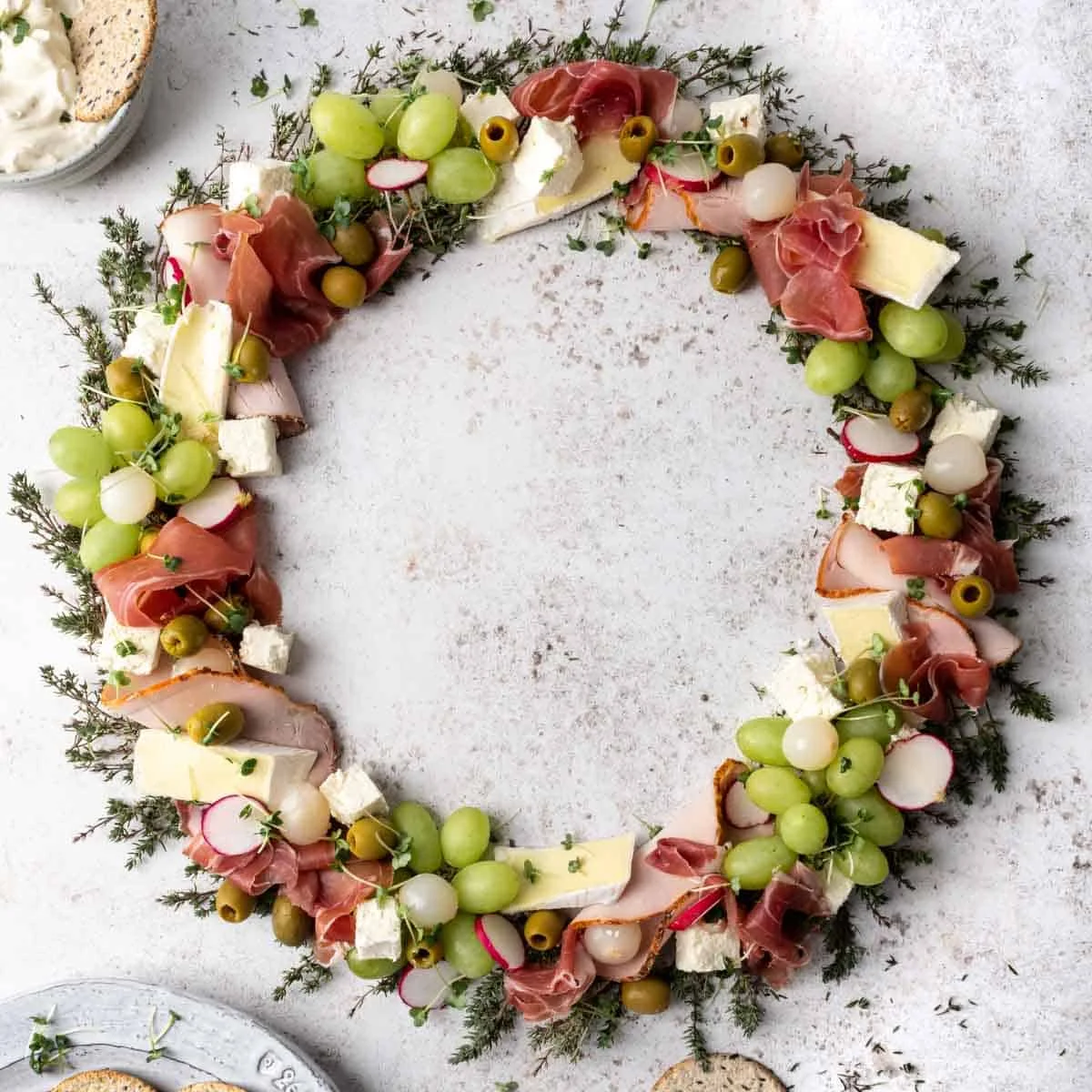
This Christmas charcuterie wreath turns cured meats, cheeses, fruit and herbs into a festive sharing board. It is a simple centrepiece to assemble when you want guests to help themselves to a mix of savoury, salty and fresh bites.
Ingredients
- 4–5 handfulsrosemary or thyme
- 100 g (3.5 oz)prosciutto, separated and loosely bundled individually
- 120 g (4.2 oz)quality ham, such as Parma, Roma or Genoa, loosely rolled or bundled
- 150 g (5.3 oz)brie, sliced thinly
- 150 g (5.3 oz)feta, cubed
- 250 g (8.8 oz)red or green grapes, broken into small bunches
- 80 g (2.8 oz)olives
- 15pickled onions
- 3radishes, sliced thinly
- 45 ml (3 tablespoons)salad cress, finely chopped
Instructions
- 1
Prepare the surface
Clean and prepare your serving surface thoroughly. Use a large wooden board, or line the surface with baking parchment if you are arranging the wreath directly on a dining table.
- 2
Shape the wreath
Set a dinner plate upside down in the centre of the surface. Snip the rosemary or thyme into roughly equal lengths and arrange the sprigs around the plate, angled at about 45 degrees to create a sweeping shape rather than a sunbeam effect. Remove the plate and neaten the herbs into a clear inner circle.
- 3
Add the nibbles
Begin with the largest items, such as the meats, spacing them evenly around the circle and loosely bunching them to add texture and height. Arrange the cheeses nearby all the way around, sliced or cubed so they are easy to serve. Fill the gaps with the grapes, olives, pickled onions and radishes, then chop the cress a little finer and scatter it over the board.
- 4
Finish the board
Gently tease a few rosemary or thyme sprigs back into view if they have become hidden, restoring the greenery and wreath shape. Arrange small bowls of dips such as hummus or pâté just outside the wreath, with crackers or baguette slices nearby.
What is a charcuterie wreath?
A charcuterie board is a spread of cured meats and accompaniments intended for sharing. This version arranges the food and herbs in a ring, turning a familiar grazing board into a festive centrepiece.
Its international mix of meats, cheeses, fruit and pickles keeps the flavours varied. The wreath works because the herbs define the shape while the ingredients add contrasting colours and textures.
Nutrition and macros by portion
The nutrition label shows one serving as written: 338 calories, 18g protein, 18g carbs, 22g fat.
| Portion | Adjustment | kcal | Protein | Carbs | Fat |
|---|---|---|---|---|---|
| Lighter | More grapes, less cheese | 237 kcal | 13g | 13g | 15g |
| This serving | As written | 338 kcal | 18g | 18g | 22g |
| Hungry | Add extra bread | 507 kcal | 27g | 27g | 33g |
The grapes and other produce provide most of the carbohydrates, while the cured meats and cheeses contribute much of the protein and fat. To balance a serving, pair it with extra fresh vegetables or fruit and choose a modest amount of crackers or baguette.
Build the herb outline
Use a plate as a temporary guide for the inner circle, then arrange the cut sprigs around it. Angling the herbs in the same direction gives the wreath a flowing outline.
Keep the centre and outer edge recognisable as you add the food. If the sprigs disappear beneath the ingredients, pull a few gently back into view at the end.
Arrange for easy grazing
Meats first: space the prosciutto and ham around the ring, loosely gathered rather than flattened. The bundles give the board height and make individual portions easy to pick up.
Cheese next: place the brie and feta close to the meat. Thin slices and cubes are convenient to serve, while the different shapes help the arrangement feel varied.
Fill the gaps: use grapes, olives, pickled onions and radishes to fill open spaces. Scatter the chopped cress last for a fresh-looking finish.
Keep the wreath balanced
Spread the ingredients around the whole circle rather than placing each type in one large cluster. This makes the board easy to browse from different sides.
Leave the herb outline visible where you can, and avoid packing the centre too tightly. Small bowls of dips belong just outside the wreath, as in the method.
A few useful texture cues
The meat bundles should look loose and ruffled, not compressed into flat layers. That helps them stand out among the sliced brie and cubed feta.
Small bunches of grapes and thin radish slices fit neatly into gaps. If the cress has long strands, chop it a little finer before scattering.
What to serve alongside
Set out crackers or baguette slices near the board so guests can pair them with the cheese and cured meats. Small bowls of hummus or pâté can sit just beyond the herb ring.
Keep the accompaniments close enough to reach without covering the wreath. The board is designed for picking and mixing, so provide serving space around it.
Recipe notes & tips
- Use a dinner plate to guide the wreath's inner edge before arranging the herbs.
- Angle the herb sprigs consistently so the outline looks like a wreath rather than spokes.
- Bundle the meats loosely to give the board a more dimensional look.
- Cut the cheese into easy-to-grab portions before arranging it.
- Keep some rosemary or thyme visible as you fill the gaps.
- Put bowls and bread outside the wreath so they do not obscure its shape.
Variations
- Use thyme: choose it instead of rosemary for a finer-looking herb outline.
- Swap the grapes: use whichever red or green grapes you have available.
- Change the ham: choose another quality cured ham in place of the listed style.
- Add hummus: serve it in a small bowl just outside the wreath.
- Offer pâté: place a small bowl beside the board as an optional accompaniment.
Common mistakes to avoid
- Flattening the meat: bundle it loosely so the board has texture and height.
- Using a sunbeam layout: angle the sprigs around the plate to create a sweeping wreath shape.
- Hiding the herbs: leave some greenery visible and tease sprigs out again at the end.
- Crowding the centre: use the upside-down plate to keep a clear inner circle.
- Leaving large cheese pieces: slice the brie and cube the feta so guests can serve themselves.
- Putting accompaniments on the wreath: arrange dips and bread just outside the herb ring.
How to store
For best presentation, assemble the board shortly before serving. Refrigerate leftovers in covered containers and use them within 1–2 days; keep any crackers or baguette separate so they do not soften.
Frequently asked questions
Can I prepare the wreath ahead of time?
You can wash and prepare the produce and cut the cheese ahead, keeping them covered and chilled. Arrange the board closer to serving so the herbs and ingredients stay neat.
Can I use thyme instead of rosemary?
Yes. The recipe allows either rosemary or thyme for the wreath outline.
How do I keep the wreath shape clear?
Use an upside-down dinner plate as a guide for the inner circle, and arrange the herbs at an angle. After adding the food, gently pull a few sprigs back into view if needed.
Can I use different grapes?
Yes. The ingredients specify red or green grapes, so either colour works.
What can I serve with the board?
The method suggests small bowls of hummus or pâté just outside the wreath, with crackers or baguette slices nearby.
How should I serve the cheese?
Slice the brie thinly and cut the feta into cubes, as listed, so guests can pick up portions easily.
Cook it from the original
This recipe comes from thecinnamonjar.com. Their page has the author’s own photos, notes and tips — the best place to cook it from.
Open the recipe on thecinnamonjar.com