
Pakistani Chicken Karahi
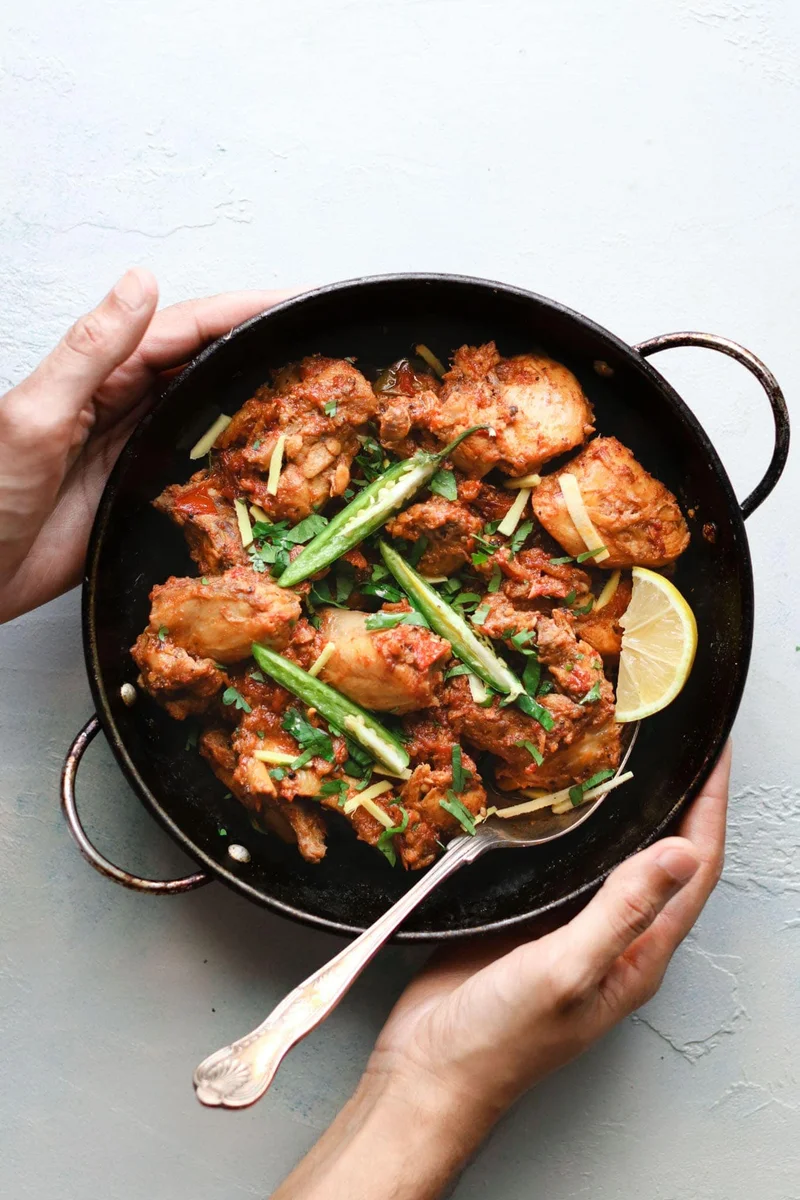
Pakistani chicken karahi is a quick, tomato-rich chicken curry flavoured with ginger, garlic, green chillies and warming spices. This restaurant-style version builds flavour in one pan and finishes with yoghurt, fresh ginger and coriander.
Ingredients
- 2 tbspghee (see note for dairy-free)
- 2–3 tbspneutral oil (or substitute more ghee)
- 1small onion, finely chopped
- 8garlic cloves, crushed
- ¾ inch (about 2 cm)ginger, crushed
- 1–2Serrano or Thai green chilli peppers, whole
- 907 g–1 kg (2–2.2 lb)skinless, bone-in chicken, cut into small pieces
- 8small tomatoes (Roma or vine), diced
- 2 tspcoriander powder
- 1 tspcumin powder
- 1 tsp, or to tastered chilli powder
- 2 tsp, dividedkosher salt
- 60 ml (¼ cup)plain whole-milk yoghurt, whisked (see note for dairy-free)
- 1 tsp, plus more to tasteblack peppercorns, freshly ground
- ½ tspgaram masala
- 2–3green chilli peppers, slit in half
- 1–2 tbspfresh ginger, julienned
- 1 tbspfresh coriander, chopped
Instructions
- 1
Sauté the aromatics
Heat a large, heavy-based pan over high heat and add the ghee and oil. When hot, add the onion and sauté for 5–6 minutes, until lightly golden. Add the garlic, crushed ginger and whole green chilli, then sauté for about 1 minute.
- 2
Brown the chicken
Add the chicken and ½ tsp of the salt. Sauté for 5 minutes, until the chicken changes colour and stops releasing water. Stir in the tomatoes, coriander, cumin, red chilli powder and remaining salt, and sauté for another minute.
- 3
Cook covered
Turn the heat down to medium, cover the pan and cook the chicken for 20 minutes, stirring once partway through.
- 4
Reduce the sauce
Remove the lid and turn the heat up to high. Sauté for 10 minutes to finish cooking the chicken and reduce excess liquid. The chicken should look glossy as the ghee or oil begins to separate.
- 5
Finish and serve
Reduce the heat to medium and gently sauté in the whisked yoghurt for 2–3 minutes. Taste and add more salt if needed; the original recipe notes that it may need another ⅛ tsp. Stir in the freshly ground black pepper and garam masala, then top with the slit green chillies, julienned ginger and coriander. Serve hot with roti, naan, bread or rice.
What is chicken karahi?
Chicken karahi is a Pakistani curry named for the deep, round pan traditionally used to cook it. It is known for a punchy mix of tomatoes, ginger, garlic and chillies rather than a long list of spices.
This version uses bone-in chicken and cooks the tomatoes down in the same pan, making a savoury, concentrated sauce. A little yoghurt is stirred in at the end for a rounded finish.
Nutrition and macros by portion
The nutrition label shows one serving as written: 234 calories, 20g protein, 6g carbs, 14g fat.
| Portion | Adjustment | kcal | Protein | Carbs | Fat |
|---|---|---|---|---|---|
| Lighter | Use less oil | 164 kcal | 14g | 4g | 10g |
| This serving | As written | 234 kcal | 20g | 6g | 14g |
| Hungry | Larger chicken portion | 351 kcal | 30g | 9g | 21g |
The chicken supplies most of the protein, while the tomatoes and onion contribute some of the carbohydrates. Ghee, oil and yoghurt account for much of the fat; serve it with a moderate portion of rice or bread and add vegetables or salad to round out the plate.
Build the flavour base
Golden onion: sauté the chopped onion until lightly coloured before adding the garlic and ginger. This gives the base time to develop flavour without letting the smaller aromatics cook for too long.
Fresh aromatics: the crushed ginger and garlic go in early, while julienned ginger is added at the end for a brighter, more distinct finish. Whole chillies flavour the curry as it cooks; the slit chillies are a fresh topping.
Choose the chicken and tomatoes
Bone-in chicken: cutting it into small pieces helps it cook within the stated time and gives the curry a more substantial, traditional feel. Use skinless pieces as specified so the sauce does not become overly greasy.
Ripe tomatoes: Roma or vine tomatoes are suggested for this recipe, diced so they can soften into the sauce. The high-heat finish helps excess liquid cook away.
Manage the heat
Covered cooking: keep the pan at medium heat for the 20-minute covered stage and stir once during that time. This lets the chicken cook through while the tomatoes soften.
Uncovered reduction: turn the heat up for the final 10 minutes and watch the pan as the liquid reduces. The glossy look and separation of the ghee or oil are the visual cues given in the method.
Add yoghurt gently
Whisk the yoghurt before adding it so it is smooth, then lower the heat to medium. Stir it in gently and cook for 2–3 minutes, as directed.
Taste the curry before serving and adjust the salt if needed. Black pepper and garam masala go in near the end, so their flavours remain clear.
What to serve with it
Roti, naan or bread are handy for scooping up the tomato sauce, while rice makes a simple base for the chicken. Serve the karahi hot, with the fresh ginger, green chillies and coriander on top.
For a more balanced plate, pair a sensible portion of the curry with rice or bread and add a side of vegetables or salad.
Recipe notes & tips
- Use a large, heavy-based pan so the chicken and aromatics have room to sauté.
- Chop the onion, tomatoes and finishing ginger before you heat the pan.
- Keep the whole chillies intact during cooking for flavour without chopping them into the sauce.
- Stir once during the covered cooking stage, as specified in the method.
- Watch closely during the final high-heat reduction so the sauce reduces without catching.
- Add the yoghurt over medium heat and stir gently.
Variations
- Dairy-free: follow the recipe's note for dairy-free alternatives to the ghee and yoghurt.
- Adjust the heat: use fewer green chillies or less red chilli powder for a milder curry.
- More ginger: add the larger amount of julienned ginger for a stronger fresh finish.
- Serve with rice: spoon the curry over rice instead of serving it with roti or naan.
- Use bread: serve with bread for dipping into the reduced tomato sauce.
Common mistakes to avoid
- Adding the yoghurt over high heat: lower the pan to medium first and stir it in gently.
- Skipping the uncovered reduction: cook for the full 10 minutes so excess liquid can reduce.
- Overcooking the aromatics: add the garlic, ginger and whole chilli after the onion has sautéed, and cook them for about a minute.
- Adding all the salt at once: reserve ½ tsp for the chicken and add the remainder with the tomatoes and spices.
- Leaving the chicken pieces too large: cut them into small pieces as directed to suit the cooking time.
How to store
Refrigerate leftovers in a covered container and use within 3 days. Reheat gently in a pan until piping hot throughout; add a small splash of water if the sauce has thickened too much.
Frequently asked questions
Can I make chicken karahi less spicy?
Use fewer green chillies and reduce or omit the red chilli powder to suit your taste. The recipe also allows the red chilli powder to be adjusted to taste.
Can I use boneless chicken?
The recipe calls for skinless, bone-in chicken cut into small pieces. Boneless chicken may cook faster, so check it during the cooking stages rather than assuming it needs the full time.
How do I know when the sauce has reduced enough?
After the 10-minute uncovered stage, the method describes the chicken as glossy, with ghee or oil starting to separate. Keep an eye on the pan as it reduces.
Can I use a dairy-free alternative?
The ingredient list refers to a note for dairy-free alternatives to both the ghee and yoghurt. Use alternatives that suit your needs and follow their package guidance.
What should I serve with chicken karahi?
Serve it hot with roti, naan, bread or rice. A side of vegetables or salad can round out the meal.
Can I prepare it ahead?
You can cook it ahead and refrigerate it once cooled. Reheat gently until piping hot, adding a splash of water if needed.
Cook it from the original
This recipe comes from teaforturmeric.com. Their page has the author’s own photos, notes and tips — the best place to cook it from.
Open the recipe on teaforturmeric.com