
Cranberry Sauce
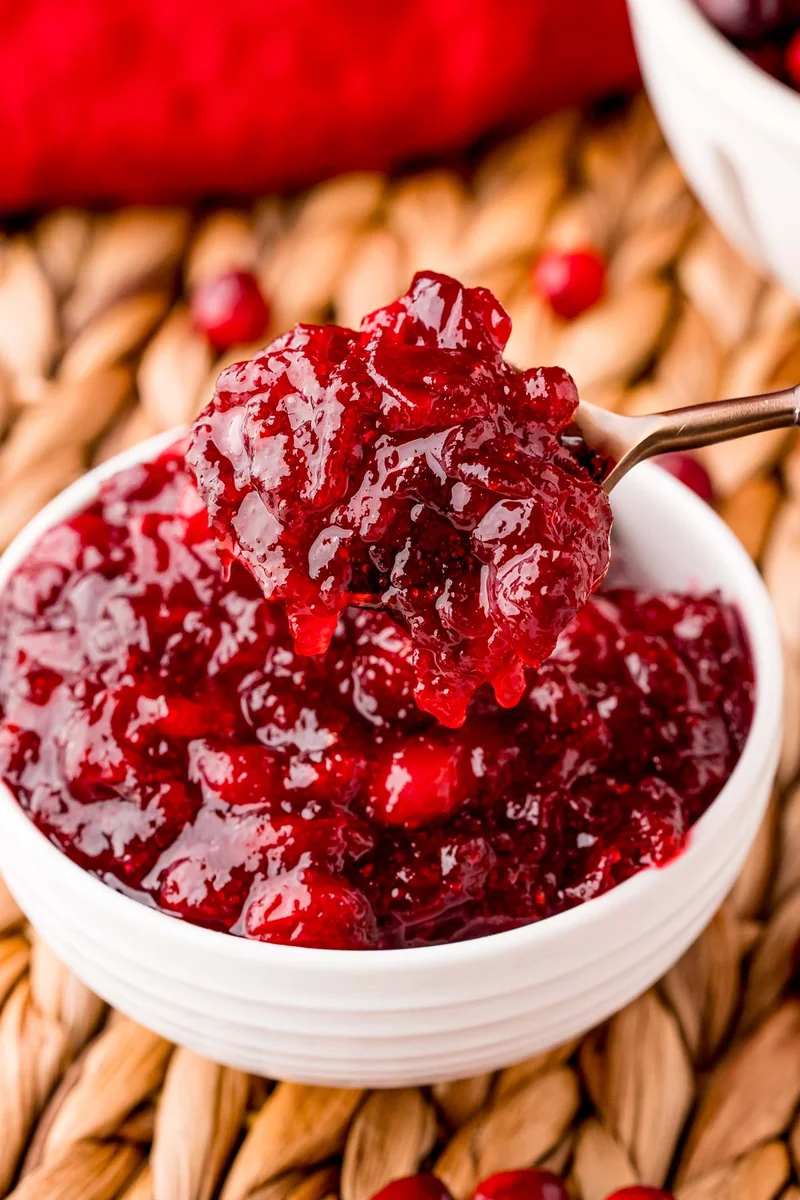
This classic American cranberry sauce simmers fresh cranberries with sugar, cranberry juice and orange zest, then gets a hint of vanilla. It is a simple make-ahead-friendly accompaniment for festive meals, roast dinners and sandwiches.
Ingredients
- 340 g (12 oz)cranberries
- 200 g (1 cup)granulated sugar
- 60 ml (2 oz)100% cranberry juice (or water or orange juice)
- 2 teaspoons (from 1 orange)orange zest
- 1 teaspoonvanilla extract
Instructions
- 1
Bring to a boil
Put the cranberries, sugar, cranberry juice and orange zest in a medium saucepan. Bring to the boil over a medium heat, stirring frequently.
- 2
Cook the berries
Turn the heat up to high and cook for 2 minutes, stirring constantly.
- 3
Cool and finish
Take the pan off the heat and leave the sauce to cool for 30 minutes. Stir in the vanilla before serving.
What is cranberry sauce?
Cranberry sauce is a sweet-tart fruit accompaniment associated with American holiday meals, especially Thanksgiving. This version cooks whole cranberries with sugar and juice until they soften and release their juices.
Orange zest adds a bright citrus note, while vanilla is stirred in after cooking so its aroma stays noticeable. The short ingredient list lets the cranberries remain the focus.
Nutrition and macros by portion
The nutrition label shows one serving as written: 122 calories, 1g protein, 31g carbs, 1g fat.
| Portion | Adjustment | kcal | Protein | Carbs | Fat |
|---|---|---|---|---|---|
| Lighter | Use less sugar | 85 kcal | 1g | 22g | 1g |
| This serving | As written | 122 kcal | 1g | 31g | 1g |
| Hungry | Serve a larger spoonful | 183 kcal | 2g | 47g | 2g |
Most of the carbohydrate comes from the sugar and cranberries, while the juice and orange zest contribute flavour with little fat or protein. Pair a serving with a protein-rich main and vegetables to make a more balanced plate.
Choosing the ingredients
Cranberries: Fresh or frozen berries work for this method; if using frozen, there is no need to thaw them first. Pick through fresh berries and discard any that are shrivelled or damaged.
Juice and zest: Cranberry juice gives the sauce a clear berry flavour, while water makes a less fruity base and orange juice adds extra citrus. Zest only the coloured outer layer of the orange to avoid the bitter white pith.
Getting the simmer right
Steady heat: Start over medium heat and stir often as the mixture warms, so the sugar dissolves and the fruit does not catch on the bottom of the pan. Once it boils, follow the recipe’s brief high-heat stage, stirring continuously for 2 minutes.
Pan choice: A medium saucepan gives the berries room to bubble without making the mixture difficult to stir. Use a spoon with a long handle, as the sauce can splutter while boiling.
Texture and cooling
Berry cues: The cranberries soften and some will burst as the sauce cooks. It will still be quite loose when hot; it thickens as it cools.
Vanilla timing: Let the sauce cool for 30 minutes before stirring in the vanilla, as directed. The cooled sauce can be served as it is, with whole berries, or gently stirred to break them down further.
When to make it
Make-ahead timing: The sauce needs 30 minutes to cool after cooking, so allow for that alongside the stovetop time. It can be prepared before the rest of the meal and chilled until needed.
Serving temperature: Serve it chilled or let it stand briefly at room temperature. If you prefer it warm, reheat it gently rather than letting it boil again.
What to serve with it
Holiday plates: Serve a spoonful alongside roast turkey, chicken or other savoury mains. Its tart-sweet flavour also works well with stuffing and roasted vegetables.
Leftovers: Try it in a sandwich with leftover roast meat, or spoon a little over porridge, yoghurt or toast. Use a clean spoon when serving from the storage container.
Recipe notes & tips
- Stir frequently over medium heat to help the sugar dissolve evenly.
- Keep stirring throughout the 2-minute high-heat stage.
- Zest the orange before squeezing it for juice, if using orange juice instead of cranberry juice.
- Expect the sauce to thicken as it cools rather than judging its final consistency while hot.
- Stir in the vanilla only after the 30-minute cooling period.
Variations
- Use orange juice: Swap it for the cranberry juice to give the sauce a more pronounced citrus flavour.
- Use water: Choose water in place of the juice for a simpler cranberry-led taste.
- Keep it chunky: Stir gently after cooling so more berries stay whole.
- Make it smoother: Mash some of the softened berries with a spoon before serving.
- Adjust the sweetness: Reduce the sugar slightly for a tarter result, keeping in mind that this changes the recipe’s balance.
Common mistakes to avoid
- Leaving it unstirred: The sugar and fruit can catch on the pan; stir frequently over medium heat.
- Using too low a heat for the boil: Bring the mixture to a proper boil before starting the 2-minute high-heat stage.
- Stopping the stirring: Stir constantly during the high-heat stage to prevent sticking and splattering.
- Adding vanilla too early: Wait until the sauce has cooled for 30 minutes before stirring it in.
- Judging it while hot: The sauce thickens as it cools, so allow the full cooling time before deciding its texture.
How to store
Store cooled cranberry sauce in a covered container in the fridge and use within about 5 days. Reheat gently in a saucepan or microwave, stirring until warmed through; add a small splash of water if it has become very thick.
Frequently asked questions
Can I use frozen cranberries?
Yes. Add them straight to the saucepan without thawing first; the mixture may take a little longer to come to the boil.
Can I make this sauce ahead?
Yes. Cool it, stir in the vanilla and refrigerate it in a covered container until serving.
Why is my cranberry sauce runny?
It is looser while hot and thickens as it cools. Give it the full 30-minute cooling period before assessing the consistency.
Can I use orange juice instead of cranberry juice?
Yes. The recipe allows orange juice or water in place of the cranberry juice; orange juice gives the sauce a more citrus-forward flavour.
Should cranberry sauce be served hot or cold?
It can be served chilled, at room temperature or gently warmed. Avoid boiling it again when reheating.
Cook it from the original
This recipe comes from sugarandsoul.co. Their page has the author’s own photos, notes and tips — the best place to cook it from.
Open the recipe on sugarandsoul.co