
Labneh
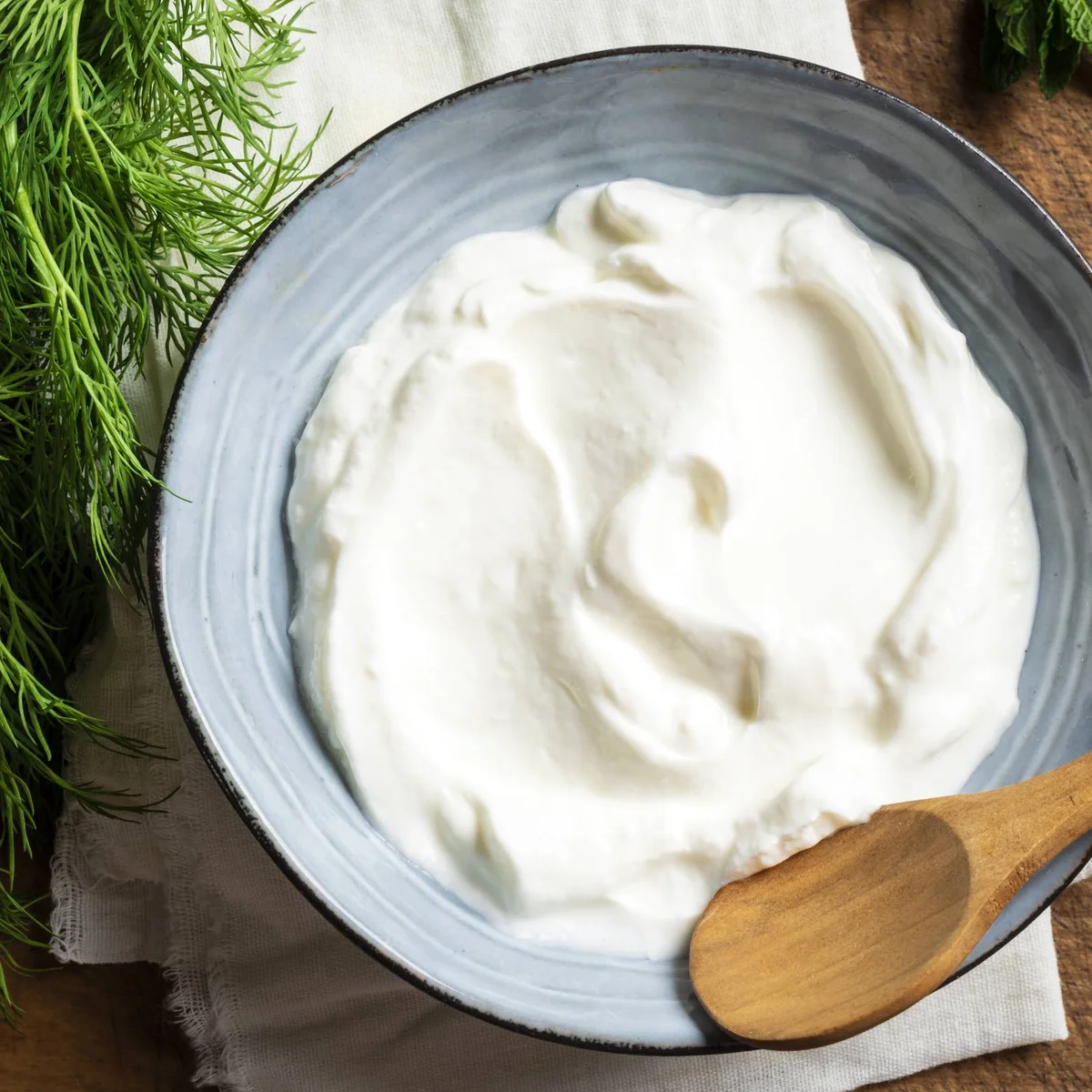
Labneh is a soft, tangy cheese made by draining salted Greek yoghurt until it reaches your preferred consistency. It takes very little hands-on effort and works as a creamy dip or spread.
Ingredients
- 1 litreGreek yoghurt
- 1 tsp (5 ml)salt
Instructions
- 1
Salt the yoghurt
Mix the yoghurt and salt thoroughly. The salt seasons it and helps the whey separate.
- 2
Set up the sieve
Line a sieve with muslin or a clean tea towel. Rest it over a deep bowl, making sure the sieve does not touch the bottom.
- 3
Make a bundle
Spoon the salted yoghurt into the centre of the cloth. Gather and twist the corners, then tie them with string to make a small bundle.
- 4
Chill the yoghurt
Put the bundle and bowl in the fridge.
- 5
Drain to taste
After 12 hours of draining, the labneh will be soft and creamy, with a dip-like consistency. Drain it for 24–36 hours for a thicker cheese that can be shaped.
What is labneh?
Labneh is a Middle Eastern strained-yoghurt cheese, made by letting whey drain away from salted yoghurt. This simple version relies on Greek yoghurt, which is already thick, and needs no cooking.
The draining time determines whether it is loose enough to scoop as a dip or firm enough to shape. A sieve, cloth and bowl do most of the work.
Nutrition and macros by portion
The nutrition label shows one serving as written: 245 calories, 23g protein, 9g carbs, 13g fat.
| Portion | Adjustment | kcal | Protein | Carbs | Fat |
|---|---|---|---|---|---|
| Lighter | Serve with extra vegetables | 172 kcal | 16g | 6g | 9g |
| This serving | As written | 245 kcal | 23g | 9g | 13g |
| Hungry | Larger portion | 368 kcal | 35g | 14g | 20g |
The yoghurt supplies most of the protein and also contributes the carbohydrates and fat; the salt adds sodium. Serve a spoonful with vegetables and bread, or alongside another protein, to make a more balanced plate.
Choosing the yoghurt
Greek yoghurt: use plain, unsweetened yoghurt so its tangy flavour is not masked. A thicker yoghurt gives you a head start, while the draining time still controls the final texture.
Salt: mix it in evenly before draining. It seasons the labneh and encourages the whey to separate.
Setting up the drain
Cloth: line the sieve with muslin or a clean tea towel, with enough overhang to gather into a bundle. If using a tea towel, choose one without strong detergent or fabric-softener smells.
Bowl: keep space beneath the sieve so the whey can collect without the cloth sitting in it. This lets the yoghurt drain freely in the fridge.
Getting the consistency right
For a dip: start checking after 12 hours, when the labneh should be soft and creamy. If it still seems too loose, leave it to drain longer.
For shaping: drain for 24–36 hours, checking as it firms up. The exact result depends on the yoghurt and how quickly it releases whey.
Serving ideas
Spread labneh on toast or flatbread, or serve it as a dip alongside chopped vegetables. Its mild tang also pairs well with olives, herbs and warm bread.
For a more substantial plate, add a source of protein and some vegetables. Use the collected whey in a smoothie or in place of some liquid in baking, if you like.
Timing and planning
The hands-on preparation is brief, but draining takes at least 12 hours. Make it the day before you want to serve it, and leave it overnight in the fridge.
Allow up to 36 hours if you want a firm, shapeable cheese. Check the texture rather than relying only on the clock.
Recipe notes & tips
- Use plain yoghurt without added sugar or flavourings.
- Make sure the bowl is deep enough to catch all the whey.
- Keep the sieve raised above the collected liquid throughout draining.
- Check the texture after 12 hours before deciding whether to drain it longer.
- Use a clean cloth with no lingering detergent smell.
Variations
- Fresh herbs: fold chopped mint or dill into the finished labneh.
- Garlic: stir in a little finely grated garlic just before serving.
- Lemon zest: add finely grated zest for a brighter flavour.
- Spiced topping: dust the surface with paprika or za'atar.
- Olive oil: finish the served labneh with a drizzle of olive oil.
Common mistakes to avoid
- Sieve touching the bowl: the yoghurt can sit in whey; use a deeper bowl or raise the sieve.
- Loose bundle: yoghurt may escape through the cloth; gather and tie it securely.
- Stopping too soon: the labneh may remain runny; keep draining until it reaches the texture you want.
- Leaving it at room temperature: drain it in the fridge as directed.
- Using flavoured yoghurt: added sweetness can clash with the savoury result; choose plain yoghurt.
How to store
Keep the finished labneh covered in the fridge and use within 3–4 days. It is served cold, so no reheating is needed.
Frequently asked questions
How long should I drain labneh?
Drain it for about 12 hours for a soft, dip-like texture, or 24–36 hours for a firmer cheese. Check the texture as it drains, since yoghurts can vary.
Can I use regular yoghurt instead of Greek yoghurt?
Yes, but it may need longer to drain because it starts out thinner. Use plain yoghurt and check it until it reaches the consistency you want.
What can I use instead of muslin?
A clean tea towel can be used to line the sieve. Choose one that is clean and free of strong detergent smells.
What is the liquid that collects in the bowl?
It is whey draining from the yoghurt. Pour it away or save it for another use, such as adding to a smoothie.
Can I make labneh ahead?
Yes. It needs at least 12 hours to drain, so preparing it the day before is convenient. Keep it refrigerated while it drains.
Cook it from the original
This recipe comes from sobors.hu. Their page has the author’s own photos, notes and tips — the best place to cook it from.
Open the recipe on sobors.hu