
Cream Sauce Seafood Pasta
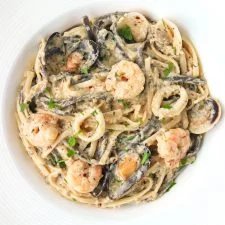
This Italian-inspired seafood pasta brings mussels, clams, squid and shrimp together with linguine in a creamy white wine and Parmesan sauce. It makes an impressive meal for a special evening but is straightforward enough to prepare at home.
Ingredients
- 10mussels, fresh or frozen
- 10littleneck clams, fresh or frozen
- 100 g (3.5 oz)squid, skinned, rinsed, patted dry and cut into rings
- 125 g (8–10 pieces)shrimp, peeled, deveined, rinsed and patted dry
- ½ teaspoon, to tastekosher salt
- ½ teaspoon, to tastefreshly cracked black pepper
- 2 teaspoonsHerbes de Provence
- 4 teaspoonsfreshly squeezed lemon juice
- 2 clovesgarlic, finely minced
- 1 tablespoonextra-virgin olive oil
- 1 tablespoonunsalted butter
- A splashdry white wine
- 227 g (8 oz)uncooked linguine, or a half-and-half mix of regular and squid ink linguine
- 4 clovesgarlic, finely minced
- ½yellow onion, finely minced
- 4 tablespoons, plus more for garnishfresh Italian parsley, finely chopped
- 2 tablespoonsall-purpose flour
- 237 ml (1 cup)dry white wine
- 710 ml (3 cups)whole milk
- 2 teaspoons, to tastekosher salt
- 1 teaspoonfreshly cracked black pepper
- 1 teaspoongarlic powder
- 1 teaspoononion powder
- 1 teaspoondried thyme
- 1 teaspoondried oregano flakes
- 1½ teaspoons, to tasteground cayenne
- 1 teaspoon, to tastecrushed red pepper chilli flakes
- About 50 g (½ cup)freshly grated Parmigiano Reggiano or Parmesan
- 1 tablespoonextra-virgin olive oil
- 2 tablespoonsunsalted butter
Instructions
- 1
Mix the seasonings
Combine the seasonings for the cream sauce in a small bowl, cover and set aside until needed.
- 2
Prepare the seafood
Rinse and cut the squid into rings about 1.3 cm (½ inch) wide, remove any skin, rinse again and pat dry. If using fresh clams, soak them in water for 20 minutes and rinse thoroughly. Soak and scrub fresh mussels with a metal brush to remove grit. You can skip soaking and scrubbing frozen shellfish if the packaging says they are ready to cook. Peel and devein the shrimp if needed, rinse and pat dry. Keep the squid, mussels, clams and shrimp in separate bowls.
- 3
Chop the aromatics
Finely mince the garlic and onion and chop the parsley; set them aside.
- 4
Cook the linguine
Boil the linguine in salted water in a large pot or deep sauté pan, following the packet directions, until al dente. The recipe suggests rinsing the pasta under water to stop it sticking and cooking further. Rinse out the pan and return it to the stove.
- 5
Measure the liquids
Measure the milk and wine into separate cups and set them aside.
- 6
Steam the seafood
Heat the olive oil and butter in a medium sauté pan over medium-high heat. When hot, add all the seafood, lemon juice, salt, black pepper and Herbes de Provence; sauté for 1 minute. Add the garlic and a splash of white wine, stir, cover and steam for 4–6 minutes. Uncover and move the shrimp and squid to a clean bowl once just cooked through. Cover the pan again and steam the clams and mussels for a further 3–5 minutes, until their shells open and most of the wine has evaporated. Turn off the heat, discarding any clams or mussels that remain tightly closed.
- 7
Soften onion and garlic
In a separate large, deep sauté pan, heat the olive oil and butter over medium-high heat until the butter has melted and is bubbling. Add the onion and garlic and sauté for 1–2 minutes, until fragrant.
- 8
Add the parsley
Stir in the chopped parsley and sauté for another minute.
- 9
Cook flour and wine
Whisk in the flour and cook for 2 minutes. Slowly pour in the wine while whisking, then simmer for about 2–4 minutes, until the mixture thickens and the wine has reduced.
- 10
Finish the sauce
Reduce the heat to medium and gradually whisk in the milk. Stir in the seasonings and grated cheese, mixing until the cheese melts and the sauce begins to thicken.
- 11
Toss and serve
Add the linguine and seafood to the sauce and toss continuously to combine. Cook for 3–5 minutes, until heated through and the sauce has thickened further, then turn off the heat. Divide among four plates or transfer to a serving dish, garnish with extra parsley if desired, and serve immediately.
What is cream sauce seafood pasta?
This is a seafood-and-pasta dish in the Italian style, pairing shellfish and squid with linguine in a white wine cream sauce. It takes inspiration from Italian seafood pasta traditions, while the milk-based sauce and varied seasonings give this version a particularly rich, savoury finish.
The mix of mussels, clams, shrimp and squid gives the dish a range of seafood flavours and textures. White wine, lemon and parsley add brightness to balance the creamy sauce.
Nutrition and macros by portion
The nutrition label shows one serving as written: 690 calories, 43g protein, 64g carbs, 29g fat.
| Portion | Adjustment | kcal | Protein | Carbs | Fat |
|---|---|---|---|---|---|
| Lighter | Less sauce, more seafood | 483 kcal | 30g | 45g | 20g |
| This serving | As written | 690 kcal | 43g | 64g | 29g |
| Hungry | Larger pasta portion | 1035 kcal | 65g | 95g | 43g |
The linguine and flour provide most of the carbohydrates, while butter, olive oil, milk and Parmesan contribute much of the fat. Seafood and milk supply protein. Pair a serving with a generous salad or vegetables to add freshness and balance the rich pasta.
Why cook the seafood separately?
Different seafood needs different cooking times. The shrimp and squid are taken out as soon as they are just cooked, while the clams and mussels stay covered until their shells open.
Keeping the seafood in the pan only as long as needed helps avoid tough squid and overcooked shrimp. Discard shellfish that remain tightly closed after cooking.
Building a smooth sauce
Flour: Whisk it into the butter, oil, onion and garlic, then cook it for 2 minutes before adding liquid. This gives the flour time to cook and helps it thicken the sauce.
Wine: Pour it in gradually while whisking, and let it simmer for 2–4 minutes so it reduces before the milk goes in.
Milk and cheese: Add the milk gradually over medium heat, then stir in the Parmesan until melted. Keep whisking to help the sauce turn smooth and thicken evenly.
Getting the pasta texture right
Linguine: Cook it just to al dente, following the packet directions, as it will spend another 3–5 minutes in the sauce.
Finish: Toss continuously so the pasta is coated and the seafood heats through. The sauce should cling to the linguine; it will thicken further as the pasta releases starch.
Choosing the wine and pasta
Wine: A dry white wine such as Sauvignon Blanc suits the sauce; use the same style for the seafood splash and the measured amount in the sauce. Avoid a sweet wine, which can make the finished dish taste less balanced.
Pasta: Regular linguine works well, and a half-and-half mix with squid ink linguine adds a striking colour contrast. Either choice can be cooked by the same method.
Serving the dish
Serve the pasta straight away, while the sauce is hot and glossy. Finish with extra chopped parsley for a fresh herbal note.
For a meal, pair it with a simple green salad or steamed vegetables. Keep any side lightly dressed so it complements rather than competes with the rich sauce.
Recipe notes & tips
- Pat the squid and shrimp dry so excess water does not dilute the sauce.
- Use separate bowls for each type of seafood to make it easier to add and remove them at the right time.
- Grate the Parmesan finely so it melts readily into the sauce.
- Keep the sauce at a gentle simmer after adding the milk rather than letting it boil hard.
- Have the cooked pasta and seafood ready before finishing the sauce, as the final toss takes only a few minutes.
Variations
- Add scallops: Sear them separately and add them with the other seafood at the end.
- Use a different pasta: Swap in fettuccine or another long pasta shape and cook it al dente.
- Adjust the heat: Reduce or omit the cayenne and chilli flakes for a milder sauce.
- Add vegetables: Stir in cooked spinach or peas as you toss the pasta with the sauce.
- Change the herbs: Use fresh thyme in place of dried thyme, adding it to the sauce with the parsley.
Common mistakes to avoid
- Overcooking the squid: Remove it as soon as it is just cooked through, then add it back at the end.
- Skipping the flour cook: Give the flour 2 minutes in the pan before adding wine to avoid a raw flour taste.
- Adding the milk too quickly: Pour it in gradually while whisking to help keep the sauce smooth.
- Boiling the finished sauce hard: Keep the heat moderate after the milk goes in so the sauce thickens gently.
- Eating tightly closed shellfish: Discard any clams or mussels that stay tightly closed after steaming.
How to store
Refrigerate leftovers in an airtight container and eat within 1–2 days. Reheat gently in a pan over low heat, stirring often; add a small splash of milk if the sauce has thickened too much. Avoid prolonged reheating, which can make the seafood tough.
Frequently asked questions
Can I use frozen seafood?
Yes. Use frozen mussels and clams if their packaging says they are ready to cook; the recipe says soaking and scrubbing can then be skipped. Thaw other seafood safely and pat it dry before cooking.
Can I use only one kind of linguine?
Yes. Use 227 g of regular linguine or squid ink linguine instead of a mix, and cook it according to the packet directions.
How do I know when the clams and mussels are done?
Their shells should open after steaming. Discard any that remain tightly closed when cooking is finished.
Can I make the sauce less spicy?
Yes. Reduce or leave out the cayenne and chilli flakes, then taste and adjust the seasoning before tossing through the pasta.
Can I prepare any of this ahead?
You can chop the garlic, onion and parsley, measure the liquids and mix the seasonings ahead. For the best texture, cook the seafood and combine it with the pasta and sauce just before serving.
Cook it from the original
This recipe comes from thatspicychick.com. Their page has the author’s own photos, notes and tips — the best place to cook it from.
Open the recipe on thatspicychick.com