
Stir-fried E-fu Noddles with Shrimp
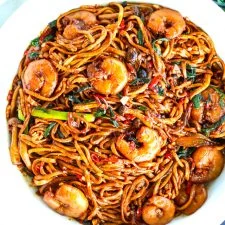
These Chinese stir-fried E-fu noodles pair springy noodles with shrimp, mushrooms, chives and a savoury soy-based sauce. They make a quick special-occasion meal, but are just as suited to a weeknight dinner.
Ingredients
- 7garlic cloves, minced
- 2 tbspginger, grated
- 1/4yellow onion, thinly sliced
- 3–8, to taste (optional)red chillies, preferably bird’s eye, chopped
- 75 gbrown straw mushrooms (shimeji), ends trimmed and discarded, rinsed
- 40 g (5–6 pieces)Chinese garlic chives, chopped into 5 cm lengths, whites and greens separated
- 1 tspcornflour
- 2 tspmushroom soy sauce
- 4 tspreduced-salt light soy sauce
- 2 tspthick, sweet dark soy sauce
- 1½ tbsp, to tastefried garlic in chilli oil
- 2 tbspoyster sauce, or vegetarian mushroom-flavoured oyster sauce
- 1 tspsesame oil
- 3 tbspwater
- 1½ tspcornflour
- 3 tspreduced-salt light soy sauce
- 2 tspShaoxing wine
- ½ tspsesame oil
- 4 tbsp, dividedpeanut oil, or another high-smoke-point cooking oil
- 1 tsp (optional)chilli oil
- 1 tspsesame oil
- 200 gshrimp, fresh or frozen, peeled, tails removed and deveined
- 150 gdried E-fu noodles
- About 2,400 mlwater, for boiling the noodles
- A pinch, plus more to tastecoarsely ground black pepper
- A pinch, or to tastewhite pepper
- To taste (optional)crushed red chilli flakes
- To taste (optional)Chinese chilli oil
Instructions
- 1
Chop the ingredients
Chop the garlic, ginger, onion, red chillies and chives. Remove the chilli seeds if you want less heat. The small mushrooms can stay whole; they will shrink as they cook.
- 2
Boil the noodles
Bring about 2,400 ml water to the boil in a large pan or pot. Add the noodles and cook for about 3–4 minutes, until the strands separate but are still firm. Drain in a colander and rinse under tap water to stop them sticking.
- 3
Marinate the shrimp
In a large bowl, mix the shrimp marinade ingredients. Add the shrimp, coat them in the mixture and set aside.
- 4
Mix the sauce
Combine all the sauce-bowl ingredients in a medium bowl, mixing thoroughly with a spoon. Set aside.
- 5
Cook the shrimp
Heat 2 tbsp peanut oil and a dash of sesame oil in a wok or large pan over high heat. Lift and swirl the wok so the oil coats its sides, then return it to the heat. Add the shrimp in an even layer and cook for about 30–45 seconds on one side, then 30 seconds on the other. Toss until no longer translucent. Transfer to a fine-mesh strainer held over the wok to drain, then move the shrimp to a clean large bowl. Discard the oil and wipe the wok with paper towels.
- 6
Heat the wok
Heat the remaining 2 tbsp peanut oil with the chilli oil, if using, and about 1 tsp sesame oil in the wok. Lift and rotate it clockwise to spread the oil around the sides, then return it to the hob and let the oil heat for 1 minute.
- 7
Cook the aromatics
Add the onion and sauté for about 1 minute, until translucent. Add the garlic, ginger and chive whites and stir-fry for 15 seconds. Add the red chillies and continue stir-frying.
- 8
Add the mushrooms
Add the mushrooms and stir-fry for a further 30 seconds. They do not need to be fully softened yet, as they will keep cooking with the other ingredients.
- 9
Return the shrimp
Add the shrimp to the wok and toss them with the other ingredients.
- 10
Toss with sauce
Stir the sauce-bowl mixture to loosen the cornflour, then add the noodles and pour the sauce evenly over them. Toss and stir-fry continuously until everything is combined and coated.
- 11
Season the noodles
Season with black and white pepper to taste and keep stir-frying.
- 12
Finish with chives
Add the chive greens and stir-fry for about 1–2 minutes, until bright green. Keep tossing until the noodles are heated through, then turn off the heat and transfer to a serving dish.
- 13
Serve the noodles
Serve with Chinese chilli oil and crushed red chilli flakes on the side, if desired.
What are E-fu noodles?
E-fu, also called yi mein, are Chinese wheat noodles often associated with celebratory meals and long-life symbolism. Their soft, slightly springy texture works well in stir-fries because the noodles can soak up sauce while holding their shape.
This version combines them with shrimp, small mushrooms, Chinese chives and several soy-based seasonings. High-heat cooking brings the components together quickly, while the sauce adds savoury depth.
Nutrition and macros by portion
The nutrition label shows one serving as written: 471 calories, 25g protein, 41g carbs, 24g fat.
| Portion | Adjustment | kcal | Protein | Carbs | Fat |
|---|---|---|---|---|---|
| Lighter | Use less cooking oil | 330 kcal | 17g | 28g | 17g |
| This serving | As written | 471 kcal | 25g | 41g | 24g |
| Hungry | Add more noodles | 707 kcal | 37g | 61g | 36g |
The noodles provide most of the carbohydrates, while peanut oil, sesame oil and chilli oil contribute much of the fat. Shrimp supplies the protein, with oyster sauce and soy sauces adding further flavour and sodium. Serve with a portion of fresh or steamed vegetables for a more balanced plate.
The ingredients that build flavour
Soy sauces: Mushroom soy, light soy and sweet dark soy each bring a different savoury note, saltiness or colour. Oyster sauce and Shaoxing wine round out the sauce with extra depth.
Aromatics: Garlic, ginger, onion and chives flavour the cooking oil early in the stir-fry. Chilli is optional, so you can adjust the heat to suit your table.
Mushrooms: Shimeji mushrooms are small enough to leave whole after trimming. Their size and texture make them easy to toss through the noodles.
Keep the noodles firm
Boil the E-fu noodles only until they separate and are still firm, about 3–4 minutes. They will cook again in the wok, so fully soft noodles at this stage can turn soggy later.
Rinsing after draining helps stop the strands sticking together while you prepare the remaining ingredients. Drain them well so excess water does not dilute the sauce.
Cook the shrimp in a single layer
Spread the marinated shrimp evenly across the hot wok and give them the specified brief cooking time on each side. They are ready to move on when they are no longer translucent.
Let the cooked shrimp drain over the wok before setting them aside. Handle the strainer gently so the coating stays on the shrimp.
Get the wok ready
A hot wok and prepared ingredients make the quick stir-frying easier to manage. Chop the vegetables, mix the marinade and sauce, and drain the noodles before you begin cooking.
The recipe cooks the shrimp first, then removes the oil and wipes the wok before starting the noodles. This keeps the final stir-fry from carrying excess oil from the shrimp stage.
Use the sauce bowl well
Cornflour settles as the sauce stands, so stir the mixture again just before adding it to the wok. Pour it over the noodles and keep tossing to coat the strands evenly.
Add the chive greens near the end and cook until they turn bright green, about 1–2 minutes. The noodles should be heated through before you take the wok off the heat.
What to serve alongside
The noodles already combine shrimp, mushrooms and vegetables in one pan, so they can be served as the main dish. A simple side of greens or lightly dressed vegetables can add freshness alongside the savoury sauce.
Put extra Chinese chilli oil and crushed chilli flakes on the table for anyone who wants more heat. Keeping these additions optional makes the dish easy to serve to a mixed group.
Recipe notes & tips
- Prepare and arrange all the ingredients before heating the wok, as the stir-frying stages move quickly.
- Leave the shrimp whole and spread them out so they cook evenly.
- Keep the noodles slightly firm after boiling because they will cook again in the wok.
- Rinse and drain the noodles well to limit sticking and excess water.
- Stir the sauce just before pouring it in to redistribute the cornflour.
- Offer chilli oil and crushed chilli on the side so each person can choose their preferred heat.
Variations
- Make it vegetarian: Use vegetarian mushroom-flavoured oyster sauce and omit the shrimp.
- Adjust the heat: Leave out the red chillies and serve chilli oil separately.
- Change the mushrooms: Use another small mushroom variety if shimeji are unavailable.
- Add more greens: Increase the Chinese chives while keeping their whites and greens separate for cooking.
- Use another cooking oil: Substitute a different high-smoke-point oil for the peanut oil.
Common mistakes to avoid
- Overcooking the noodles: Boil them only until separated but still firm, as they cook again in the wok.
- Skipping the sauce stir: Mix it again just before adding so the cornflour is not left at the bottom of the bowl.
- Crowding the shrimp: Spread them evenly in the wok so they cook on both sides as directed.
- Shaking the strainer too hard: Drain the shrimp gently to avoid dislodging their cornflour coating.
- Adding the greens too early: Stir in the chive greens near the end so they cook for only about 1–2 minutes.
- Leaving the noodles unrinsed: Run tap water over them after draining to help prevent the strands sticking together.
How to store
Refrigerate leftovers in a covered container and use within 2 days. Reheat in a wok or frying pan until piping hot, tossing gently; add a small splash of water if the noodles seem dry.
Frequently asked questions
Can I use frozen shrimp?
Yes. The recipe allows fresh or frozen shrimp; thaw frozen shrimp before peeling and deveining if needed, then follow the marinade and cooking steps.
What if I cannot find E-fu noodles?
E-fu noodles give the dish its characteristic texture. Another wheat noodle can be used, but follow its packet instructions and stop cooking while it is still firm enough for the final stir-fry.
Can I make this without chilli?
Yes. Leave out the red chillies and optional chilli oil, and serve chilli oil or crushed chilli separately for anyone who wants it.
Can I make the dish vegetarian?
Use vegetarian mushroom-flavoured oyster sauce and leave out the shrimp. The original method does not give a replacement quantity for the shrimp.
Why rinse the noodles after boiling?
Rinsing with tap water helps keep the drained strands from sticking together while you prepare the rest of the dish.
How do I know when the shrimp are cooked?
The method says to toss them until they are no longer translucent, after briefly cooking both sides.
Cook it from the original
This recipe comes from thatspicychick.com. Their page has the author’s own photos, notes and tips — the best place to cook it from.
Open the recipe on thatspicychick.com