
Turkish Lamb Pide
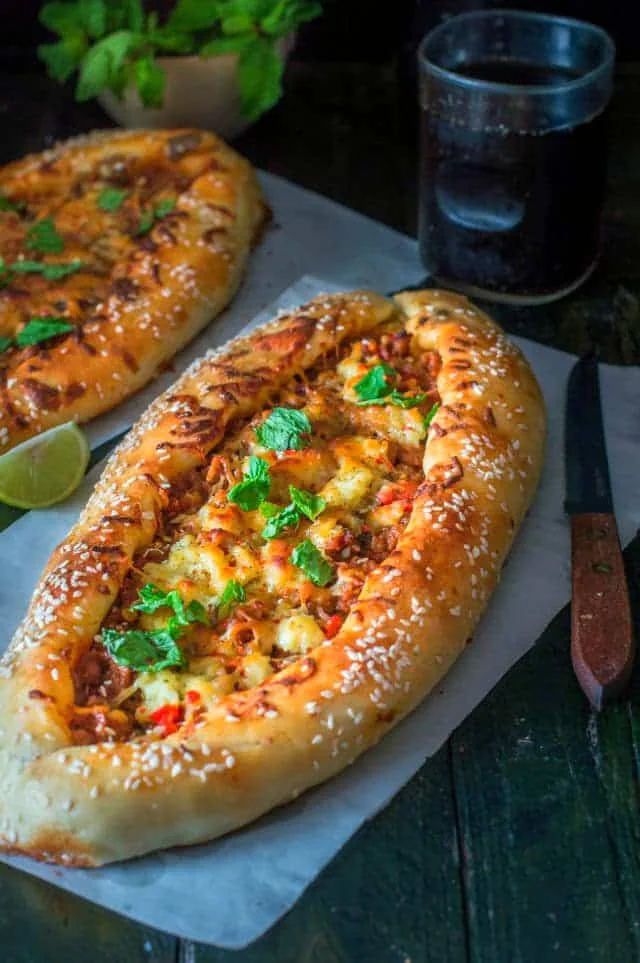
Turkish lamb pide is a boat-shaped bread filled with spiced lamb, vegetables and cheese. It takes a little time for the dough to rise, but the result is a warm, substantial meal with crisp edges and a savoury filling.
Ingredients
- 375 g (3 cups)plain flour
- 1 tbspactive dried yeast
- 180 ml (¾ cup), warmmilk
- 1 tspsugar
- 1 tspsalt
- 1egg
- 500 glamb, finely minced
- 1 largeonion
- 2 cloves (the original cook used 6)garlic
- 2 tbspbutter or vegetable oil
- ½ tsp (the original cook used 1 tsp, lightly toasted)cumin powder
- ½ tspground coriander
- ¼ tspground cinnamon
- ½ tsp, optionalgaram masala
- ½ tsp, optionalred chilli flakes
- to tastesalt
- ½ tspground black pepper
- 1 tspfresh lemon juice
- 2 tbspfresh mint, chopped
- 1 mediumtomato
- 1red or green bell pepper
- 1 cup (about 110 g)cheddar or mozzarella, grated
- to sprinkle on topsesame seeds
Instructions
- 1
Mix the dough
Combine the warm milk, sugar and yeast in a large bowl and leave undisturbed for 10 minutes, until bubbling. Add the egg, salt and oil, mix well, then work in the flour and knead until the dough is smooth and elastic.
- 2
Let dough rise
Oil a bowl and turn the dough in it so it is coated. Cover with a damp towel and leave for up to 1 hour, until doubled in size.
- 3
Cook the aromatics
Meanwhile, heat a pan with the butter or oil. Add the minced garlic and, once fragrant, add the chopped onion. Fry until the onion is golden brown.
- 4
Brown the lamb
Add the minced lamb and sauté over high heat for 5–6 minutes, until its colour begins to change. Lower the heat, add all the dry spices and cook until the lamb is done.
- 5
Add the vegetables
Stir in the tomato and chopped red bell pepper. Cook for another 2–3 minutes, stirring occasionally, then turn off the heat.
- 6
Finish the filling
Mix in the chopped mint and lemon juice. Set the filling aside to cool.
- 7
Heat the oven
Preheat the oven to 200°C.
- 8
Divide the dough
Punch down the dough to release the trapped air. Turn it out on a lightly floured surface and divide it into two pieces.
- 9
Shape the bases
Roll one piece into an oval and transfer it to a lined baking sheet. Stretch it a little further with your hands to form an oval pide base. Dust the top with a little cornflour.
- 10
Add the filling
Spread half the cooled lamb mixture over the dough, then add half the grated cheese. The original cook also topped one pide with fresh cottage cheese and another with sliced mushrooms.
- 11
Form the boats
Fold in the sides, bring the ends together and pinch them closed to make a boat shape.
- 12
Brush and sprinkle
Lightly beat an egg and brush it over the edges of the shaped dough. Spoon a couple of spoonfuls over the filling, then sprinkle sesame seeds along the edges.
- 13
Bake the pide
Bake for 25–30 minutes, until golden brown.
- 14
Rest and serve
Leave the pide to rest for 5 minutes, then sprinkle with za’atar. Slice and serve warm.
What is Turkish lamb pide?
Pide is a Turkish flatbread often shaped like a boat and baked with a savoury topping. This version pairs minced lamb with onion, warm spices, tomato, pepper and cheese.
The risen dough makes a soft base, while its folded edges hold the filling in place. Baking the filling inside the bread brings the components together in an easy-to-slice meal.
Nutrition and macros by portion
The nutrition label shows one serving as written: 780 calories, 39g protein, 76g carbs, 34g fat.
| Portion | Adjustment | kcal | Protein | Carbs | Fat |
|---|---|---|---|---|---|
| Lighter | Less cheese, more salad | 546 kcal | 27g | 53g | 24g |
| This serving | As written | 780 kcal | 39g | 76g | 34g |
| Hungry | Larger pide portion | 1170 kcal | 59g | 114g | 51g |
The flour and milk supply most of the carbohydrates, while lamb and cheese contribute much of the protein and fat. Pair a portion with a generous salad or other vegetables to balance the plate.
Building flavour in the filling
Aromatics: Fry the garlic briefly, then give the onion time to turn golden; this creates a savoury foundation before the lamb goes in.
Spices: The cumin, coriander and cinnamon season the lamb, while garam masala and chilli flakes are optional additions. Add the tomato and pepper near the end so they soften without losing all their texture.
Working with the dough
Yeast: The milk should be warm rather than hot, and the 10-minute wait gives the yeast a chance to start bubbling.
Rising: Let the dough rise until it has doubled, up to 1 hour. The time can vary with room temperature, so use the change in size as your cue rather than relying only on the clock.
Shaping the pide
Oval bases: Roll each piece of dough into an oval, then stretch it gently on the lined tray. Avoid making the centre so thin that it struggles to support the filling.
Boat edges: Fold the sides in and pinch the ends closed to contain the topping. Brushing the edges with beaten egg helps them brown in the oven.
Getting the filling and bake right
Cooling: Let the cooked lamb mixture cool before spreading it on the dough; a very hot filling can make shaping less manageable.
Doneness: Bake at 200°C for 25–30 minutes, looking for a golden crust. Rest for 5 minutes before slicing so the filling settles.
Serving ideas
Fresh sides: Serve warm pide with a crisp salad or sliced cucumber and tomato to contrast with the rich lamb and cheese.
On the table: A squeeze of lemon or a spoonful of yoghurt alongside works well with the spiced filling. Cut each pide into portions for sharing.
Recipe notes & tips
- Wait for the yeast mixture to become bubbly before adding the flour.
- Knead until the dough feels smooth and elastic so it can be stretched into an oval.
- Cook the lamb filling until done before adding it to the dough.
- Cool the filling before assembling the pide.
- Keep the sides and ends pinched together so the filling stays contained.
- Check the pide at 25 minutes and continue baking if the crust is not golden.
Variations
- Extra garlic: Use the original cook’s six cloves for a stronger garlic flavour.
- More cumin: Increase the cumin to 1 tsp, as the original cook did, for a more pronounced spice note.
- Cottage cheese: Add fresh cottage cheese to the topping alongside or instead of some of the grated cheese.
- Mushrooms: Top one pide with sliced mushrooms before baking.
- Spicier filling: Include the optional chilli flakes for extra heat.
Common mistakes to avoid
- Milk too hot: Let it cool until warm to the touch so it does not hinder the yeast.
- Rushing the rise: Leave the dough until doubled in size, even if it needs the full hour.
- Filling while hot: Cool the lamb mixture first to make shaping easier.
- Thin centre: Stretch the dough gently and keep enough thickness to support the filling.
- Loose ends: Pinch the tips firmly so the boat shape holds during baking.
- Slicing straight away: Rest the baked pide for 5 minutes before cutting.
How to store
Cool leftovers, then refrigerate in an airtight container for up to 3 days. Reheat in an oven at 180°C until hot throughout; the crust is likely to soften slightly in the fridge.
Frequently asked questions
Can I make the dough ahead?
Yes. Refrigerate the covered dough after kneading and let it come closer to room temperature before shaping. Allow enough time for it to rise until doubled.
How can I tell when the lamb is cooked?
Cook it until no raw-looking mince remains, then continue with the recipe until the filling is done. The pide is baked again after assembly.
Can I use mozzarella instead of cheddar?
Yes. The ingredient list allows either cheddar or mozzarella; grate the cheese before adding it to the filling.
Do I need to use garam masala and chilli flakes?
No. Both are marked optional, so you can leave them out while keeping the other spices.
Can I bake both pide at the same time?
Yes, if both fit with space around them on the oven tray or trays. If they do not brown evenly, rotate the trays during baking.
What does the egg wash do?
Brushing beaten egg on the folded edges helps them brown. The method also calls for spooning a couple of spoonfuls of egg over the filling.
Cook it from the original
This recipe comes from theflavoursofkitchen.com. Their page has the author’s own photos, notes and tips — the best place to cook it from.
Open the recipe on theflavoursofkitchen.com