
Tuna Mayo Onigirazu (Sushi Sandwich) Recipe
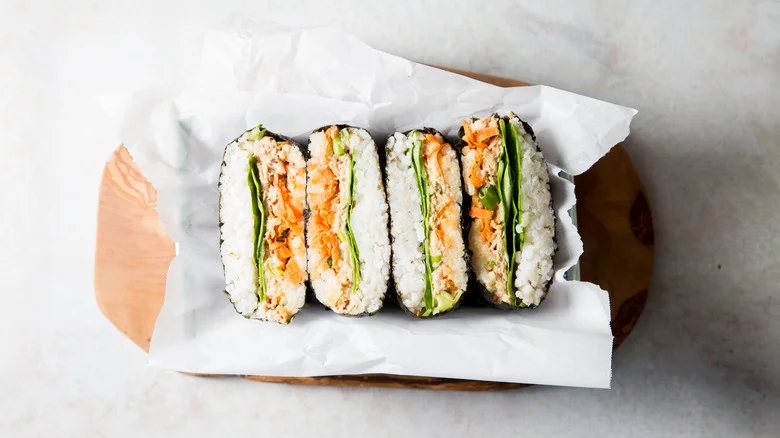
Tuna mayo onigirazu is a Japanese rice sandwich wrapped in nori, with creamy tuna and a crisp, lemony carrot salad inside. It makes a filling lunch that is easy to assemble and slice for serving.
Ingredients
- 50 g (½ cup)shredded carrot
- 1 tablespoon (15 ml)finely chopped parsley
- ½ teaspoonlemon juice
- 1 pinchsalt
- 1 cantuna
- 2 tablespoons (30 ml)Japanese mayonnaise
- ½ teaspoonsoy sauce
- ½scallion, chopped
- 2 sheetsnori
- 260 g (1⅓ cups), cooked and kept warmsushi rice
- 10 smalllettuce leaves
Instructions
- 1
Mix the carrot
Put the shredded carrot in a small bowl with the parsley, lemon juice and salt. Stir to combine, then set aside.
- 2
Prepare the tuna
Drain the tuna and put it in a small bowl with the mayonnaise, soy sauce and scallion. Mix well, breaking up the tuna with a fork. Taste and, if you like, add a little salt; set aside.
- 3
Set out the nori
Cut a piece of cling film slightly larger than a sheet of nori. Lay it on your work surface and place a nori sheet on top.
- 4
Shape the rice
Wet your hands, then place a quarter of the rice in the centre of the nori. Shape it into a square and press it down firmly so it holds together.
- 5
Add lettuce and tuna
Arrange 5 lettuce leaves over the rice and spoon half of the tuna mixture on top.
- 6
Add the carrot
Spread half of the carrot mixture over the tuna.
- 7
Cover with rice
Put another quarter of the rice on top of the carrot. Fold two diagonally opposite corners of the nori snugly over the rice.
- 8
Fold and wrap
Fold the other two corners over the rice, then wrap the onigirazu snugly in the cling film beneath it.
- 9
Make the second
Repeat steps 3–8 with the remaining ingredients to make the second onigirazu. Leave both wrapped for about 5 minutes so the nori softens.
- 10
Slice and serve
Unwrap the onigirazu and cut each in half with a wet knife before serving.
What is onigirazu?
Onigirazu is a Japanese rice sandwich: fillings are enclosed in rice and nori, then wrapped and cut across to reveal the layers. Its name is related to onigiri, the familiar Japanese rice ball, but the sandwich-style folding makes it easy to pack with a range of fillings.
This version pairs tuna mixed with Japanese mayonnaise and soy sauce with a bright carrot salad. Lettuce adds a crisp layer, while warm, sticky sushi rice helps the parcels hold together.
Nutrition and macros by portion
The nutrition label shows one serving as written: 657 calories, 26g protein, 107g carbs, 13g fat.
| Portion | Adjustment | kcal | Protein | Carbs | Fat |
|---|---|---|---|---|---|
| Lighter | Use less rice | 460 kcal | 18g | 75g | 9g |
| This serving | As written | 657 kcal | 26g | 107g | 13g |
| Hungry | Add another onigirazu | 986 kcal | 39g | 161g | 20g |
Most of the carbohydrates come from the sushi rice, while the Japanese mayonnaise contributes much of the fat and the tuna provides most of the protein. Add cucumber or another fresh vegetable on the side for a simple way to round out the plate.
Choose the right rice
Sushi rice: cooked short-grain rice is sticky enough to stay together when pressed. Keep it warm for easier shaping, but let it cool just enough to handle safely.
Nori: use full sheets so there is enough to fold around the filling. The brief rest after wrapping lets the seaweed soften and cling to the rice.
Keep the fillings balanced
Tuna: drain it well before mixing so the filling stays cohesive rather than watery. Break up the larger pieces with a fork, then mix in the mayonnaise, soy sauce and scallion.
Carrot: the lemon juice and parsley give the shredded carrot a fresh, lightly sharp contrast to the creamy tuna. Keep the carrot in a separate layer so its texture remains distinct.
Build a neat parcel
Rice base: press the first portion into a compact square in the centre of the nori. A firm base gives the toppings support and makes the parcel easier to fold.
Filling layers: spread the lettuce, tuna and carrot within the rice footprint, then add the second rice portion on top. Avoid piling the filling too high, which can make the corners difficult to close.
Folding: bring the opposite corners over the rice first, then fold in the remaining two. Wrap the parcel snugly in cling film to hold its shape while the nori softens.
Use a wet knife
A damp blade is less likely to drag through the sticky rice and pull the filling out. Wet the knife before cutting each parcel, and use a steady downward motion for a clean cross-section.
Serve it as a meal
The onigirazu is substantial on its own, with rice, tuna and vegetables all in the same parcel. For a more varied plate, serve it with miso soup or a simple cucumber salad.
Pack the halves with the cut sides facing up if you want to show the layers. They also work well as a portable lunch when kept wrapped until serving.
Recipe notes & tips
- Wet your hands before handling the rice to reduce sticking.
- Drain the tuna thoroughly so the filling does not make the nori soggy.
- Keep the filling centred and within the rice square for easier folding.
- Use cling film to help bring the nori corners together neatly.
- Let the wrapped parcels rest for about 5 minutes before unwrapping.
- Dampen the knife between cuts for tidier halves.
Variations
- Add cucumber: Lay thin cucumber slices over the lettuce for extra crunch.
- Use spring onion: Replace the scallion with finely sliced spring onion if that is what you have.
- Make it spicy: Stir a little chilli sauce into the tuna mayonnaise.
- Change the herbs: Use finely chopped chives in place of the parsley.
- Add avocado: Include a few thin slices alongside the tuna for a softer filling.
Common mistakes to avoid
- Wet filling: Drain the tuna well so excess liquid does not loosen the rice layers.
- Overfilled centre: Keep the toppings within the rice square so the nori corners can meet.
- Loose rice base: Press the rice firmly into shape to give the parcel a stable foundation.
- Dry nori: Wrap the onigirazu and leave it for about 5 minutes so the sheet softens.
- Ragged cut: Wet the knife before slicing to stop the rice catching on the blade.
How to store
Keep the wrapped onigirazu in an airtight container in the fridge and eat within 1 day. The rice may firm up when chilled, so bring it towards room temperature before eating; avoid reheating in the cling film.
Frequently asked questions
Can I make onigirazu ahead?
Yes. Assemble and wrap it, then keep it chilled in an airtight container and eat within 1 day. The nori will soften further as it rests.
Do I need sushi rice?
Short-grain sushi rice is best because its stickiness helps the sandwich hold together. Other rice may be less cohesive and harder to fold.
Why is my nori hard to fold?
Nori is easier to fold once it has had a few minutes to soften against the warm rice. Wrap the parcel snugly and leave it for about 5 minutes before slicing.
How do I stop the rice sticking to my hands?
Dampen your hands before shaping each rice layer. Re-wet them as needed, without making the rice wet.
Can I use tuna in water?
Yes. Drain it thoroughly before mixing with the mayonnaise, soy sauce and scallion.
Can I freeze onigirazu?
Freezing is not ideal for this version, as the lettuce and carrot can lose their fresh texture when thawed. It is best assembled fresh or stored chilled for a short time.
Cook it from the original
This recipe comes from tastingtable.com. Their page has the author’s own photos, notes and tips — the best place to cook it from.
Open the recipe on tastingtable.com