
Haitian Pikliz
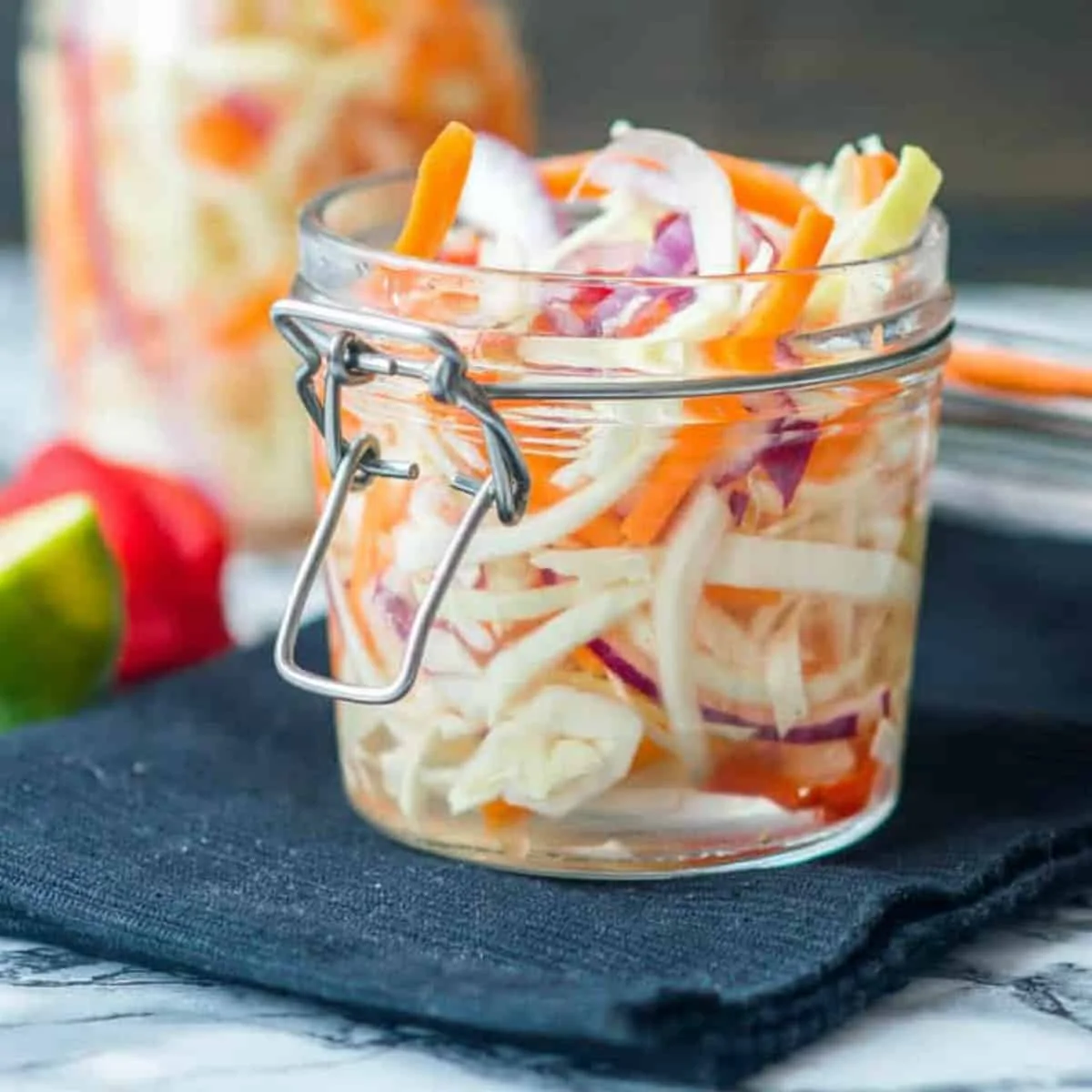
Haitian pikliz is a sharp, fiery slaw of cabbage, carrot, onion and Scotch bonnet peppers in vinegar. Serve it as a crunchy side or spoon it over rich dishes for a bright, spicy contrast.
Ingredients
- 2 cups (about 180 g)shredded cabbage (roughly half a cabbage)
- 1carrot, cut into thin matchsticks
- 1shallot or red onion, sliced
- 3Scotch bonnet peppers, sliced
- 480 ml (2 cups)white vinegar
- 2.5 ml (½ tsp)pink salt
- Juice of ½lime
Instructions
- 1
Combine vegetables
Put the cabbage, carrots, shallots and sliced Scotch bonnet peppers in a bowl.
- 2
Toss together
Use tongs to mix the vegetables evenly.
- 3
Season the slaw
Squeeze the lime juice over the vegetables and sprinkle on the pink salt.
- 4
Pack the jars
Divide the vegetables evenly between mason jars, using 2–3 jars if needed. Pour in enough vinegar to fill each jar roughly three-quarters full.
- 5
Refrigerate pikliz
Store the jars in the refrigerator and use the pikliz as needed.
What is Haitian pikliz?
Pikliz is a Haitian pickled vegetable condiment, usually made with cabbage, chilli and vinegar. It brings sharp acidity and heat to the plate, much as other fermented or pickled sides do in their own food traditions.
This version is a quick refrigerator pickle rather than a long fermentation. The mix of crunchy vegetables, lime and Scotch bonnet makes it a lively counterpoint to savoury, rich foods.
Nutrition and macros by portion
The nutrition label shows one serving as written: 48 calories, 1g protein, 6g carbs, 1g fat.
| Portion | Adjustment | kcal | Protein | Carbs | Fat |
|---|---|---|---|---|---|
| Lighter | Use less salt | 34 kcal | 1g | 4g | 1g |
| This serving | As written | 48 kcal | 1g | 6g | 1g |
| Hungry | Serve a larger portion | 72 kcal | 2g | 9g | 2g |
The cabbage, carrot and onion provide most of the carbohydrate, while the vegetables contribute a little protein. The vinegar and lime add sharpness with little energy, and the small amount of salt supplies most of the sodium; pair a modest serving with a protein-rich main and a filling starch such as rice.
Choosing the vegetables
Cabbage: Shred it finely so the vinegar can reach plenty of surface area and the slaw is easy to spoon out.
Carrot and onion: Cut the carrot into thin matchsticks and slice the shallot or red onion evenly, so the pieces sit neatly with the cabbage.
Scotch bonnet: These peppers bring the defining heat. Handle them carefully, and keep the seeds if you want the full intensity.
Mixing for an even bite
Toss the vegetables well with tongs before packing them into jars. This distributes the chilli and onion throughout the cabbage rather than leaving hot spots in one part of the batch.
Add the lime and salt over the vegetables as directed, then give them a thorough mix so the seasoning is not concentrated in one area.
Packing and adding vinegar
Pack the vegetable mixture evenly into clean jars, but avoid crushing it into a solid mass. Divide it between 2–3 jars if one jar is too full.
The recipe calls for vinegar to fill roughly three-quarters of each jar. Keep the jars refrigerated, and use a clean utensil when taking out a serving.
Heat and texture
The finished slaw should stay crisp, with the vinegar and lime giving it a tart, punchy flavour. Thin, consistent cuts help the vegetables soften and take on the sharpness more evenly.
Scotch bonnet heat can be intense, so tailor the amount to your taste. For a milder batch, remove the seeds and inner membranes before slicing.
How to serve pikliz
Serve it in small amounts alongside grilled or fried foods, stews, rice dishes or sandwiches. Its acidity and crunch are particularly welcome next to a rich or savoury main.
Use a fork or tongs to lift out the vegetables, letting excess vinegar drain back into the jar. Add more to the plate if you want extra tang.
Recipe notes & tips
- Wear gloves when slicing Scotch bonnets, and wash your hands and utensils thoroughly afterwards.
- Use tongs to distribute the chilli evenly through the vegetables.
- Cut the cabbage and carrot into similarly fine pieces for an even crunch.
- Divide the vegetables between jars rather than packing them too tightly.
- Keep the jars chilled and use a clean utensil each time you serve the slaw.
Variations
- Reduce the heat: Remove the Scotch bonnet seeds and membranes before slicing.
- Use red onion: Swap the shallot for red onion as allowed in the ingredient list.
- Add more lime: Squeeze in extra lime for a brighter citrus note.
- Make it milder: Use fewer Scotch bonnets for a gentler condiment.
- Change the crunch: Cut the carrot into fine matchsticks or grate it for a softer texture.
Common mistakes to avoid
- Uneven cuts: Slice the vegetables to a similar thickness so they take on the vinegar more evenly.
- Uneven heat: Toss the mixture thoroughly before packing to distribute the Scotch bonnet.
- Overpacked jars: Divide the mix between 2–3 jars instead of crushing it into one.
- Too much chilli: Remove seeds and membranes or reduce the number of peppers for less heat.
- Leaving it warm: Store the jars in the refrigerator as the method directs.
How to store
Keep the pikliz in covered jars in the refrigerator and use a clean utensil to serve it. For the best texture, enjoy it while the vegetables are still crisp; discard it if you notice signs of spoilage.
Frequently asked questions
How spicy is Haitian pikliz?
With three Scotch bonnets, this version can be very hot. Remove the seeds and membranes or use fewer peppers to reduce the heat.
How long should pikliz sit before serving?
The recipe does not specify a resting time, so it can be served after preparation. Chilling it gives the vegetables time to take on more of the vinegar flavour.
Can I use red onion instead of shallot?
Yes. The ingredient list gives shallot or red onion as alternatives.
Why is my pikliz not fully covered in vinegar?
The method calls for vinegar to fill roughly three-quarters of the jar, not to cover the vegetables completely. Divide the mixture between jars as needed and follow that fill level.
What should I serve with pikliz?
Serve it as a sharp, crunchy side or condiment with rich savoury dishes, grilled or fried foods, rice or sandwiches.
Cook it from the original
This recipe comes from thatgirlcookshealthy.com. Their page has the author’s own photos, notes and tips — the best place to cook it from.
Open the recipe on thatgirlcookshealthy.com