
Potato Goulash with Sausage
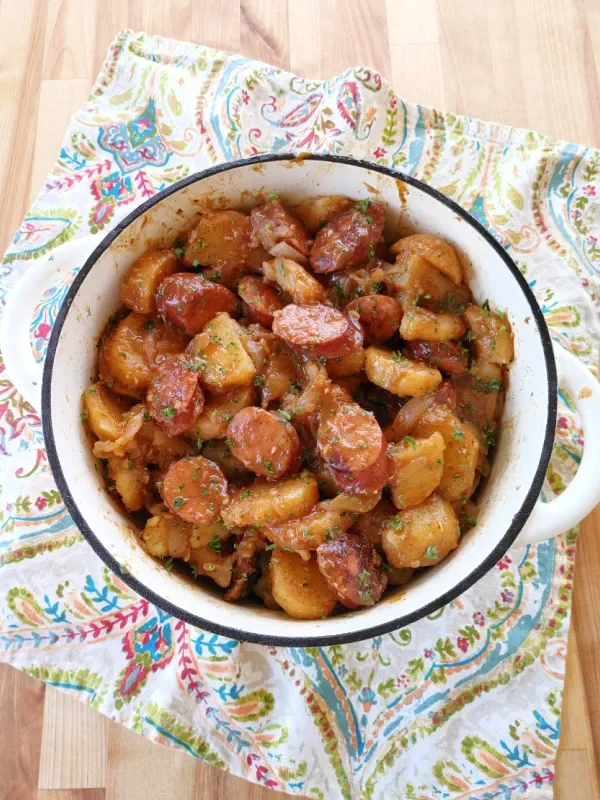
This Hungarian-style potato goulash is a hearty one-pot stew of tender potatoes, smoked sausage, onions and paprika. It is a satisfying choice when you want a rustic meal with plenty of savoury broth and little washing-up.
Ingredients
- 30 ml (2 tablespoons)vegetable oil
- 454 g (1 lb)smoked sausage, cut into thick slices
- 2yellow onions, halved then sliced
- 15 ml (1 tablespoon)minced garlic
- 5 ml (1 teaspoon)regular paprika
- 5 ml (1 teaspoon)smoked paprika
- 7.5 ml (1.5 teaspoons)salt
- 5 ml (1 teaspoon)black pepper
- 5 ml (1 teaspoon)dried thyme
- 1.13 kg (2.5 lb)russet potatoes, peeled
- 2 × 411 g (2 × 14.5-ounce cans)beef broth
- 43 g (3 tablespoons)butter
- To tastefresh parsley or thyme, for garnish (optional)
Instructions
- 1
Brown the sausage
Heat the vegetable oil in a 30 cm (12-inch) Dutch oven or heavy pot over medium heat. Brown the sausage until crisp around the edges, then lift it out with a slotted spoon and set aside.
- 2
Cook the onions
Add the onions to the hot oil and sauté for 3 minutes, adding more oil if needed.
- 3
Season the broth
Stir in the garlic, both paprikas, salt, pepper and thyme, and cook for 2 minutes more. Pour in the broth.
- 4
Slice the potatoes
Cut the peeled potatoes into thick slices, about 1.3 cm (½ inch) thick, then add them to the pot with the onions.
- 5
Simmer the potatoes
Bring the potatoes to a boil, then reduce the heat to medium and cook uncovered for 15 minutes, stirring occasionally. They do not need to be fully covered by broth; move them around now and then so they cook evenly.
- 6
Finish the goulash
Stir in the sausage and butter. Reduce the heat to low and continue cooking uncovered, stirring occasionally, until the potatoes are tender.
- 7
Add the garnish
If desired, garnish with fresh parsley or thyme.
What is potato goulash?
Goulash is a stew associated with Hungarian cooking, commonly seasoned with paprika. This rustic version pairs potatoes with smoked sausage in a savoury broth, making a substantial one-pot meal.
The combination of regular and smoked paprika builds a warm, smoky flavour, while browning the sausage first gives the broth a savoury base. The potatoes release some starch as they cook, helping the liquid feel more stew-like.
Nutrition and macros by portion
The nutrition label shows one serving as written: 490 calories, 16g protein, 46g carbs, 25g fat.
| Portion | Adjustment | kcal | Protein | Carbs | Fat |
|---|---|---|---|---|---|
| Lighter | Use less sausage and butter | 343 kcal | 11g | 32g | 18g |
| This serving | As written | 490 kcal | 16g | 46g | 25g |
| Hungry | Serve with extra bread | 735 kcal | 24g | 69g | 38g |
The potatoes provide most of the carbohydrates, while the sausage, oil and butter contribute much of the fat; sausage also supplies most of the protein. Serve a moderate bowl with a green salad or vegetables to add a fresh, lighter contrast.
Why brown the sausage first?
Sausage: browning it in the pot gives the edges a little crispness and leaves flavour in the cooking oil. Set it aside while the onions and potatoes cook so it does not become overdone.
Oil: use enough to coat the base of the pot, adding a little more if the sausage has absorbed most of it before the onions go in.
Building the paprika flavour
Paprika: briefly cooking both kinds with the garlic and onions helps their flavour spread through the oil. Keep the pot over moderate heat and add the broth after 2 minutes so the seasonings do not scorch.
Garlic and thyme: these round out the smoky, savoury base. Stir them in with the paprikas rather than leaving them against the hot base of the pot.
Getting the potatoes tender
Slice size: cut the potatoes into even slices about 1.3 cm (½ inch) thick so they cook at a similar rate. Russet potatoes soften readily and help give the broth a fuller texture.
Broth level: the slices may sit partly above the liquid at first. Stir and turn them from time to time during the 15-minute simmer, then keep cooking gently until a knife slides easily into the thickest pieces.
Finishing without overcooking
Sausage and butter: adding these after the potatoes have had their initial simmer lets the sausage warm through while the butter enriches the broth. Keep the heat low for the final cooking stage.
Doneness: the recipe gives no fixed time for this last stage, so use the potatoes as your guide. Stop when they are tender but still hold their shape.
What to serve alongside
Bread: crusty bread is useful for soaking up the paprika broth. A simple green salad or steamed green vegetables add freshness alongside the rich stew.
Garnish: parsley gives a fresh finish, while thyme echoes the seasoning already in the pot. Add either just before serving if you have it.
Recipe notes & tips
- Cut the potatoes into similarly thick slices so they soften at roughly the same pace.
- Let the sausage brown before turning it; this helps develop colour and flavour.
- Stir the paprika mixture while it cooks to keep the garlic and spices from catching on the pot.
- Move potatoes through the broth during the first simmer, even if they are not fully submerged.
- Keep the final cooking stage at a low simmer so the potato slices do not break apart.
Variations
- Add caraway: stir in a small pinch with the paprika for an earthy note.
- Use kielbasa: swap it for the smoked sausage while keeping the same method.
- Add peppers: slice a red pepper and sauté it with the onions.
- Finish with sour cream: add a spoonful to each bowl for a tangy, creamy contrast.
- Make it meat-free: use a plant-based smoked sausage and vegetable broth instead of beef broth.
Common mistakes to avoid
- Skipping the browning: the sausage will miss its crisp edges; brown it well before removing it from the pot.
- Scorching the paprika: it can turn bitter; stir constantly and add the broth after 2 minutes.
- Cutting uneven slices: thin pieces may fall apart before thick ones soften; aim for slices about 1.3 cm (½ inch) thick.
- Leaving potatoes unstirred: exposed slices may cook unevenly; turn them through the broth occasionally.
- Boiling hard at the end: vigorous bubbling can break up the potatoes; reduce the heat to low and cook gently.
How to store
Cool leftovers promptly, then refrigerate in a covered container for up to 3 days. Reheat gently in a saucepan until piping hot, adding a splash of broth or water if the stew has thickened; stir carefully to keep the potatoes intact.
Frequently asked questions
Do the potatoes need to be covered by broth?
No. The method allows some slices to sit above the liquid; stir and move them around occasionally so they cook evenly.
How do I know when the potatoes are done?
They are ready when a knife slips easily into the thickest slices. Continue cooking over low heat if they are still firm.
Can I use a different type of potato?
Yes, though the texture may differ. Choose potatoes that hold together reasonably well if you want distinct slices in the finished stew.
Can I make this ahead?
Yes. Refrigerate it once cooled and reheat gently before serving. The potatoes may soften further after storage.
What can I use instead of beef broth?
Vegetable broth can be used, though it will change the flavour. For a meat-free version, pair it with plant-based smoked sausage.
Cook it from the original
This recipe comes from southyourmouth.com. Their page has the author’s own photos, notes and tips — the best place to cook it from.
Open the recipe on southyourmouth.com