
Juicy Smoked Butterflied Pork Butt with Extra Bark
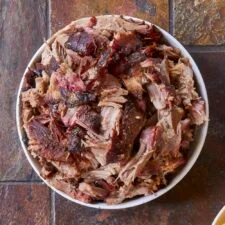
Butterflied pork shoulder is smoked until tender, then shredded for juicy pulled pork with plenty of exposed, savoury bark. Flattening the joint helps it cook more quickly than a whole shoulder while still delivering generous portions for a cookout.
Ingredients
- 4.54 kg (10 lb)boneless pork butt or shoulder, butterflied
- 30–45 ml (2–3 tablespoons)yellow mustard, or another preferred binder
- 45–60 ml (3–4 tablespoons)Chupacabra Ribnoxious
- 45–60 ml (3–4 tablespoons)Chupacabra A Fine Meat Rub
- As neededjuice
- As neededapple cider vinegar
Instructions
- 1
Prepare the pork
Set a cooling rack inside a half-sheet pan. Arrange the butterflied pork on the rack with the fat cap facing up.
- 2
Season both sides
Rub half the mustard over the top and sides of the pork with gloved hands. Sprinkle on half of each seasoning and pat them in. Turn the pork over and repeat with the remaining mustard and seasonings. Leave it in the pan for 30 minutes so the seasonings settle into the meat.
- 3
Heat the smoker
Fill the hopper and set the smoker to 135°C (275°F). Put foil or a disposable drip pan on the lower rack.
- 4
Smoke to 74°C
Place the pork on the upper rack with the damper halfway open. Insert a probe into each side of the pork and close the lid. Smoke until the internal temperature reaches 74°C (165°F), about 5–6 hours. Check the pork roughly every 45 minutes and, if needed, spritz it all over with an equal-parts mixture of juice and apple cider vinegar.
- 5
Wrap and continue
Lay out two very large pieces of pink butcher paper. Take the pork off the smoker, remove the probes and wrap the meat tightly in a double layer of paper. Return it to the upper rack, carefully reinsert the probes through the paper and raise the smoker to 149°C (300°F). Close the lid and smoke until the internal temperature reaches 88°C (190°F), about 2 hours.
- 6
Expose the bark
Open the lid and carefully remove the probes. Open the top of the paper, exposing as much of the pork’s surface as possible without spilling the juices trapped inside. Put the probes back into the meat, close the lid and raise the smoker to 177°C (350°F). Continue smoking until the internal temperature reaches 96°C (205°F) and the pork is probe-tender.
- 7
Rest the pork
Remove the pork from the smoker, keeping as much of the paper juices as possible. Wrap it in fresh pink butcher paper and pour the saved juices over the meat. Double-wrap it in butcher paper, then wrap it in plastic wrap, and rest it in a cooler or large insulated bag for 2 hours.
- 8
Shred the meat
After 2 hours, carefully unwrap the pork and shred it. It will still be very hot, so protect your hands with meat gloves or use shredding claws.
- 9
Store leftovers
Keep leftovers in the fridge for up to 5 days or in a freezer-safe bag for up to 3 months.
What is butterflied pork butt?
Pork butt, also called pork shoulder, is a well-marbled cut often cooked slowly until it can be pulled apart. Butterflying means opening out the joint so it lies flatter, creating more surface area for seasoning and smoke.
This is a barbecue-style take on pulled pork, built around a seasoned, smoky crust as well as tender meat. The flatter shape and final uncovered stage help create extra bark.
Nutrition and macros by portion
The nutrition label shows one serving as written: 373 calories, 55g protein, 1g carbs, 16g fat.
| Portion | Adjustment | kcal | Protein | Carbs | Fat |
|---|---|---|---|---|---|
| Lighter | Smaller pork portion | 261 kcal | 39g | 1g | 11g |
| This serving | As written | 373 kcal | 55g | 1g | 16g |
| Hungry | Larger pork portion | 560 kcal | 83g | 2g | 24g |
The pork supplies most of the protein and fat, while the rubs and mustard contribute relatively little carbohydrate. Pair a serving with vegetables and a modest portion of a starchy side to make a more balanced plate.
Why butterflying works
Flattened meat has more surface exposed to the smoker than a compact whole joint. That gives the rub more area to cling to and helps develop the bark that flavours each shred.
Keep the thickness as even as you can when opening out the shoulder. This helps it cook more evenly, though the temperature and tenderness cues still matter more than the clock.
Layer the seasoning
Mustard binder: spread it over the pork before adding the rubs so the seasoning has something to adhere to. The method divides both the binder and rubs between the two sides.
Two rubs: use the listed Ribnoxious and A Fine Meat Rub, patting them onto the surface rather than brushing them off. The 30-minute rest gives the seasoning time to settle onto the meat.
Follow the temperature stages
First stage: smoke at 135°C until the pork reaches 74°C internally, checking about every 45 minutes. The recipe suggests spritzing with equal parts juice and apple cider vinegar if the surface needs it.
Wrapped stage: the double layer of butcher paper stays around the pork as it cooks to 88°C. Then opening the paper exposes the top again for the final stage at 177°C.
Check for tenderness
Temperature is a useful guide, but the final cue is probe tenderness at 96°C. The probe should pass into the meat easily; if it does not, continue smoking and check again.
The pork is handled several times during cooking, so take care around the hot smoker, probes and trapped juices. Use the probes as directed when checking the internal temperature.
Rest before shredding
Rest the wrapped pork for 2 hours in a cooler or insulated bag, as directed. Saving the juices and pouring them over the meat before the final wrap helps keep them with the pork.
The meat remains very hot after resting. Wear meat gloves or use shredding claws, and pull the pork apart once it is safe to handle.
Serving ideas
Serve the shredded pork in rolls or alongside barbecue sides such as slaw, beans or corn. Keep the bark mixed through the pulled meat so each serving gets some of the crisp, seasoned edges.
For a simple plate, pair the pork with vegetables and a starch, and add sauce at the table if you want it. That lets the smoky seasoning and saved cooking juices remain noticeable.
Recipe notes & tips
- Keep the pork on a rack inside the pan while seasoning so it is easy to handle.
- Use a separate probe in each side of the butterflied joint, as directed.
- Check the pork about every 45 minutes during the first smoking stage.
- Wrap the pork tightly in two layers of butcher paper for the middle stage.
- When opening the paper for the final stage, take care not to lose the trapped juices.
- Use gloves or shredding claws when pulling apart the hot meat.
Variations
- Binder choice: use another preferred binder instead of yellow mustard.
- Spritz mixture: use equal parts juice and apple cider vinegar as described in the method.
- Serving style: pile the shredded pork into rolls for sandwiches.
- Side dishes: serve with slaw, beans or corn for a cookout plate.
Common mistakes to avoid
- Skipping the rest after seasoning: leave the pork for 30 minutes so the rubs can settle onto the surface.
- Losing the paper juices: open the paper carefully and keep the juices for the final wrap.
- Relying on time alone: check the internal temperature and continue until the pork is probe-tender.
- Opening the paper too widely: expose the top while keeping the juices trapped inside.
- Shredding unprotected: the meat will still be very hot after resting, so use gloves or shredding claws.
How to store
Refrigerate leftovers for up to 5 days or freeze them in a freezer-safe bag for up to 3 months. Reheat thoroughly before serving.
Frequently asked questions
Can I make this without the named rubs?
The recipe specifies Chupacabra Ribnoxious and A Fine Meat Rub. If substituting, choose seasonings you like, while recognising that the flavour will differ.
Do I have to use mustard as the binder?
No. The recipe allows any preferred binder in place of yellow mustard.
When should I spritz the pork?
Check it about every 45 minutes during the first smoking stage and spritz if needed. Use an equal-parts mixture of juice and apple cider vinegar.
Why does the recipe open the butcher paper near the end?
Opening the top exposes more of the pork’s surface during the final stage, while the method aims to keep the trapped juices in the paper.
How do I know when the pork is ready to shred?
The target internal temperature is 96°C (205°F), and the meat should be probe-tender. Then rest it for 2 hours before shredding.
How long can I keep leftover pulled pork?
The recipe gives up to 5 days refrigerated or up to 3 months in a freezer-safe bag.
Cook it from the original
This recipe comes from thekitchenwhisperer.net. Their page has the author’s own photos, notes and tips — the best place to cook it from.
Open the recipe on thekitchenwhisperer.net