
Yaki Onigiri (Grilled Rice Balls)焼きおにぎり
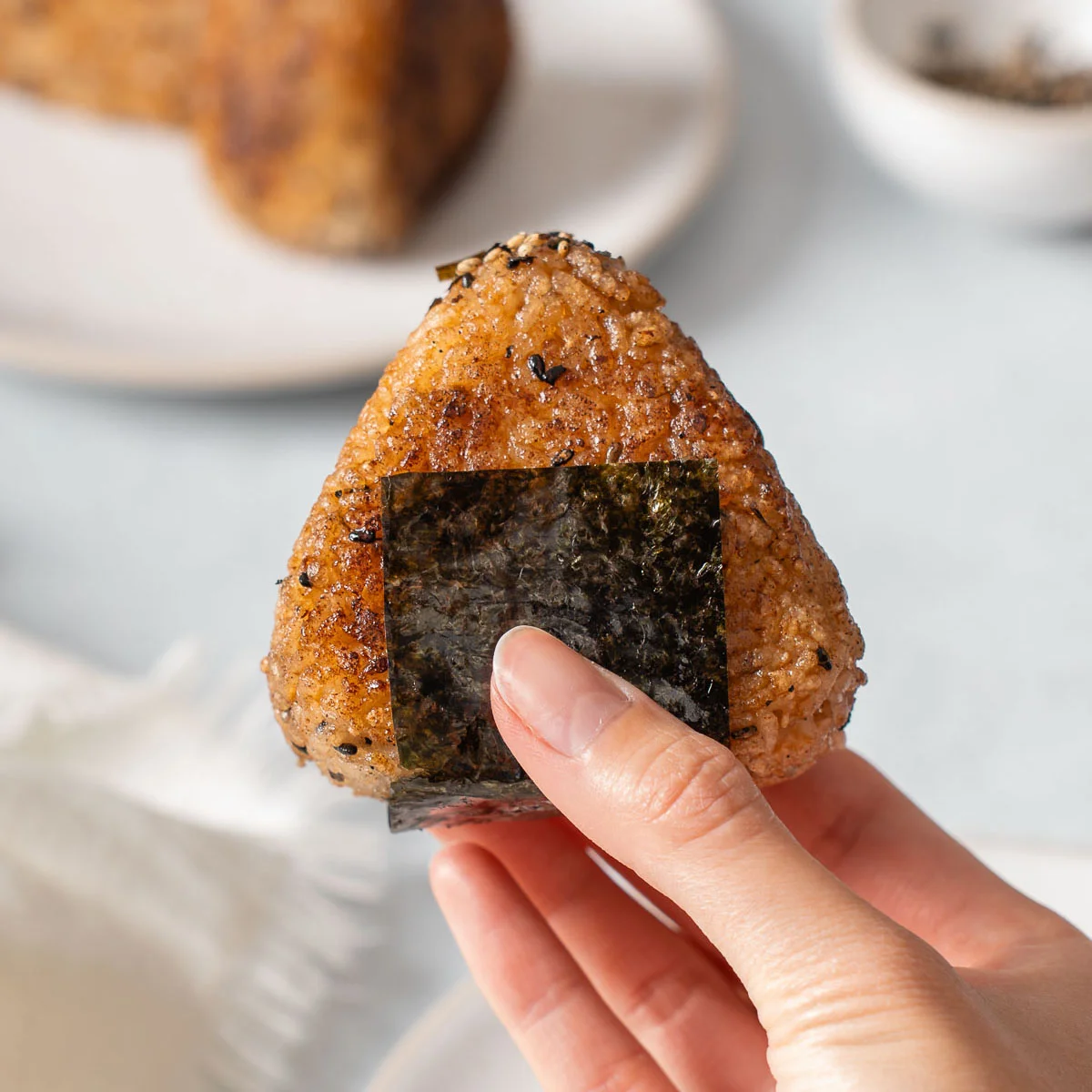
Yaki onigiri are Japanese rice balls grilled until crisp and lightly charred outside while staying soft within. Sesame-seasoned rice and a quick soy, mirin and sugar glaze make them a satisfying snack or side dish.
Ingredients
- 300 g (1½ cups)uncooked sushi rice, short- or medium-grain
- 480 ml (2 cups)water
- 6 g (2 teaspoons)toasted black sesame seeds
- 10 ml (2 teaspoons)sesame oil
- 60 ml (¼ cup)soy sauce
- 30 ml (2 tablespoons)mirin
- 4 g (1 teaspoon)sugar
- as needednori sheets, cut into 5 cm (2-inch) pieces
- to taste, optionalfurikake seasoning
Instructions
- 1
Cook the rice
Rinse the rice under running water until the water runs clear. Combine it with the water in a rice cooker or saucepan and cook until done.
- 2
Season the rice
Stir the toasted sesame seeds and sesame oil into the cooked rice. Leave it to cool until it is comfortable to handle.
- 3
Shape the rice
Wet your hands and take about 120 ml (½ cup) of rice. Press it firmly between both hands into a triangle, or pack it into an onigiri mould and press firmly.
- 4
Mix the glaze
Combine the soy sauce, mirin and sugar in a small bowl, stirring until the sugar dissolves. Set aside.
- 5
Grill the onigiri
Lightly coat a skillet with oil and heat it over medium heat. Grill the rice balls for about 2–3 minutes on each side, until all sides are crisp and lightly browned. Turn them as little as possible so they hold together.
- 6
Glaze and serve
Turn the heat to low, brush one side with the soy mixture and flip to caramelise for about 10–15 seconds. Work quickly, as the glaze can burn; brush and turn the remaining sides in the same way. Sprinkle with furikake while warm, wrap with a strip of nori and serve.
What are yaki onigiri?
Onigiri are Japanese rice balls, commonly shaped by hand or in a mould and eaten as a snack or packed meal. Yaki means grilled: the shaped rice is browned in a pan until its surface turns crisp.
This version seasons the rice with sesame, then adds a brief soy, mirin and sugar glaze. The contrast between toasted edges and a soft centre is what makes the simple rice especially appealing.
Nutrition and macros by portion
The nutrition label shows one serving as written: 214 calories, 5g protein, 44g carbs, 2g fat.
| Portion | Adjustment | kcal | Protein | Carbs | Fat |
|---|---|---|---|---|---|
| Lighter | Smaller rice balls | 150 kcal | 4g | 31g | 1g |
| This serving | As written | 214 kcal | 5g | 44g | 2g |
| Hungry | Larger rice portion | 321 kcal | 8g | 66g | 3g |
Most of the carbohydrates come from the rice, while sesame oil and seeds provide most of the fat. The rice and sesame contribute some protein, with soy sauce adding savoury flavour and sodium. Pair a portion with vegetables and a protein-rich side for a more balanced plate.
Choose the right rice
Rice: Short- or medium-grain sushi rice becomes sticky enough to hold its shape when pressed. Rinsing until the water runs clear helps remove surface starch before cooking.
Sesame: Toasted black sesame seeds and sesame oil bring a nutty note through the rice. Mix them in while the rice is cooked, then let it cool enough to shape.
Shape firmly
Hand shaping: Wet your hands to make the rice easier to handle, then press it firmly into a triangle. A mould is useful too, but pack and press the rice firmly so the ball stays together in the pan.
Size: Use about ½ cup of rice for each onigiri, as directed. Keeping the portions similar helps them cook at a similar rate.
Build a crisp crust
Pan heat: Start over medium heat and allow the sides to brown before turning. Avoid frequent flipping, which can loosen the grains and break the rice balls apart.
Glaze: Add the soy mixture only after lowering the heat. Its sugar can caramelise quickly, so the short 10–15-second turn is important.
Check the texture
Colour: Look for crisp, lightly browned surfaces on all sides before glazing. If the rice is pale and soft, give it more time in the pan before adding the sauce.
Centre: The outside should feel toasted while the inside remains soft. Handle the finished onigiri gently, especially when wrapping them in nori.
Serve while warm
Finish: Sprinkle on furikake while the glaze is still warm, then add a strip of nori. The nori adds a savoury, crisp contrast; add it just before serving for the best texture.
Pairing: Serve the rice balls as a snack or alongside a light soup, vegetables or a Japanese-style meal. Their savoury glaze makes them flavourful enough to enjoy without an elaborate accompaniment.
Recipe notes & tips
- Rinse the rice thoroughly before cooking, until the water runs clear.
- Wet your hands before shaping to help prevent the rice from sticking.
- Press each triangle firmly so it holds together during grilling.
- Let the sides brown before turning, and handle the onigiri as little as possible.
- Lower the heat before brushing on the soy mixture because its sugar can burn quickly.
- Add the nori just before serving if you want it to stay crisp.
Variations
- Use white sesame: Swap the black sesame seeds for toasted white sesame seeds.
- Add more umami: Sprinkle extra furikake over the glazed rice while it is warm.
- Change the shape: Form round or oval rice balls instead of triangles, keeping their size similar.
- Adjust the glaze: Brush on a thinner layer of the soy mixture for a subtler finish.
- Serve without nori: Leave off the nori strips and enjoy the crisp glazed rice on its own.
Common mistakes to avoid
- Loose shaping: Rice may crumble in the pan; press each portion firmly into shape.
- Frequent flipping: The rice balls can fall apart; let each side brown before turning.
- Glazing over high heat: The sugar can scorch; lower the heat before brushing on the sauce.
- Long glazing: The surface can burn quickly; caramelise each brushed side for only about 10–15 seconds.
- Adding nori too early: It can lose its crispness; wrap the onigiri just before serving.
How to store
For the best crisp texture, eat the onigiri freshly grilled. Refrigerate leftovers in an airtight container for up to 2 days; reheat in a lightly oiled skillet over medium-low heat until warmed through and crisp again. Add the nori after reheating.
Frequently asked questions
Can I shape the onigiri without a mould?
Yes. Wet your hands, take about ½ cup of rice and press it firmly into a triangle with both hands.
Why are my rice balls falling apart?
They may not have been pressed firmly enough, or they may be getting turned too often. Shape them tightly and let each side brown before flipping.
When should I brush on the soy mixture?
Brush it on after the rice balls have browned and the heat has been lowered to low. The sugar in the mixture caramelises quickly.
Can I use an ordinary saucepan to cook the rice?
Yes. The method allows for cooking the rinsed rice with the water either in a rice cooker or on the stovetop; cook it until done.
What is furikake, and is it necessary?
Furikake is a Japanese seasoning used here as an optional topping. The onigiri can be served without it.
When should I add the nori?
Wrap a strip around each onigiri after grilling and glazing, while they are warm. Adding it close to serving helps preserve its texture.
Cook it from the original
This recipe comes from takestwoeggs.com. Their page has the author’s own photos, notes and tips — the best place to cook it from.
Open the recipe on takestwoeggs.com