
Caramelized Balsamic Onion and Thyme Jam
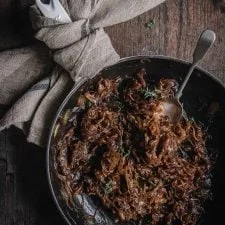
This slow-cooked onion jam combines sweet brown onions with balsamic vinegar, brown sugar and fresh thyme. Keep a jar in the fridge to add a savoury-sweet layer to sandwiches, pizza or quiche.
Ingredients
- 3 good-sizedbrown onions, peeled
- 30 ml (2 tbsp)olive oil
- 125 ml (½ cup)balsamic vinegar
- about 70 g (⅓ cup)brown sugar
- 1 tspfresh thyme leaves
Instructions
- 1
Slice the onions
Halve each onion, set it cut-side down on a chopping board and slice it finely lengthways. Alternatively, use a food processor fitted with a 2 mm slicing disc.
- 2
Coat with oil
Put the sliced onions and olive oil in a frying pan and stir well to coat. Set the pan over low heat for 2 minutes.
- 3
Add remaining ingredients
Add the balsamic vinegar, brown sugar and thyme, then stir to combine. Cook over low to medium heat so the onions gently sauté in the balsamic mixture.
- 4
Cook until jammy
Continue to sauté gently for 45 minutes, or until the balsamic mixture has reduced to a jam-like consistency.
- 5
Cool and chill
Let the onion jam cool, transfer it to a jar and refrigerate until needed.
What is onion jam?
Onion jam is a slow-cooked, savoury-sweet condiment made by softening onions until they are tender and concentrated. This Australian-style version uses balsamic vinegar, brown sugar and thyme for tang, sweetness and herbal fragrance.
The method keeps the ingredients simple and relies on gentle cooking to reduce the liquid and bring the flavours together. Use it wherever a dish could benefit from a sweet, savoury onion accent.
Nutrition and macros by portion
The nutrition label shows one serving as written: 700 calories, 7g protein, 103g carbs, 29g fat.
| Portion | Adjustment | kcal | Protein | Carbs | Fat |
|---|---|---|---|---|---|
| Lighter | Use less sugar and oil | 490 kcal | 5g | 72g | 20g |
| This serving | As written | 700 kcal | 7g | 103g | 29g |
| Hungry | Serve with a sandwich | 1050 kcal | 11g | 155g | 44g |
Most of the carbohydrates come from the brown sugar and onions, while the olive oil supplies most of the fat; the recipe contains only a small amount of protein. Since this makes a concentrated condiment, use it alongside a protein-rich sandwich filling or savoury dish and vegetables rather than treating the whole batch as a single plate.
Why slice the onions finely?
Even slices: Cutting the onions finely lengthways helps them soften at a similar pace. A sharp knife works well, or use the food processor’s 2 mm slicing disc as suggested in the method.
Brown onions: Their rounded savoury flavour suits the sweet-and-tangy mixture. Choose onions of a similar size so they are easier to slice consistently.
Keep the heat gentle
Start low: Give the onions and oil 2 minutes over low heat, stirring to coat them. This begins the softening without rushing the process.
Slow reduction: After adding the remaining ingredients, use low to medium heat and let the onions sauté gently for 45 minutes. Stir from time to time so the mixture cooks evenly and does not catch on the pan.
Look for a jam-like texture
The recipe’s cue is a balsamic mixture reduced to a jam-like consistency. The onions should be tender and coated rather than sitting in a large amount of thin liquid.
The mixture will continue to settle as it cools, so take it off the heat once it reaches that consistency rather than waiting for it to become completely dry.
Choose a suitable pan
A wide frying pan gives the onions room to cook in a relatively even layer and helps the balsamic mixture reduce. If the onions are crowded into a small pan, they may take longer to soften and reduce.
Use a pan that can hold the onions and liquid comfortably, with enough space to stir without spilling.
How to serve it
Spread a little through a sandwich or add it to pizza or quiche, as suggested in the recipe description. Its sweet, tangy flavour also works alongside savoury fillings and cheeses.
For a simple plate, pair a modest spoonful with a sandwich or savoury tart and add a crisp salad or vegetables for freshness.
Recipe notes & tips
- Slice the onions as evenly as you can so they soften at a similar rate.
- Stir well when adding the oil so the onion slices are coated.
- Keep the heat gentle once the balsamic mixture is in the pan.
- Stir occasionally during the long reduction to help prevent sticking.
- Let the jam cool before transferring it to a jar.
Variations
- Extra thyme: Add a little more fresh thyme for a stronger herbal note.
- Peppery finish: Add black pepper to taste while the onions cook.
- Softer sweetness: Reduce the brown sugar slightly for a more tangy result.
- Red onion: Use red onions instead of brown for a different colour and flavour.
- Herb change: Try rosemary in place of thyme, using a modest amount so it does not overpower the onions.
Common mistakes to avoid
- Uneven slices: Cut the onions to a similar thickness so they soften evenly.
- Heat too high: Keep the pan on low to medium so the mixture reduces gently rather than catching.
- Skipping the stir: Stir from time to time during cooking to help prevent sticking.
- Stopping too soon: Continue cooking until the balsamic mixture has reduced to a jam-like consistency.
- Jarring while hot: Cool the jam before putting it into a jar.
How to store
Cool the jam, place it in a clean, airtight jar and keep it refrigerated. Use a clean spoon each time and discard it if you notice mould, an unusual smell or other signs of spoilage.
Frequently asked questions
Can I slice the onions in a food processor?
Yes. The recipe suggests using a food processor fitted with a 2 mm slicing disc.
How do I know when the jam is ready?
Cook it for about 45 minutes, or until the balsamic mixture has reduced to a jam-like consistency.
Can I make it ahead?
Yes. Cool it, transfer it to a jar and refrigerate until needed.
What can I serve onion jam with?
Try it in sandwiches, on pizza or in quiche. It can also accompany other savoury dishes.
Why is my onion jam still runny?
It may need more time to reduce. Continue cooking gently until the balsamic mixture reaches a jam-like consistency.
Cook it from the original
This recipe comes from theirishmanswife.com. Their page has the author’s own photos, notes and tips — the best place to cook it from.
Open the recipe on theirishmanswife.com