
Creamy Jhol Momo Recipe without Tomato
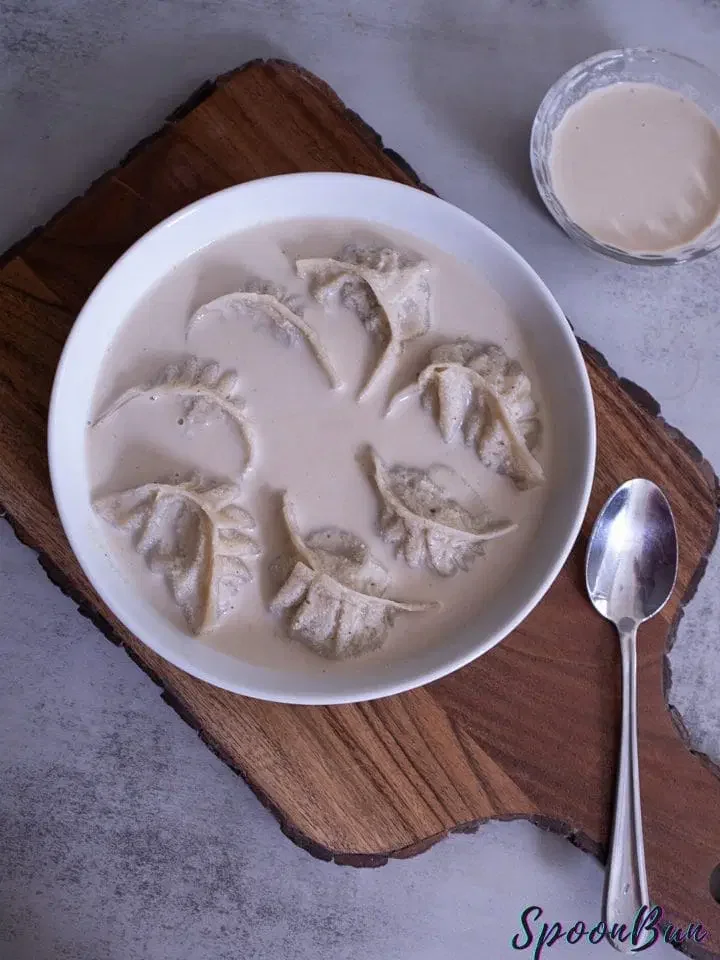
Jhol momo is a pourable, savoury sauce served with hot momo dumplings. This tomato-free version gets its creamy texture and nutty flavour from sesame, soybeans and peanuts.
Ingredients
- ¼ cup (60 ml)white soybeans
- 3 tbsproasted peanuts
- 2 tbspwhite sesame seeds
- 1½ tbspghee or butter
- 1 tbsplemon juice
- 1 tspsalt
- ½ tspSichuan pepper
- ⅓ cup (80 ml)chopped onion
- 2garlic cloves
- 1 tbspminced ginger
- 2 cups (480 ml)water
- 2 cups (480 ml)warm water
Instructions
- 1
Roast sesame and soybeans
In a dry pan over low heat, roast the sesame seeds and soybeans until lightly golden. Transfer them to a bowl with the peanuts.
- 2
Sauté the aromatics
Add the ghee or butter to the same pan. Sauté the onion, garlic, ginger and Sichuan pepper until the onion is soft and lightly browned.
- 3
Blend the sauce
Blend the roasted sesame seeds, soybeans and peanuts first. Add the sautéed onion, garlic and ginger, then add water and blend until smooth.
- 4
Adjust and season
Pour the blended jhol into a bowl. It should be thick but pourable; adjust the water as needed. Add salt and a squeeze of lemon juice to taste.
What is jhol momo?
Jhol momo is a Nepali-style dish of momo dumplings served with a loose, seasoned sauce, or jhol. The sauce is an important part of the meal: it adds moisture and flavour to the dumplings.
This version skips tomato and instead builds a creamy, nutty base from sesame, soybeans and peanuts. Blending the toasted ingredients with sautéed aromatics makes a smooth sauce for serving with hot momo.
Nutrition and macros by portion
The nutrition label shows one serving as written: 119 calories, 4g protein, 5g carbs, 10g fat.
| Portion | Adjustment | kcal | Protein | Carbs | Fat |
|---|---|---|---|---|---|
| Lighter | Use less ghee | 83 kcal | 3g | 4g | 7g |
| This serving | As written | 119 kcal | 4g | 5g | 10g |
| Hungry | Serve with extra momo | 179 kcal | 6g | 8g | 15g |
The soybeans and peanuts contribute protein, while the sesame, peanuts and ghee or butter provide most of the fat. The water-based sauce also contains some carbohydrate from the soybeans and onion; serve it with momo and add vegetables to make a more balanced plate.
Toast the seeds and soybeans
Dry roasting: Keep the pan over low heat and stir or shake it so the sesame and soybeans colour evenly. Take them off the heat once lightly golden; they will continue to toast if left in the hot pan.
Peanuts: Add the roasted peanuts to the bowl with the toasted ingredients. The method calls for roasted peanuts, so they do not need another turn in the pan.
Build flavour in the pan
Ghee or butter: Use either one to soften the onion and carry the flavour of the aromatics. Add it to the same pan used for toasting.
Aromatics: Cook the onion, garlic, ginger and Sichuan pepper until the onion is soft and lightly browned. This is the point to stop; the method does not call for deeply browned or crisp aromatics.
Blend to the right texture
Order: Blend the toasted sesame, soybeans and peanuts first, then add the sautéed aromatics. This gives the nuts and seeds a head start breaking down before the wetter ingredients go in.
Consistency: The finished jhol should be thick but pourable. Add water as needed during blending or adjustment, a little at a time, so it does not become too thin.
Season at the end
Salt and lemon: Add both after blending, tasting as you go. Lemon gives the rich, nutty sauce a bright finish, while the salt brings the flavours into balance.
Water: The ingredient list includes water and warm water, but the method does not specify a separate use for each. Follow the method’s consistency cue and adjust with water as needed.
Serve with hot momo
Pairing: Serve the jhol with hot momo so the dumplings can be dipped into or coated with the sauce. Keep the sauce thick enough to cling while still easy to pour.
On the side: A simple fresh salad or lightly dressed vegetables can add a crisp contrast to the creamy sauce and dumplings.
Recipe notes & tips
- Keep the pan on low heat while toasting to help prevent the sesame and soybeans from scorching.
- Use a blender that can handle nuts and seeds, and blend until the sauce looks smooth.
- Add water gradually so you can control the thickness.
- Taste after blending and adjust the salt and lemon juice to suit your preference.
- Serve the jhol soon after preparing it alongside hot momo.
Variations
- More lemon: Add a little extra lemon juice for a brighter finish.
- Milder pepper: Use less Sichuan pepper if you prefer a gentler tingle.
- Extra sesame: Increase the sesame seeds slightly for a stronger toasted flavour.
- Butter option: Use butter instead of ghee for the sauté.
- Thicker jhol: Start with less water and add only enough to make the sauce pourable.
Common mistakes to avoid
- High heat: The seeds can scorch before they toast evenly; roast them over low heat.
- Over-toasting: Dark, bitter seeds can overpower the sauce; remove them when lightly golden.
- Adding all the water at once: The jhol may become too thin; add water gradually and check the texture.
- Skipping the first blend: The nuts and seeds may remain coarse; blend them before adding the aromatics.
- Over-seasoning early: Salt and lemon are easier to balance after blending; add them at the end and taste.
How to store
Refrigerate leftover jhol in a covered container and use within 3 days. Reheat gently in a pan, stirring and adding a little water if it has thickened; avoid leaving it at room temperature for an extended period.
Frequently asked questions
Can I make this jhol without tomato?
Yes. This recipe contains no tomato; its creamy, nutty base comes from sesame, soybeans and peanuts.
How thick should jhol be?
It should be thick but pourable. Add water gradually until it is easy to pour and coats the momo.
Can I use butter instead of ghee?
Yes. The ingredients allow for either ghee or butter, used to sauté the aromatics.
What should I serve with jhol?
Serve it with hot momo, for dipping or spooning over the dumplings. Fresh vegetables or a simple salad make a good accompaniment.
Can I prepare the sauce ahead?
Yes, you can make it ahead and refrigerate it in a covered container for up to 3 days. Stir and loosen with a little water when reheating if needed.
Cook it from the original
This recipe comes from spoonbun.com. Their page has the author’s own photos, notes and tips — the best place to cook it from.
Open the recipe on spoonbun.com